Philippines Accuses China Of Water Cannon Use As Clashes Continue For 2nd Day
Source Entity
NDTV News Search Records Found 1000
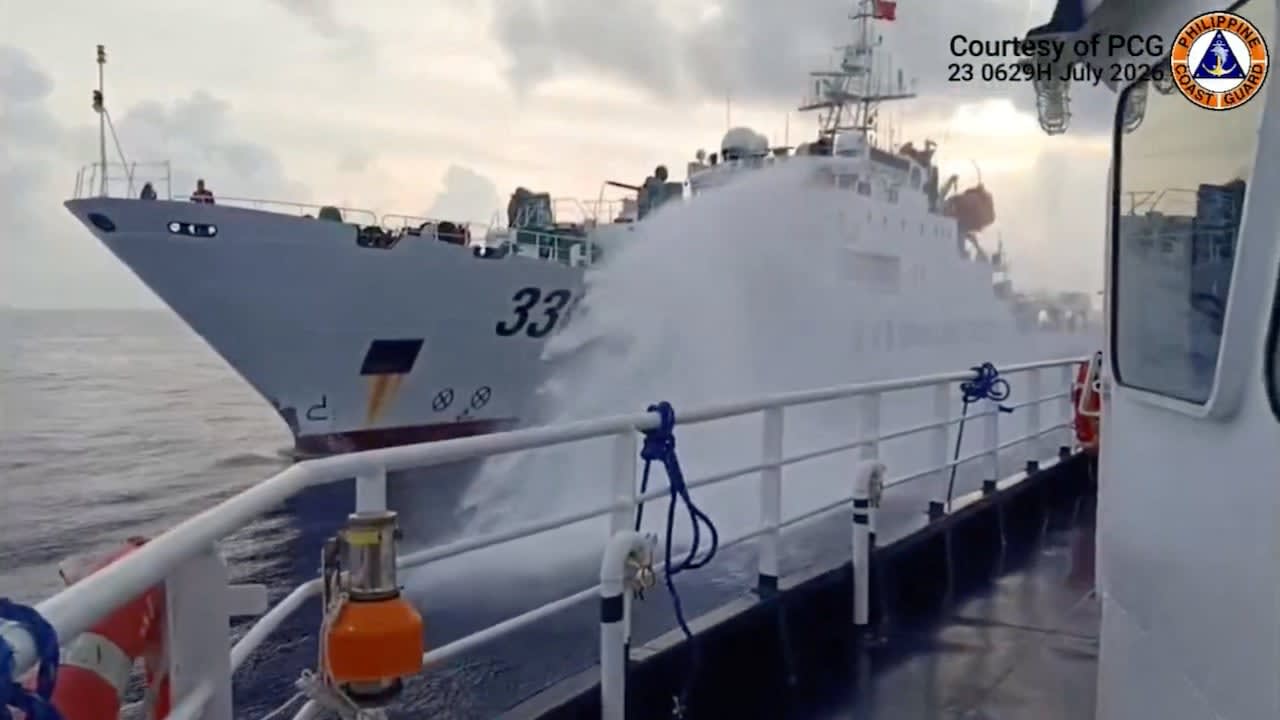
The Philippines has accused China of using water cannons against its vessels for the second consecutive day in the South China Sea. This escalation highlights the ongoing maritime tensions and territorial disputes between the two nations in the contested region.
Tensions Escalate in the South China Sea
Recent reports indicate a significant escalation in maritime hostilities, as the Philippines has accused the Chinese Coast Guard of deploying water cannons against Philippine vessels for the second consecutive day. This aggressive maneuver in the South China Sea serves as a stark reminder of the volatile nature of the territorial disputes that have long characterized relations between Manila and Beijing. The use of water cannons, while non-lethal, represents a deliberate show of force intended to obstruct Philippine operations within waters that both nations claim as their sovereign territory.
The Strategic Importance of the Region
The South China Sea remains one of the world's most critical maritime corridors, serving as a vital artery for global trade and a region rich in untapped natural resources. China’s extensive claims, often visualized through the 'nine-dash line,' frequently overlap with the Exclusive Economic Zones (EEZ) of several Southeast Asian nations, including the Philippines. The recent deployment of coast guard vessels to intercept Philippine ships is not an isolated incident but rather part of a broader strategy of 'gray zone' tactics—actions that fall below the threshold of conventional armed conflict but are designed to exert control and erode the sovereignty of neighboring states.
Historical Context and Legal Framework
To understand the gravity of these clashes, one must look at the 2016 Permanent Court of Arbitration ruling in The Hague, which invalidated China’s expansive historical claims in the South China Sea. Despite this legal victory for the Philippines, Beijing has consistently refused to recognize the ruling, maintaining that its presence in the area is based on historical rights. This fundamental disagreement creates a persistent deadlock, where diplomatic efforts are frequently undermined by physical confrontations on the high seas.
Impact on Regional Security Dynamics
The recurring nature of these clashes has profound implications for regional security. By repeatedly challenging Philippine vessels, China is testing the limits of Manila's bilateral security agreements, particularly its long-standing Mutual Defense Treaty with the United States. These confrontations compel the Philippines to seek closer security partnerships with other regional powers, effectively turning the South China Sea into a primary theater for geopolitical competition between major global actors.
Future Trends and Potential De-escalation
Looking ahead, it is likely that these maritime confrontations will continue to occur as long as there is no mutually agreed-upon code of conduct for the region. The trend points toward a 'new normal' where low-level, high-stakes physical altercations become a standard tool of diplomatic signaling. Without a substantive shift in policy or a breakthrough in high-level negotiations, the risk of a miscalculation that could lead to broader regional instability remains alarmingly high. The international community continues to monitor these events closely, as they reflect the broader struggle for influence and adherence to international maritime law in the Indo-Pacific.
Verification Required?