I want to wrap myself in Hue’s new Liane rope lights
Source Entity
Jennifer Pattison Tuohy
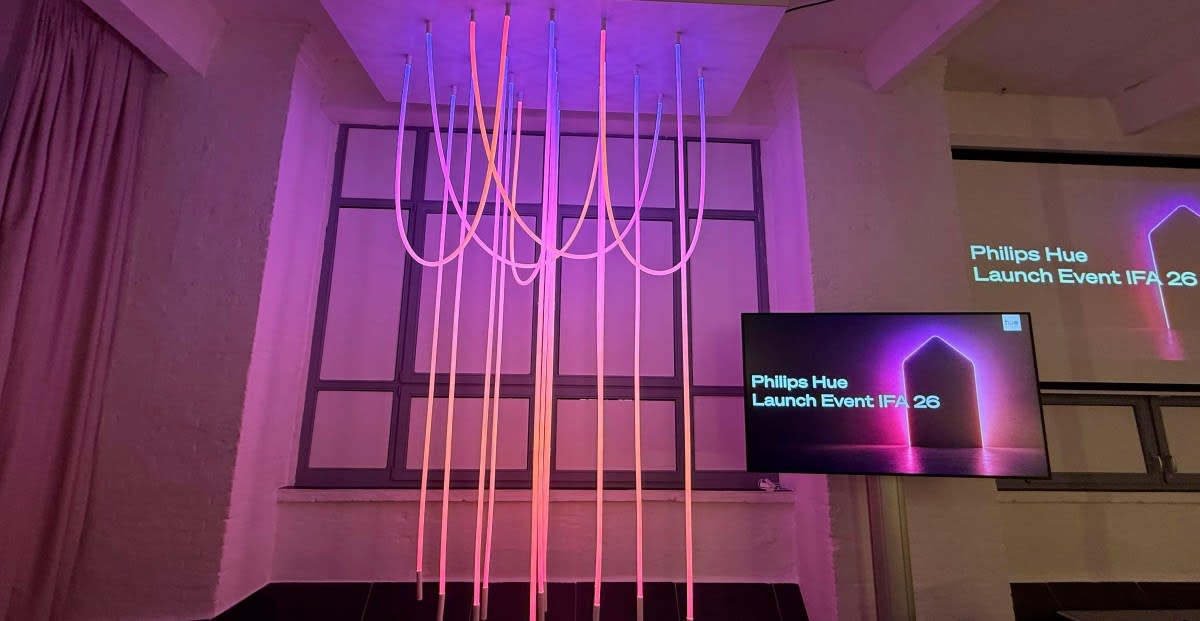
Philips Hue has significantly expanded its smart lighting ecosystem through new partnerships and hardware releases announced at IFA. Key updates include a Nanoleaf integration module, more affordable TV sync solutions, and the launch of architecturally focused rope lights.
Philips Hue Expands Ecosystem and Accessibility at IFA
At the recent IFA tech show in Berlin, Philips Hue unveiled a strategic expansion of its smart lighting portfolio, signaling a shift toward broader compatibility and more accessible entry points for consumers. By focusing on both hardware integration and price-point diversification, the company is attempting to solidify its position as the premier ecosystem for home lighting automation.
Strategic Partnership with Nanoleaf
One of the most notable developments is the collaboration between Philips Hue and Nanoleaf. Rather than attempting to replicate the modular wall panel market, Hue has opted to partner with the category leader. Starting September 3rd, users can integrate Nanoleaf Hexagon, Triangle, and Mini Triangle panels into the Hue ecosystem via a $39.99 bridge module. This device, equipped with Bluetooth, Zigbee, and Thread connectivity, represents a rare instance of cross-brand synergy in the often-siloed smart home industry.
Democratizing TV Sync Technology
Philips Hue is also addressing long-standing consumer feedback regarding the high barrier to entry for its entertainment synchronization products. Historically, the brand’s sync solutions have been positioned as premium, high-cost investments. The introduction of the $150 Sync Box 4K—a significant price reduction compared to the $385 8K model—and the $119.99 Play Screen Sync camera solution marks a pivotal move to capture a wider market demographic.
Enhancing Aesthetic Versatility
Beyond technical integrations, the brand is pivoting toward more sophisticated design aesthetics. The launch of the Liane 360-degree rope lights addresses a common criticism that smart lighting often feels better suited for gaming setups than mature living spaces. By focusing on "architecturally focused" lighting, Philips Hue is aiming to integrate its technology more seamlessly into high-end interior design.
Industry Implications and Future Trends
These announcements reflect a broader trend in the Internet of Things (IoT) sector: the move toward interoperability and modularity. By embracing standards like Thread and partnering with competitors, Philips Hue is acknowledging that a "walled garden" approach may no longer be sufficient in an era where consumers demand flexible, multi-brand smart home environments.
Conclusion
Through these strategic moves—partnering with Nanoleaf, slashing prices on sync hardware, and refining product design—Philips Hue is effectively broadening its reach. As the smart home market matures, these efforts to lower costs and increase design appeal will likely be critical in maintaining the brand's dominance against increasingly aggressive competition in the connected lighting space.