Broken boards, no lab staff, insufficient classrooms: Inside Pimpri schools
Source Entity
Shubham Kurale
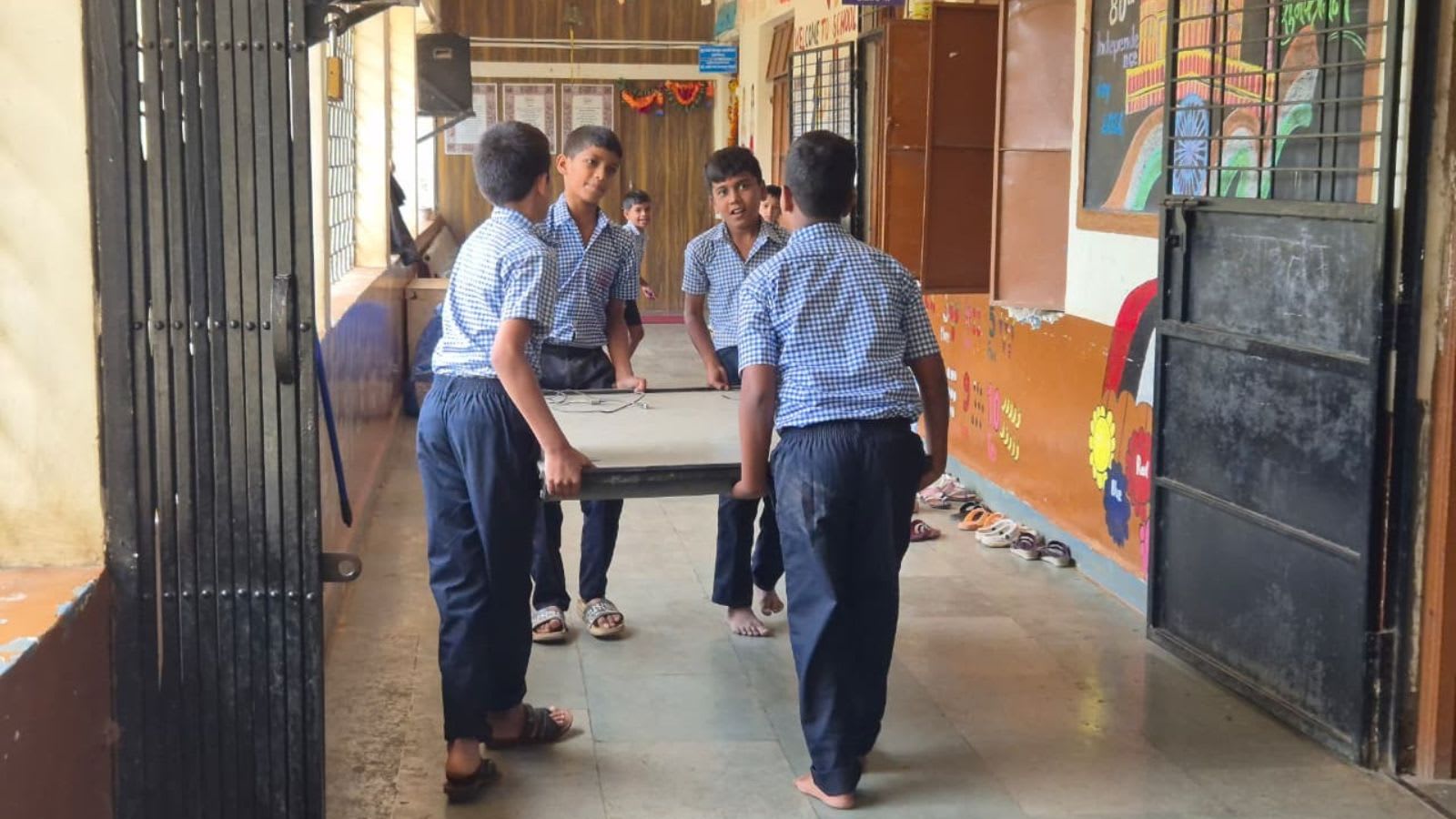
A single school building in Pimpri-Chinchwad is struggling to accommodate over 1,100 students across five different school units. Teachers report severe infrastructure decay, critical staff shortages, and space constraints that are hampering the quality of education.
The Crisis of Infrastructure in Pimpri-Chinchwad Schools
A disturbing reality has emerged within the educational landscape of Pimpri-Chinchwad, where a single three-storey building serves as the educational home for five distinct school units. With a combined enrollment exceeding 1,100 students, the facility is buckling under the pressure of overcrowding. This situation highlights a systemic failure to provide adequate physical space for a growing student population, leaving educators and administrators in a perpetual state of crisis management.
The Infrastructure Deficit
The building currently houses the Bharat Ratna Maulana Abdul Kalam Azad Urdu School (nursery and primary) alongside the Prabodhankar Thakare Vidya Mandir (nursery and primary) and the PCMC’s Thakare Secondary School. The resulting congestion is not merely an inconvenience; reports indicate crumbling infrastructure, including broken boards and insufficient classroom availability. These conditions create a suboptimal learning environment that directly contradicts the basic standards required for effective pedagogical delivery.
The Human Capital Gap
Beyond the physical decay, the schools are suffering from chronic understaffing. Teachers, speaking on the condition of anonymity due to the sensitivity of their employment, have highlighted that staff shortages persist across nearly every department. When a school lacks the necessary personnel to manage classroom dynamics, provide individualized attention, or maintain administrative functions, the quality of education inevitably suffers, leaving students at a significant disadvantage compared to their peers in better-resourced institutions.
Systemic Implications
This scenario is emblematic of the broader challenges faced by municipal education systems in rapidly urbanizing areas. The attempt to maximize the utility of a single building by housing five different units suggests a lack of long-term urban planning or a failure to allocate sufficient budget for school construction. When infrastructure is stretched to this extent, the focus shifts from student development to mere logistical survival, creating a cycle of neglect that is difficult to break without significant intervention.
Future Outlook and Conclusion
If the current trajectory of resource scarcity continues, the educational outcomes for the 1,100 students in these units may be severely compromised. Future trends suggest that without a comprehensive audit and a commitment to expanding school infrastructure, the academic performance and safety of these students will remain at risk. Addressing these shortages requires not only an immediate infusion of capital for repairs but also a strategic reorganization of how municipal school units are distributed and staffed to ensure a sustainable future for local education.