How the government’s flagship PLI schemes are lagging in job creation
Source Entity
Ravi Dutta Mishra
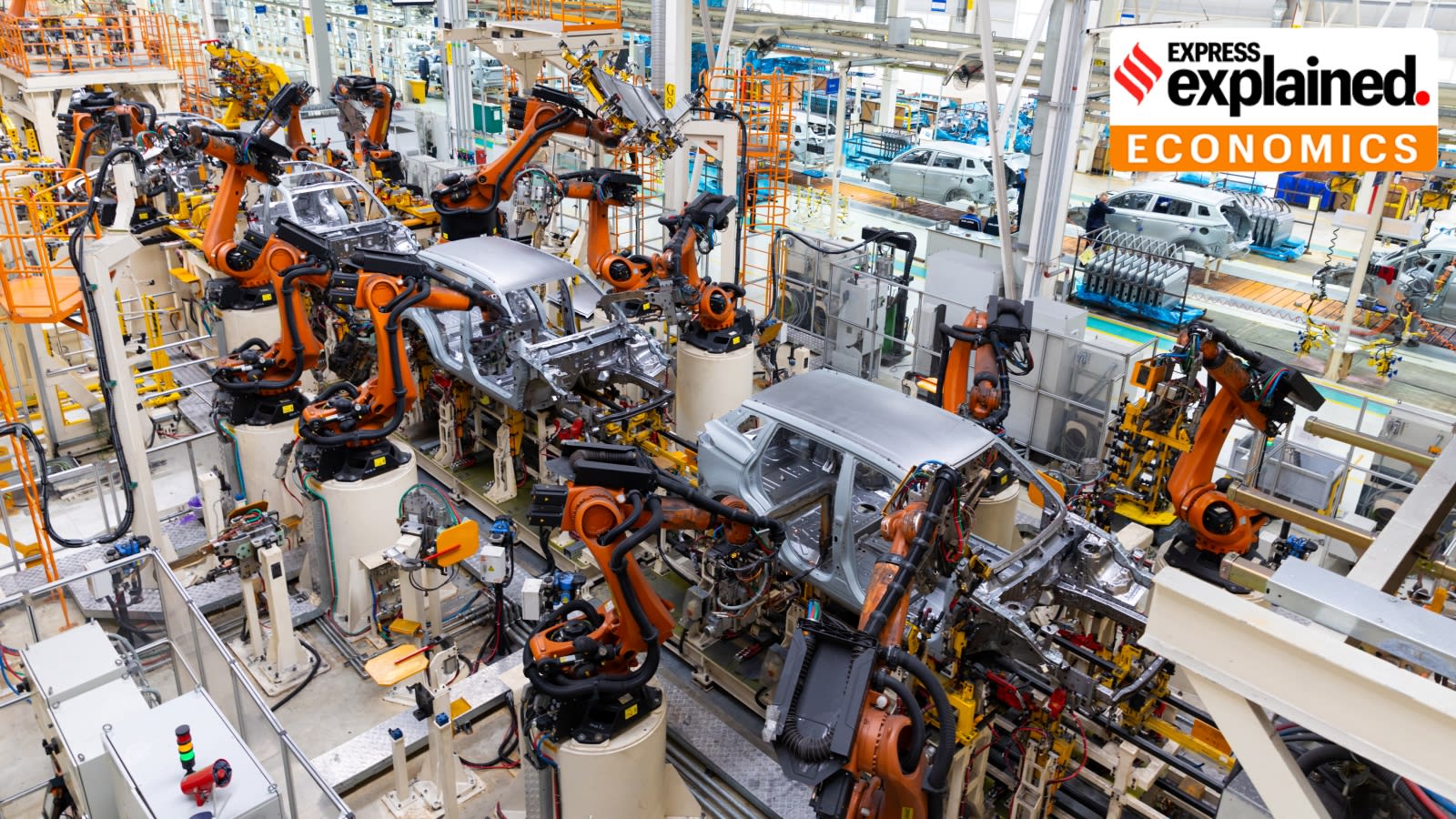
India's flagship Production-Linked Incentive (PLI) schemes have achieved significant investment and production targets but are significantly underperforming in job creation. A NITI Aayog report reveals only 28% of the projected employment target has been met, highlighting a major implementation gap.
Assessing the Performance of India's PLI Schemes
Launched in March 2020, the Indian government’s Production-Linked Incentive (PLI) schemes were designed as a cornerstone of the 'Atmanirbhar Bharat' (Self-Reliant India) initiative. With the primary goal of boosting domestic manufacturing and integrating India into global supply chains, the policy framework incentivized companies based on incremental sales. While the initiative has successfully attracted capital, a recent NITI Aayog report indicates a complex reality regarding its socioeconomic impact, specifically concerning employment generation.
Investment vs. Employment Disparity
According to the latest data, the 14 PLI schemes have reached 76% of their investment targets and 64% of their production targets as of March 2026. These figures suggest that the capital-intensive nature of these projects is functioning as intended, drawing significant private sector participation. However, the employment outcome remains starkly lower; only 8.49 lakh jobs have been created, which accounts for a mere 28% of the ambitious 30.18 lakh target. This disparity suggests that while the schemes are effective at stimulating industrial output, they are struggling to translate that growth into mass-scale labor absorption.
Sectoral Variances in Labor Absorption
Employment performance across the 14 schemes is highly uneven. The food products sector stands out as the primary engine of job creation, contributing 3.29 lakh positions, likely due to the labor-intensive nature of food processing and supply chain logistics. In contrast, large-scale electronics manufacturing and pharmaceutical production have generated 1.69 lakh and 1.14 lakh jobs, respectively. The fact that no other scheme has breached the one-lakh job mark indicates that the government's current incentive structure may be favoring high-automation industries that do not necessarily require a large workforce.
Economic Implications and Structural Challenges
This performance gap raises critical questions about the future of industrial policy in India. If the PLI schemes are intended to address the country's demographic dividend and provide meaningful employment to its massive youth population, the current trajectory is insufficient. The reliance on capital-intensive manufacturing suggests that the 'Make in India' narrative may need to pivot toward incentivizing sectors that prioritize human labor over robotic automation or high-tech assembly lines.
Future Trends and Policy Adjustments
Looking ahead, policymakers are likely to face pressure to recalibrate the incentive models. To bridge the gap between investment and job creation, the government may need to introduce 'employment-linked' riders or sub-targets within the existing PLI frameworks. This could encourage firms to adopt labor-intensive operational models alongside their technological upgrades. Without such adjustments, the schemes risk being viewed as successful for corporate balance sheets but failing to deliver on their promise of inclusive economic growth.
Conclusion
In summary, while the PLI schemes have proven successful in attracting investments and scaling production capacity, their failure to meet employment targets is a significant concern. The path forward requires a more nuanced approach that balances the need for industrial modernization with the urgent necessity of creating millions of jobs for the domestic workforce.