IIT Delhi 57th convocation: PM Narendra Modi’s key message to graduates
Source Entity
Vidheesha Kuntamalla
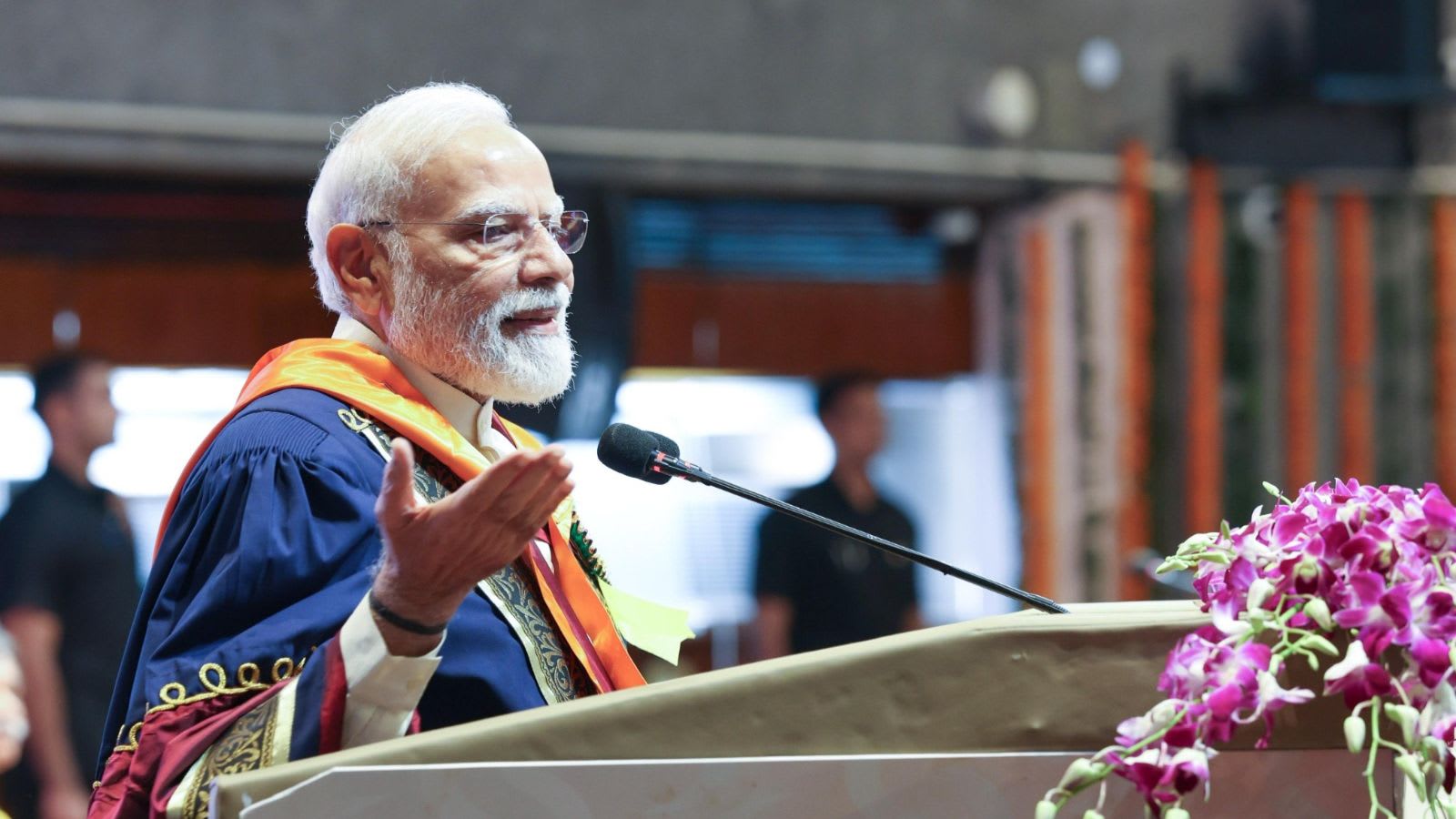
Prime Minister Narendra Modi addressed the 57th IIT Delhi convocation, emphasizing the need for lifelong learning in a rapidly changing world. He also highlighted the gender disparity among medal winners, calling for greater female representation in academic excellence.
PM Modi Calls for Academic Parity at IIT Delhi Convocation
At the 57th convocation ceremony of the Indian Institute of Technology (IIT) Delhi, Prime Minister Narendra Modi addressed the graduating class with a dual focus on the necessity of adaptability in the modern technological landscape and the pressing need for gender representation in higher education. While celebrating the achievements of the current cohort, the Prime Minister utilized the platform to underscore a significant structural concern: the disparity in the number of female medal winners.
The Imperative of Lifelong Learning
The Prime Minister’s address centered on the unpredictable nature of the global technological environment. By suggesting that it is impossible to forecast the state of the world even two or three decades from now, Modi highlighted that the traditional model of education—which often ends upon graduation—is no longer sufficient. He advocated for a mindset of perpetual curiosity, arguing that the ability to adapt to new, unforeseen challenges is the primary marker of future success in an era defined by rapid digital transformation and innovation.
Addressing the Gender Gap in STEM
A critical portion of the Prime Minister’s remarks was directed at the gender composition of the awardees. Upon presenting the institute’s highest honors, Modi observed that the number of female recipients was notably low. He explicitly stated that there "should have been more" female students among the medal winners, signaling a government-level push to improve the participation and success rates of women in elite STEM (Science, Technology, Engineering, and Mathematics) institutions.
Broader Implications for Higher Education
This call to action reflects a broader national objective to foster inclusivity within India's premier technical institutes. Historically, IITs have faced challenges in maintaining gender balance, a trend that policymakers are actively seeking to reverse through various scholarship programs and reservation policies. By highlighting this issue at a prestigious convocation, the Prime Minister is signaling that academic excellence must be measured not just by individual merit, but by the diversity of the talent pool being nurtured.
Future Trends and Institutional Accountability
Looking ahead, the pressure on institutions like IIT Delhi to demonstrate measurable progress in female representation is likely to intensify. The Prime Minister's public critique suggests that future institutional evaluations may rely more heavily on diversity metrics. Furthermore, his emphasis on "keeping the learning instinct alive" serves as a mandate for these institutes to evolve their curricula to be more flexible, ensuring that graduates remain relevant as automation and artificial intelligence redefine professional sectors.
Concluding Perspectives
The 57th convocation ceremony serves as a microcosm of India's current developmental trajectory: a nation striving to balance cutting-edge technological advancement with social equity. By challenging the graduates to remain curious and urging the institution to cultivate a more representative student body, the Prime Minister has set a clear agenda for the future of Indian higher education. Success for the next generation will depend not only on their technical prowess but on their ability to embrace change and promote an inclusive environment for all aspiring engineers.