Those involved in NEET paper leak will be punished: PM Modi at NDA parliamentary party meet
Source Entity
Latest News: Today's Latest News Headlines from India & World | Hindustan Times | Hindustan Times
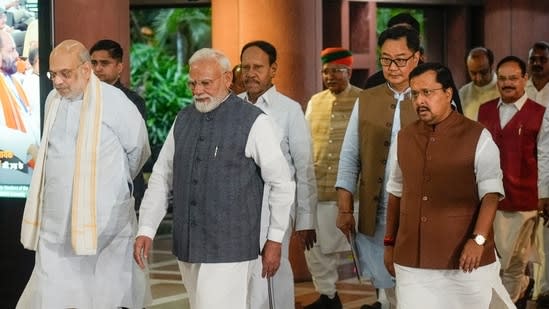
Prime Minister Narendra Modi has assured NDA lawmakers that those involved in the NEET paper leak will face strict legal action. The government is prioritizing student interests and implementing new measures to ensure a future-proof examination system.
Government Response to NEET Examination Irregularities
Prime Minister Narendra Modi recently addressed the National Democratic Alliance (NDA) parliamentary party, known as 'Mangal Milan,' to directly confront the controversy surrounding the NEET paper leaks. In a clear signal of government intent, the Prime Minister emphasized that the administration is committed to protecting the interests of students while ensuring that those responsible for compromising the integrity of the examination process face the harshest possible legal consequences. This move serves as a pivotal moment for the government to regain public trust amidst growing concerns over educational accountability.
Prioritizing Student Futures and Institutional Integrity
Central to the government's narrative is the assertion that immediate, decisive action was taken following the discovery of the leak. Union Parliamentary Affairs Minister Kiren Rijiju corroborated this, noting that the government successfully facilitated a re-examination, ensuring that the academic trajectory of affected students was not permanently derailed. By prioritizing the declaration of results and mitigating the delay, the administration aims to demonstrate that, despite the systemic breach, the state remains capable of protecting the aspirations of the country's youth.
Countering Political Narratives
During his address, the Prime Minister urged NDA lawmakers to actively engage with the youth to dispel anxieties and address the political discourse surrounding the issue. He explicitly called for lawmakers to expose what he termed 'conspiracies' by the opposition, specifically referencing the recent protests led by the Cockroach Janta Party (CJP). This highlights a strategic effort to frame the NEET crisis not just as a procedural failure, but as a battleground for political narrative control where the government seeks to maintain its credibility against demands for ministerial resignations.
Strategic Reforms for a Foolproof System
Beyond immediate punitive measures, the government is shifting its focus toward long-term systemic reform. Minister Rijiju underscored that the Prime Minister has outlined specific steps designed to avert future leaks, emphasizing the need for a 'foolproof system.' This indicates that the government recognizes the vulnerability of current examination infrastructure and is moving to implement more robust, possibly technology-driven, security protocols to prevent similar incidents from recurring in the future.
Broader Implications for Governance
The NEET paper leak incident carries significant weight for the current administration, as it touches upon the aspirations of millions of Indian students. The government's insistence on balancing strict punishment for the guilty with the protection of student interests suggests a dual approach: maintaining a 'zero tolerance' policy for criminal negligence while attempting to stabilize the educational landscape. The success of these initiatives will likely be measured by the ability of the government to restore faith in the national entrance exam process and minimize the political fallout from opposition-led agitations.
Conclusion
In summary, the government's response to the NEET controversy is a calculated effort to project strength, accountability, and reform. By mobilizing the NDA parliamentary party to communicate directly with the public, the administration aims to neutralize political criticism while laying the groundwork for a more secure examination framework. The coming months will be critical in determining whether these measures are sufficient to quell public concern and successfully insulate the national education system from future disruptions.
Multiple Citing Sources
Verification Required?