50 crore people lifted out of extreme poverty, Maoism eliminated: PM Modi
Source Entity
The Indian Express
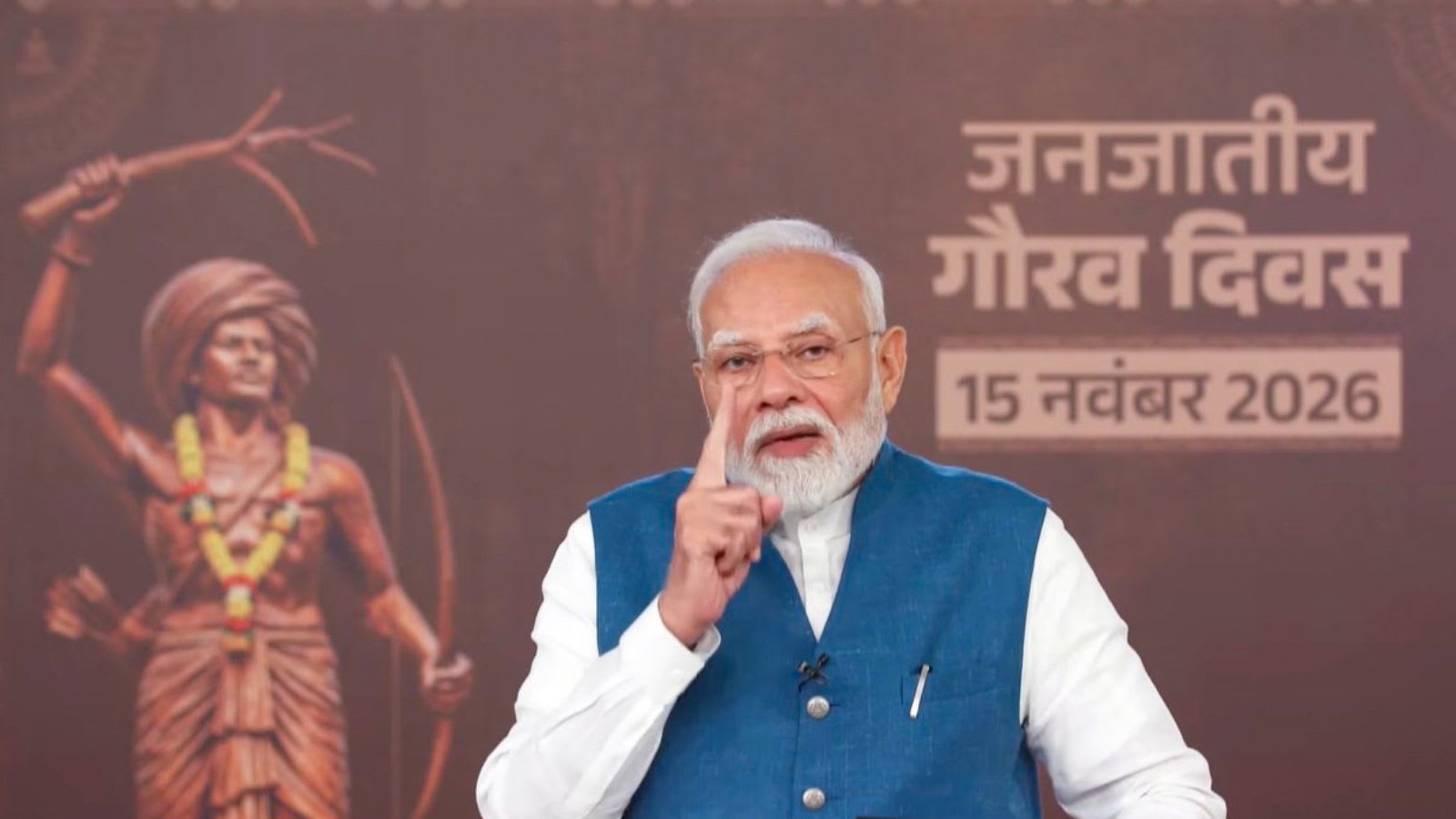
Prime Minister Narendra Modi recently highlighted the lifting of 50 crore people from extreme poverty and the significant decline of Maoist insurgency in India. Speaking on Janjatiya Gaurav Diwas, he credited these milestones as transformative achievements for tribal communities.
A Milestone in India’s Socio-Economic Development
Prime Minister Narendra Modi’s recent address during the Janjatiya Gaurav Diwas celebrations, marking the 151st birth anniversary of the tribal freedom fighter Birsa Munda, served as a platform to highlight two transformative milestones in modern Indian history. By citing a World Bank report, the Prime Minister noted that approximately 50 crore individuals have been lifted out of extreme poverty over the last 12 to 13 years. This achievement, described as one of the most significant since independence, underscores the impact of sustained welfare interventions and economic policy shifts aimed at reaching the most vulnerable segments of the population.
Addressing the Maoist Insurgency
Beyond economic indicators, the Prime Minister focused heavily on the state of internal security, specifically the decline of Naxalism. Highlighting that 125 districts were affected by Maoist violence in 2014, the government claims that the systematic elimination of this insurgency has been a cornerstone of its administrative strategy. The narrative presented suggests that previous regimes were passive observers, allowing the insurgency to flourish and directly impacting the safety and rights of tribal citizens, who were often caught in the crossfire or disenfranchised by the militant groups.
Impact on Tribal Communities
Central to the Prime Minister’s speech was the emphasis on the welfare of tribal communities, who are often the most affected by both poverty and regional instability. By addressing the gathering in Gadchiroli, Maharashtra, the government highlighted that the reduction in Maoist influence has restored fundamental rights, such as the right to vote, which were previously compromised in conflict-ridden zones. The discourse emphasizes that the state has moved from a position of 'mute spectatorship' to one of active protection and empowerment.
Historical Context and Governance
The Prime Minister’s remarks serve as a critique of past governance, suggesting that previous administrations failed to address the systemic issues of Naxalism and economic exclusion. By framing the reduction of violence as a prerequisite for social development, the government asserts that the elimination of insurgency has provided the necessary stability for welfare schemes to reach remote areas. This reflects a broader trend of aligning security objectives with socio-economic development to ensure that tribal regions are fully integrated into the national mainstream.
Future Implications and Trends
Looking forward, these developments suggest a continued focus on infrastructure development and digital inclusion in historically underdeveloped areas. The government's narrative signals a commitment to maintaining the current security posture to ensure that economic gains are not reversed. As India continues to track these metrics, the success of these policies will likely be measured by the sustained improvement in the quality of life for tribal populations and the continued stabilization of previously conflict-prone districts.
Conclusion
The dual narrative of economic liberation and internal security stabilization forms the core of the government's current political messaging. By linking the lifting of 50 crore people out of poverty with the eradication of Maoist violence, the Prime Minister aims to consolidate a vision of 'inclusive development.' The emphasis on the legacy of Birsa Munda serves to reinforce the government’s commitment to tribal empowerment, framing the last decade as a period of significant correction and progress for marginalized communities.