PMO reviews Ambedkarite writings in university curricula after anonymous post calls them ’poison’
Source Entity
India Latest News: Top National Headlines Today & Breaking News | The Hindu
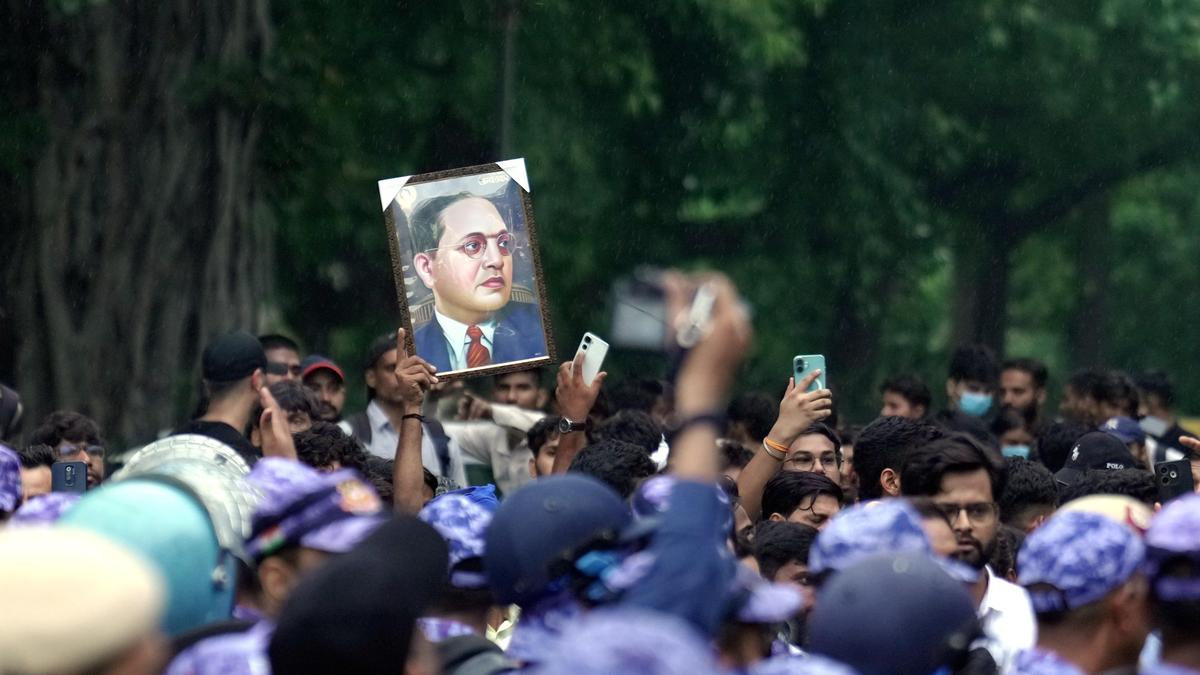
The Prime Minister's Office has initiated a review of Ambedkarite literature in central university curricula following an anonymous social media complaint. Academics are criticizing this move as an unprecedented infringement on academic autonomy and the established oversight roles of the UGC.
PMO Review of Academic Curricula Sparks Controversy
Recent reports indicate that the Prime Minister’s Office (PMO) has initiated an investigation into the inclusion of specific intellectual works within the curricula of central universities. This move was reportedly triggered by an anonymous social media post that labeled foundational texts by figures such as B.R. Ambedkar, Jyoti Rao Phule, Gail Omvedt, Braj Ranjan Mani, and Sharmila Rege as 'poison.' The subsequent directive, issued on September 27, 2026, required central universities to provide comments on these materials and report on course enrollment figures, marking a significant intervention in academic affairs.
The Shift in Oversight Mechanisms
Historically, the management and vetting of university syllabi fall under the jurisdiction of the Department of Higher Education and the University Grants Commission (UGC). These bodies are structured to maintain academic rigor and institutional autonomy. By bypassing these traditional channels, the PMO’s direct involvement in auditing specific readings suggests a shift toward centralized executive oversight of academic content. Critics argue that this disrupts the balance of power between autonomous educational institutions and the state, potentially chilling the environment for intellectual discourse.
Intellectual Significance of the Scrutinized Works
The authors targeted in the anonymous complaint—most notably B.R. Ambedkar and Jyoti Rao Phule—are foundational to the study of social justice, caste dynamics, and egalitarian philosophy in India. Their works provide critical frameworks for understanding historical inequality and the evolution of the Indian Constitution. The scrutiny of these texts by an executive office raises concerns about the potential marginalization of critical social science perspectives that are vital for a comprehensive understanding of India’s social history.
Academic Freedom and Institutional Autonomy
Academic freedom is predicated on the ability of scholars and students to engage with a diverse range of literature without fear of political reprisal. When an anonymous social media post can trigger an inquiry from the highest office in the country, it creates an environment of self-censorship. Academics, such as Kancha Ilaiah Shepherd, have explicitly questioned the legitimacy of this interference, noting that universities should remain spaces for debate rather than sites for ideological regulation.
Broader Implications and Future Trends
The precedent set by this inquiry may have long-term implications for how higher education institutions handle curriculum design. If political offices continue to intervene based on social media pressure, universities may face increased pressure to sanitize their reading lists to avoid controversy. This trend threatens to diminish the role of universities as independent crucibles of critical thought, potentially leading to a more homogenized academic environment that reflects current political sensitivities rather than objective historical analysis.
Conclusion
Ultimately, the PMO’s intervention into university curricula represents a pivotal moment for academic governance in India. While the government maintains the right to oversee educational standards, the reliance on anonymous complaints to review established academic texts poses a significant challenge to the autonomy of central universities. Moving forward, the academic community will likely remain vigilant, seeking to preserve the integrity of their curricula against external ideological pressures while upholding the legacy of the scholars currently under scrutiny.
Verification Required?