Police must urgently curb procedural lapses: Evidence must be made trustworthy
Source Entity
Latest News: Todays Latest News Headlines from India & World | Hindustan Times | Hindustan Times
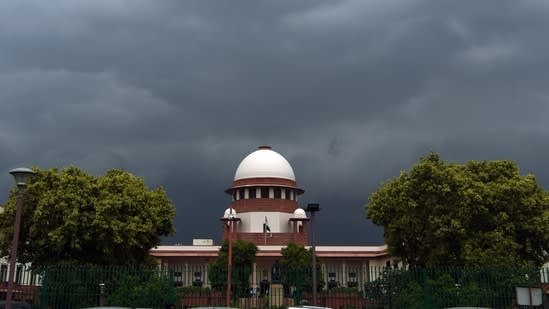
Procedural failures in police investigations are undermining the Indian justice system, leading to acquittals and bail for accused individuals. Reforms are essential to shift from a colonial-era focus on control to a rights-based framework that ensures admissible evidence.
The Crisis of Procedural Integrity in Indian Policing
The recent series of judicial outcomes highlighting police procedural lapses underscores a systemic crisis that threatens the rule of law. From the failure to inform an accused woman of her arrest grounds to the collapse of complex cases against high-profile figures due to thin, inferential evidence, the judiciary is increasingly forced to intervene. These incidents, including the delayed acquittal of a clinic in Hisar due to a simple technicality regarding required signatures, demonstrate that the investigative process is suffering from a chronic inability to meet basic legal standards.
The Weight of Colonial Legacies
To understand why these lapses persist, one must look at the historical architecture of the Indian legal system. The Code of Criminal Procedure of 1861, and its 1989 successor, were designed by a colonial administration that prioritized the maintenance of order and state control over the protection of individual rights. This foundational philosophy often manifests in contemporary policing as an emphasis on 'getting the job done' rather than 'doing the job correctly,' leading to shortcuts that ultimately compromise the durability of criminal prosecutions.
Judicial Intervention and Constitutional Promises
The Supreme Court of India has attempted to bridge this gap through landmark rulings like Joginder Kumar and DK Basu. These decisions were intended to turn the constitutional promise of due process into concrete, enforceable mandates. By requiring specific justifications for arrests and rigorous adherence to paperwork, the Court sought to curb arbitrary power. However, as the provided evidence shows, the gap between these judicial ideals and ground-level police execution remains vast, leaving the state’s litigation efforts fragile and prone to dismissal.
The Cost of Inefficiency
When police work is riddled with 'procedural lapses,' the broader implications are severe. The state’s interest in finality is defeated when cases dissolve decades later, causing emotional and financial exhaustion for all parties involved and wasting precious judicial resources. Fast and durable litigation is only possible when the state ensures that every 't' is crossed and every 'i' is dotted. The current trend of 'inference stacked on inference' is not only legally insufficient but also erodes public trust in the state's capacity to deliver justice.
Future Trends and Reform Imperatives
Looking ahead, the shift toward a more robust, rights-based investigative framework is non-negotiable. Future trends must focus on institutionalizing training that emphasizes the evidentiary value of documentation. If the investigative process remains broken, the state will continue to face the embarrassment of high-profile acquittals and the frustration of stalled proceedings. To reclaim the integrity of the criminal justice system, police departments must move beyond colonial mindsets and prioritize the creation of trustworthy, unimpeachable evidence that can withstand the scrutiny of a modern, rights-conscious judiciary.
Verification Required?