'Resign now': Kerala Congress deletes 'dear' CJI post after backlash, BJP fury
Source Entity
KARAN MANRAL
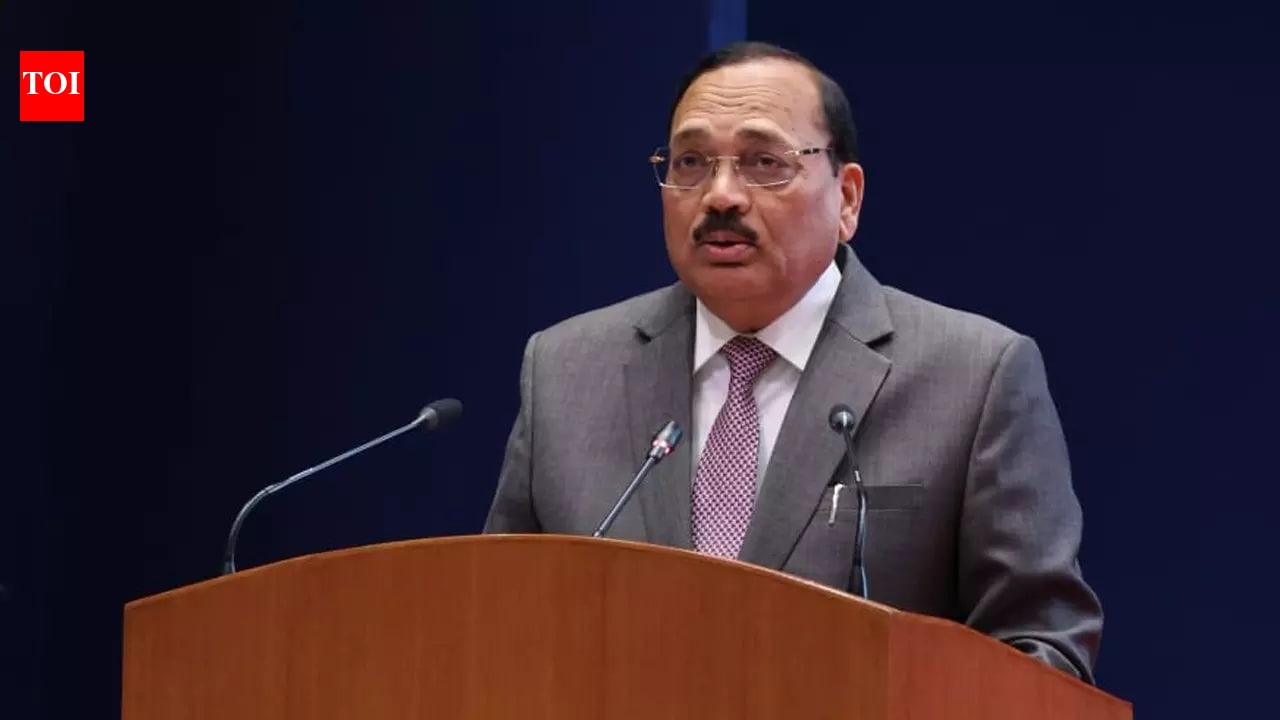
Indian political discourse is currently defined by shifting public protest regulations and internal party critiques. Key figures like Shivraj Chouhan and Kapil Sibal have offered contrasting views on institutional accountability and judicial impact on democratic participation.
The Interplay of Institutional Trust and Political Accountability
Recent political discourse in India has been marked by a intense debate regarding the role of constitutional bodies and the space afforded to public dissent. The commentary provided by senior political figures highlights a fractured landscape where institutional trust is often filtered through the lens of electoral success or failure. When Shivraj Chouhan attributes the electoral setbacks of the Congress party to 'directionless leadership' rather than the Election Commission, he is essentially framing internal party governance as the primary arbiter of political health, effectively insulating constitutional machinery from partisan blame.
The Contestation of Public Space
The reaction from the Citizens for Justice and Peace (CJP) regarding the relocation of designated protest sites—marked by the provocative assertion, 'Ab poora desh Jantar Mantar banega!'—signals a deep-seated anxiety regarding the erosion of public assembly rights. Jantar Mantar has historically served as the epicenter of democratic expression in New Delhi. By challenging the state’s authority to restrict these sites, activists are highlighting a broader trend of administrative encroachment on the right to protest, suggesting that the spatial containment of dissent is a precursor to its eventual silencing.
Judicial Intervention and Public Perception
The role of the Supreme Court remains a focal point for political actors seeking validation of their democratic ideals. Kapil Sibal’s recent pivot—praising the Court for restoring the faith of the people after an earlier period of vocal frustration—underscores the volatile relationship between the legal system and political opposition. This shift suggests that for many in the political sphere, the judiciary is viewed as a final bulwark against perceived executive overreach, even as that same judiciary is often subject to intense public and political scrutiny.
Analyzing the Political Narrative
These disparate events are linked by a common theme: the struggle to define the boundaries of democratic institutions. Whether it is the Election Commission’s role in electoral integrity, the state’s management of protest sites, or the Supreme Court’s role in adjudicating constitutional rights, each entity is currently being tested. The discourse suggests that political actors are increasingly utilizing these institutional interactions to frame their own narratives of crisis and recovery.
Future Trends in Indian Political Discourse
Moving forward, it is likely that the tension between administrative control and the right to dissent will escalate. As political parties continue to grapple with electoral outcomes, the rhetoric surrounding the 'fairness' of institutions will likely intensify. The reliance on judicial intervention as a primary tool for political redress will likely continue, placing immense pressure on the Supreme Court to maintain its perceived neutrality in an increasingly polarized environment.
Conclusion
In summary, the current political climate is defined by a complex interplay between internal party dynamics, the regulation of public expression, and the perceived efficacy of the judiciary. While leadership challenges continue to dominate the narrative for parties like Congress, the broader issue of how the state interacts with its citizens’ right to protest remains a critical indicator of the health of Indian democracy. The ongoing reconciliation between institutional actions and public expectations will remain the defining feature of this political cycle.
Multiple Citing Sources