Pomera’s sleek distraction-free writing machine is just too small
Source Entity
Terrence O’Brien
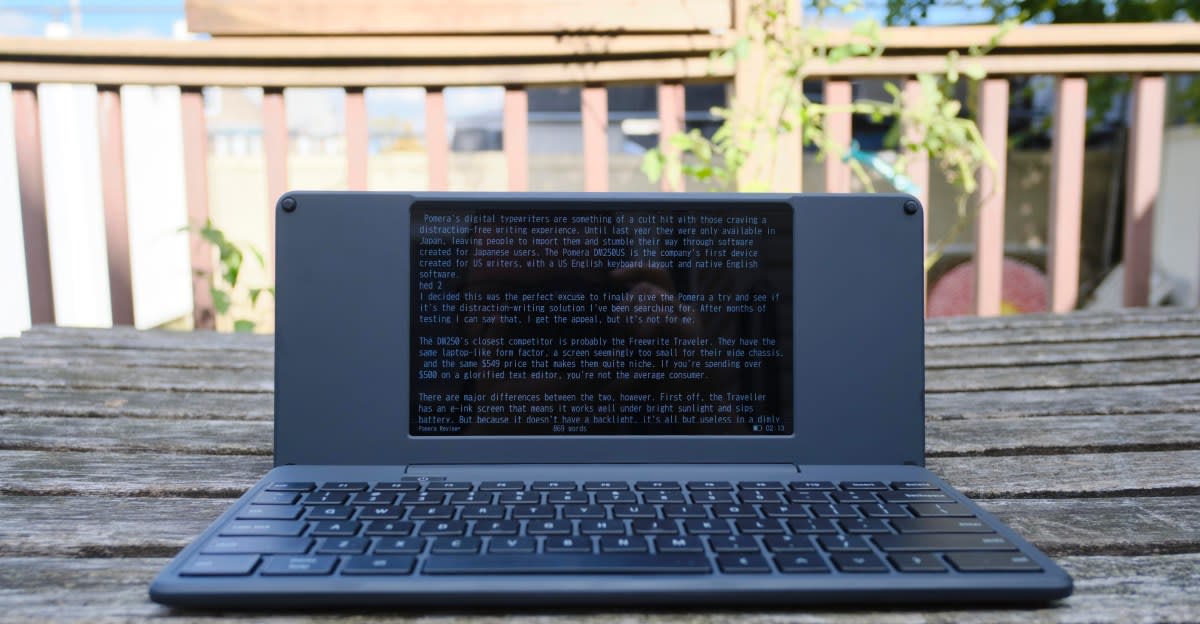
Pomera has launched the DM250US, its first distraction-free digital typewriter tailored for the US market. This device aims to bridge the gap for writers seeking portable, focused tools previously only accessible via Japanese imports.
The Rise of Distraction-Free Writing Hardware
The landscape of modern digital creation is notoriously cluttered, with notifications, web browsing, and multi-tasking often impeding the writing process. Pomera’s line of digital typewriters has long served as a cult solution for this problem, offering a hardware-based environment that strips away the internet to prioritize focus. While these devices have enjoyed a dedicated following in Japan for years, they remained largely inaccessible to the American market, forcing enthusiasts to navigate complex import processes and Japanese-language interfaces.
Filling a Long-Standing Market Void
Historically, the United States saw a different trajectory for word processing hardware. Devices like the AlphaSmart Neo were once staples in educational environments, favored for their durability and lack of digital distractions. However, as general-purpose computing devices became more portable and feature-rich, the niche for dedicated writing hardware in the US withered. Pomera’s arrival in the US represents a shift in how writers value their tools, moving away from the 'jack-of-all-trades' philosophy toward specialized, hardware-centric workflows.
The Strategic Pivot to the US Market
Until recently, the barrier to entry for Pomera devices was significant. Users were required to import units directly from Japan, which introduced hurdles such as non-native keyboard layouts and software designed exclusively for Japanese input. The introduction of the $549 Pomera DM250US marks a pivotal expansion strategy, as it is the company’s first iteration explicitly engineered for US writers, featuring a standard English layout and localized software.
Design Constraints vs. User Experience
Despite the excitement surrounding the US launch, the hardware presents a unique set of challenges. Critics have noted that the device’s physical design, while impressively compact and foldable, may prioritize portability to a fault. For many writers, the 'too small' form factor creates ergonomic hurdles that can impact long-form drafting sessions. This highlights the ongoing tension in hardware design between the desire for extreme portability and the necessity of ergonomic comfort.
Future Trends in Specialized Tech
The launch of the DM250US reflects a broader trend in the tech industry: the resurgence of 'analog' or 'dedicated' electronics. As users become increasingly fatigued by the constant connectivity of smartphones and PCs, the demand for hardware that does 'one thing well' is growing. Future trends suggest that we may see more manufacturers targeting this 'distraction-free' segment, provided they can balance the specialized nature of these tools with the comfort and accessibility required by the average consumer.
Conclusion
Pomera’s entry into the US market with the DM250US is a significant milestone for the niche community of distraction-free writers. While the device offers a long-awaited solution for those seeking a focused writing environment, its success will likely depend on whether users can adapt to its distinct physical constraints. Ultimately, it stands as a testament to the enduring appeal of hardware that values intent over constant connectivity.