Sanskrit varsity suspension row: Prakash Raj says protesting students ‘are not Savarkars’ to tender apology
Source Entity
India Latest News: Top National Headlines Today & Breaking News | The Hindu
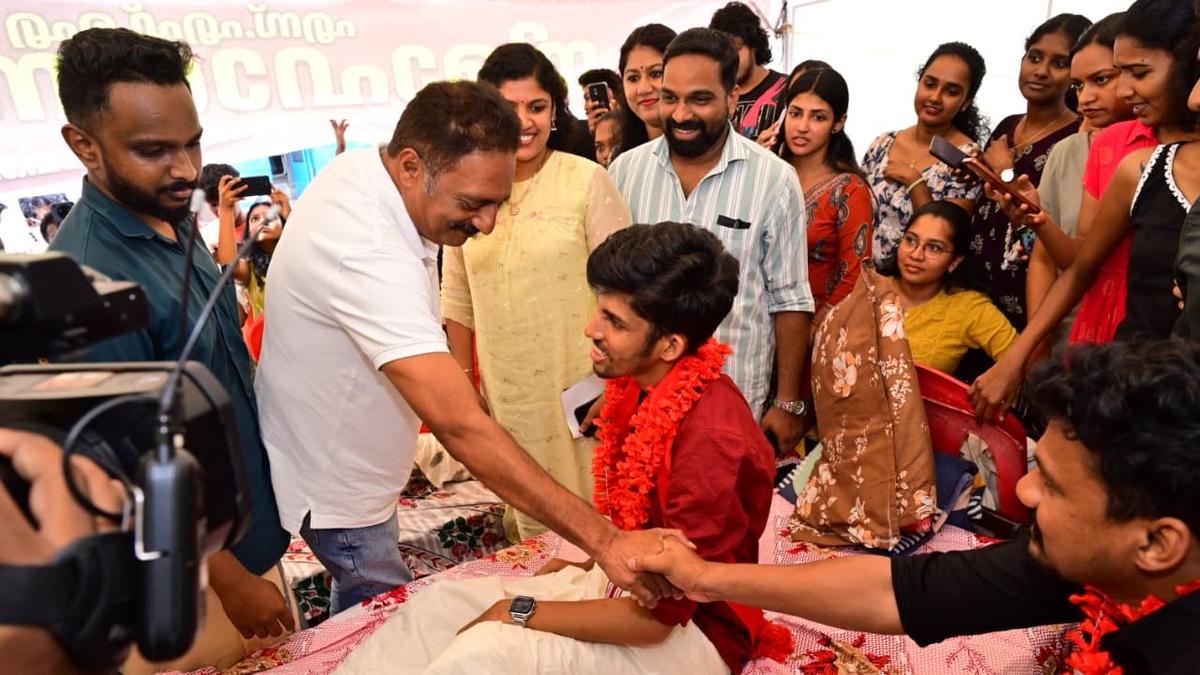
Actor Prakash Raj visited the Sree Sankaracharya University of Sanskrit to support students suspended for protesting. He criticized the university's demand for apology letters, comparing the students' democratic right to dissent against historical figures like Savarkar.
The Intersection of Academic Dissent and Political Rhetoric
On November 7, 2026, the Sree Sankaracharya University of Sanskrit (SSUS) at Kalady became the epicenter of a burgeoning debate regarding student rights and institutional discipline. Actor and activist Prakash Raj’s visit to the campus to support sixteen suspended activists from the Students Federation of India (SFI) has brought national attention to the university's controversial policy. The administration’s mandate, which conditions the lifting of suspensions upon the submission of written apologies for past protests, has been framed by students and their supporters as an infringement on their democratic right to dissent.
The Rhetoric of Apology: Savarkar and Historical Context
Central to Prakash Raj's intervention was his pointed critique of the university’s requirement for 'sorry petitions.' By invoking the historical figure of Vinayak Damodar Savarkar—who famously petitioned the British colonial government for clemency—Raj sought to draw a sharp contrast between current student activists and historical figures often associated with political compromise. This rhetoric serves to embolden the students, positioning their refusal to apologize not as an act of insubordination, but as a principled stand against what they perceive as an authoritarian requirement to suppress inquiry.
Gandhian Non-Violence and Constitutional Rights
Raj further contextualized the student movement by framing their actions within the ideologies of Mahatma Gandhi and B.R. Ambedkar. By asserting that the students are utilizing the 'strength of what Gandhi has taught them' and exercising the rights granted by 'Babasaheb Ambedkar,' the narrative shifts from a local disciplinary dispute to a broader philosophical defense of the Indian Constitution. This framing is designed to resonate with a public that values the right to protest as a fundamental pillar of Indian democracy, effectively challenging the university's characterization of the protests as mere breaches of disciplinary norms.
The Future of Campus Activism
The standoff at SSUS highlights a growing trend in Indian higher education where administrative disciplinary actions are increasingly viewed through a political lens. The threat to prevent students from appearing for their examinations acts as a significant pressure point, raising concerns about the potential for long-term academic consequences for students who choose to exercise their right to protest. Prakash Raj’s promise to join the protesting students if they remain barred from their exams signals a potential escalation, suggesting that external public figures may play an increasingly active role in mediating or intensifying these campus conflicts.
Institutional Implications and Concluding Thoughts
Ultimately, the situation at Kalady poses a difficult question for academic institutions: where does the line lie between maintaining order and stifling legitimate student advocacy? As the university Syndicate insists on adherence to disciplinary norms, the students and their allies are demanding a space for critical discourse. The resolution of this specific row will likely set a precedent for how universities in the region handle student dissent in the coming years, balancing the need for academic structure against the protected right of students to question authority and advocate for their rights.
Verification Required?