Restoration of Retinal Regenerative Potential
Source Entity
Hacker News
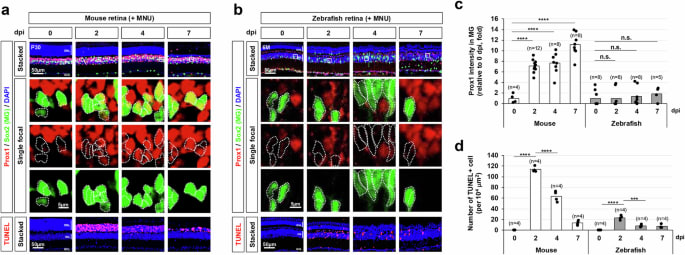
Researchers have discovered that Prox1 protein levels significantly increase in mouse retinal Müller glia following various forms of retinal injury. This upregulation suggests a potential role for Prox1 in the regenerative response of retinal tissue.
The Role of Prox1 in Retinal Regeneration
Recent scientific investigations have shed light on the molecular mechanisms governing retinal repair, specifically focusing on the expression of the Prox1 protein within the mouse retina. While Prox1 is known for its stable expression in retinal neurons, new findings indicate that its levels are not static in other cell types. Specifically, Müller glia (MG)—the primary glial cells of the retina—demonstrate a dynamic response to injury by significantly upregulating Prox1 protein levels.
Mechanisms of Prox1 Upregulation
The study highlights that this elevation in Prox1 is a reactive process triggered by physical and chemical damage to the retina. When photoreceptors (PR) undergo degeneration due to exposure to N-methyl-N-nitrosourea (MNU), the immunostaining signals for Prox1 in Müller glia show a marked increase. This specificity is notable because, while Prox1 levels rise in the MG, the intensities of the protein in other retinal subsets remain remarkably stable, suggesting that Prox1 may serve as a specialized marker or mediator for the glial response to trauma.
Broadening the Scope of Retinal Damage
The research further confirms that this phenomenon is not limited to a single type of injury. Similar patterns of Prox1 upregulation were observed following intensive light exposure, which is known to cause significant photoreceptor damage. Furthermore, the intravitreal injection of N-methyl-D-aspartate (NMDA)—a chemical agent that induces the degeneration of bipolar cells (BCs), amacrine cells (ACs), and retinal ganglion cells (RGCs)—also elicited the same molecular response in Müller glia. This consistency across different injury models reinforces the hypothesis that Prox1 is a central component in the retinal injury-induced signaling pathway.
Implications for Regenerative Medicine
The ability of Müller glia to respond to injury is a subject of intense study in regenerative medicine. In many non-mammalian vertebrates, Müller glia can dedifferentiate and regenerate lost retinal neurons, a capability that is largely restricted in mammals. The discovery that Prox1 expression is modulated by injury provides a potential entry point for researchers to manipulate these cells. By understanding how Prox1 levels influence the MG state, scientists may eventually be able to unlock latent regenerative potential in mammalian retinas.
Future Research Trajectories
Moving forward, the scientific community must determine whether the upregulation of Prox1 is a protective mechanism or a precursor to a regenerative shift. If Prox1 is indeed a driver of the regenerative response, future therapies could focus on modulating this protein to enhance the repair of damaged retinal tissue. The fact that this protein responds to various forms of cellular death—whether PR, BC, AC, or RGC-related—suggests that it plays a fundamental role in the retinal stress response, making it a promising target for future clinical interventions aimed at treating degenerative eye diseases.