Why Punjab can’t shake off drug crisis: Role of history, geography, economics
Source Entity
Manraj Grewal Sharma
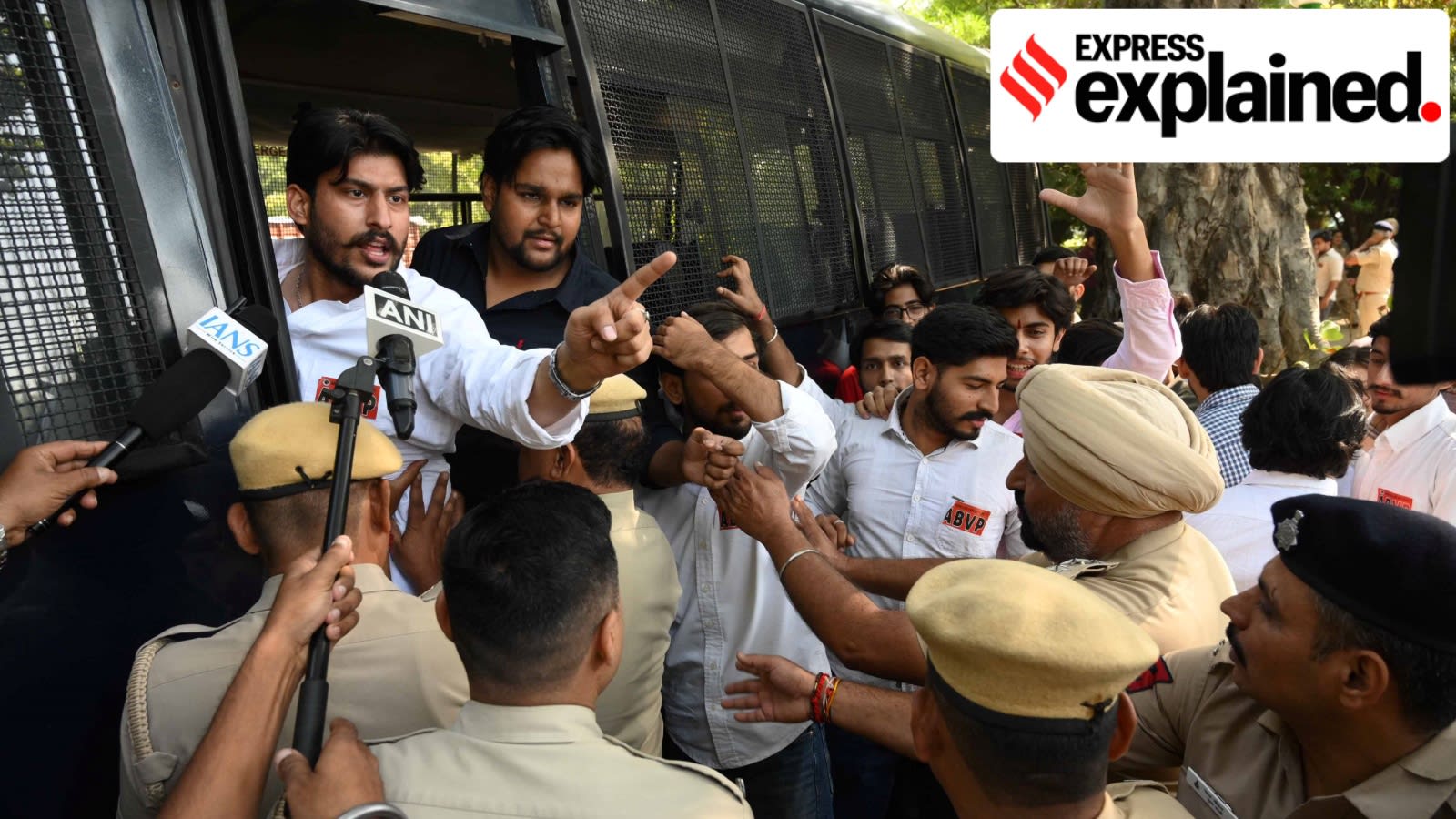
Punjab police seized the body of a suspected overdose victim, Daljit Singh, while his family attempted to join an anti-drug protest. The incident has intensified public outrage, with the father of the deceased now reported missing amid the ongoing drug crisis.
The Seizure of a Coffin: A New Low in Punjab’s Drug Crisis
The recent incident in Mansa, Punjab, where police forcibly seized the body of 34-year-old Daljit Singh, marks a distressing escalation in the state's long-standing struggle with substance abuse. As the family attempted to transport the coffin to a protest site, they were met with a heavy police presence that reportedly utilized force to intercept the procession. This event, described as a "first" in the region's history, highlights the growing friction between grieving families and law enforcement over the handling of drug-related fatalities.
The Context of Protest and Tragedy
The family of Daljit Singh, hailing from Bhamme Kalan village, was en route to join an ongoing agitation centered on the death of Parvinder Singh Jhota. Jhota, a prominent anti-drug activist, was killed after publicly accusing a medicine shop owner of illicit drug sales. The convergence of Daljit’s funeral procession with the broader protest movement against Jhota’s killing illustrates the deep-seated public frustration regarding the state's inability to curb the drug menace.
Conflicting Narratives and Legal Tensions
A critical point of contention is the classification of Daljit Singh's death. While his family maintains he died due to a drug overdose—a common, tragic reality in the region—the police have categorized the death as a "murder." Crucially, the authorities have provided no substantiating details for this claim, leaving the family in a state of uncertainty. The subsequent disappearance of Daljit’s father following the police intervention has further fueled suspicion and distress, casting a dark shadow over the administrative handling of the case.
Data and the Magnitude of the Crisis
The struggle in Punjab is not merely anecdotal; it is quantified by alarming statistics. According to the National Crime Records Bureau (NCRB) 2024 data, Punjab leads India in drug trafficking cases, recording 6,060 instances. Furthermore, the state reported 106 drug overdose deaths, a figure that underscores the lethal efficacy of the drug trade currently plaguing the region. This data reinforces why the public remains highly sensitive to how the state handles individual deaths attributed to addiction.
Broader Implications for Public Trust
The decision by law enforcement to "seize" a body from a grieving family is likely to have significant socio-political repercussions. In a climate where anti-drug activists are being targeted, such actions by the police risk being interpreted as attempts to suppress dissent or manage the optics of the drug crisis rather than addressing the root causes of the addiction epidemic. The combination of a missing relative and an "unaccounted for" body suggests a dangerous breakdown in communication and trust between the state and its citizens.
Conclusion: A Path Forward
As Punjab continues to battle a scourge that has persisted for over a decade and a half, the events in Mansa serve as a grim reminder of the human cost involved. Without transparency regarding the death of Daljit Singh and the location of his father, the state risks further alienating a population already exhausted by the cycles of addiction and violence. Moving forward, the government faces immense pressure to restore accountability and provide clear, evidence-based answers to families caught in this devastating cycle.