40 years ago September 29, 1986: Violence and arrests in Punjab
Source Entity
The Indian Express
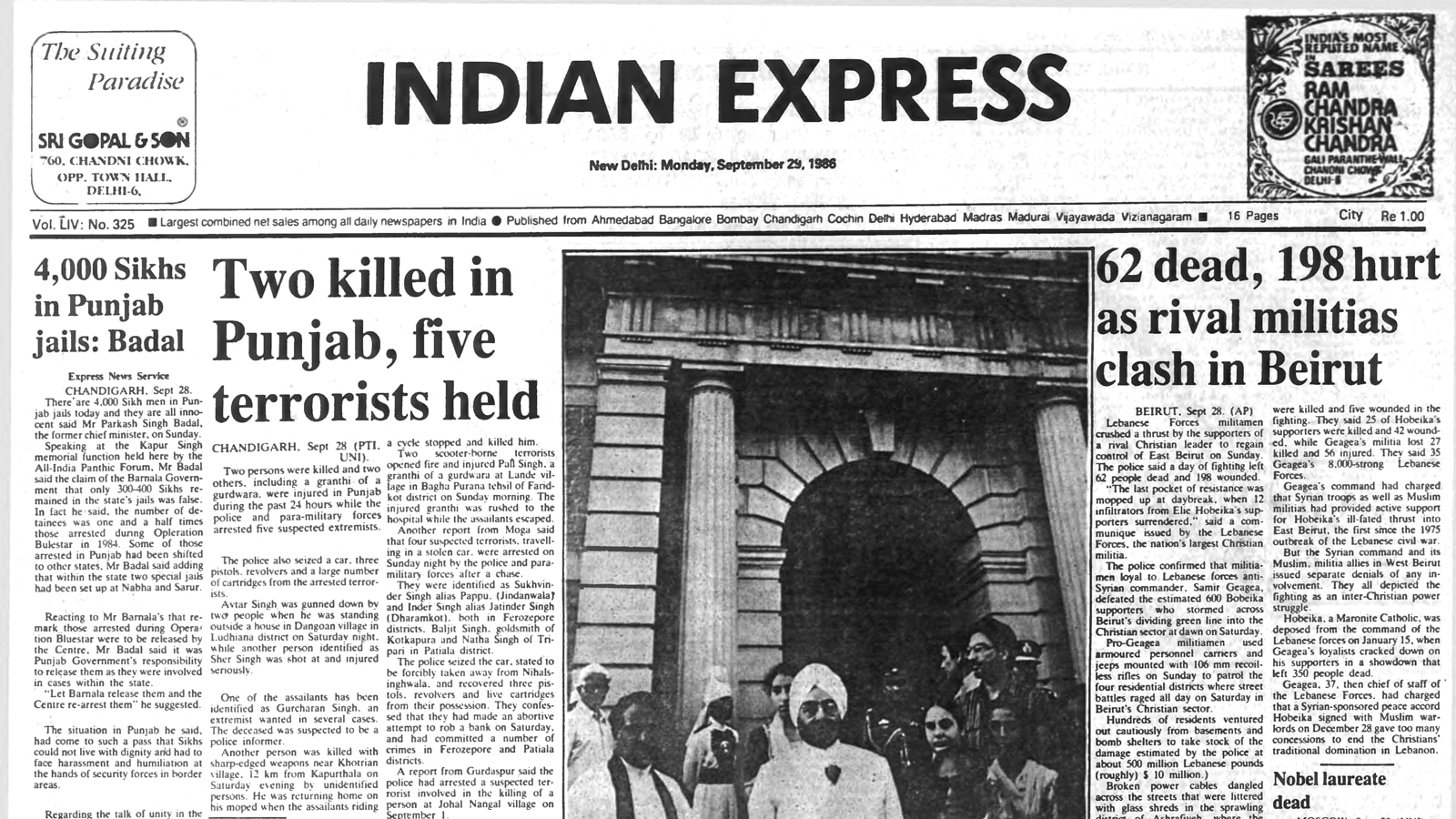
In 1986, Punjab faced significant civil unrest characterized by targeted violence and political disputes over the detention of Sikh citizens. Former Chief Minister Parkash Singh Badal challenged official government figures, alleging that thousands of innocent individuals were being held in state jails.
The Volatile Landscape of 1986 Punjab
On September 29, 1986, the state of Punjab was gripped by a cycle of violence that reflected the broader socio-political instability of the era. Reports from that period highlight a grim reality where targeted killings and injuries occurred within a 24-hour window, specifically noting the death of Avtar Singh in Dangoan village and the serious injury of Sher Singh. These events were not isolated incidents but symptomatic of an environment where security forces and paramilitary units were actively engaged in operations against suspected extremists, resulting in the arrest of five individuals.
The Human Cost of Ongoing Conflict
The targeted nature of these attacks—including the injury of a granthi (a religious official) at a gurdwara—underscores the deep-seated tensions that permeated public life in Punjab during the mid-1980s. The presence of paramilitary forces and the constant threat of extremist violence created a state of emergency that directly impacted the daily lives of citizens. The death of Avtar Singh, gunned down while standing outside a house, illustrates the unpredictable and lethal nature of the security crisis that had enveloped the region, making ordinary community spaces potential sites of violence.
Political Polarization and Disputed Narratives
The political climate was equally contentious, as evidenced by the rhetoric of former Chief Minister Parkash Singh Badal. Speaking at the Kapur Singh memorial function in Chandigarh, Badal launched a direct challenge against the Barnala administration's portrayal of the security situation. By asserting that 4,000 Sikh men were detained in jails—a figure vastly higher than the government's claim of 300-400—Badal highlighted a profound disconnect between the state’s official narrative and the grassroots perception of the crackdown.
The Rhetoric of Innocence and State Power
Badal’s claim that all 4,000 detainees were innocent served as a rallying cry for those who believed that the state’s anti-extremist measures were being used indiscriminately against the Sikh population. This discourse deepened the divide between the political leadership and the administration, transforming the issue of prison populations into a symbol of the broader struggle for civil rights and political legitimacy in Punjab. The All-India Panthic Forum provided a platform for these grievances, amplifying voices that questioned the efficacy and morality of the government's approach to maintaining order.
Historical Implications and Future Trajectory
Looking back, the events of September 1986 serve as a critical case study in how state-led security operations can inadvertently fuel political grievances. The friction between the government's focus on suppressing extremism and the opposition's concerns regarding mass detention set a precedent for years of debate regarding human rights and judicial oversight in the region. The inability of the administration to reconcile these figures suggested an ongoing struggle for transparency, which would remain a defining challenge in Punjab's political history for the subsequent decade.