Puri Rath Yatra: One killed, over 100 devotees faint amid massive crowd
Source Entity
TOI NEWS DESK
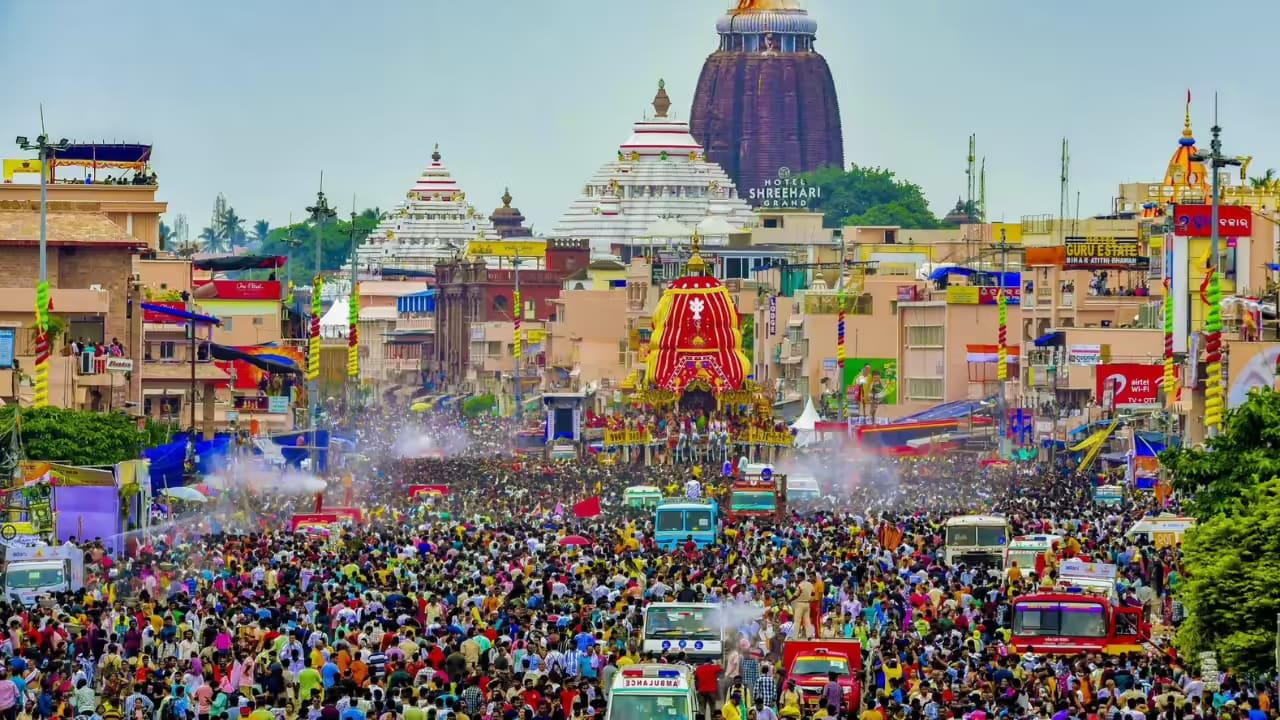
One devotee died and over 100 others fainted due to a temporary crowd surge during the annual Jagannath Rath Yatra in Puri, Odisha, highlighting the ongoing challenges of managing massive religious gatherings.
Tragedy Amidst Devotion: Analyzing the Puri Rath Yatra Crowd Surge
The annual Jagannath Rath Yatra in Puri, Odisha, is one of the world's largest religious congregations, drawing millions of devotees who gather to witness the deities' journey to the Gundicha Temple. However, the spiritual fervor of this year's event was marred by a tragic incident where one devotee lost their life and over 100 others fainted during a temporary crowd surge. This event underscores the inherent volatility of high-density gatherings and the precarious balance between facilitating religious expression and ensuring public safety.
The Mechanics of Crowd Surges and Public Safety
Crowd surges, such as the one experienced in Puri, occur when the density of a crowd reaches a critical point where individual movement is restricted, and the collective mass begins to behave like a fluid. In such scenarios, a small push or a sudden movement can create a ripple effect, leading to compressive asphyxiation or falls. The report of over 100 devotees fainting suggests a combination of physical compression and environmental stressors. When thousands are packed into a confined space, oxygen levels can drop, and the physical pressure on the chest makes breathing difficult, leading to rapid loss of consciousness.
Environmental Factors and Health Implications
Beyond the physical surge, the timing of the Rath Yatra—typically occurring in June or July—places it in the peak of Odisha's oppressive summer heat and high humidity. For many devotees, who often travel long distances and stand for hours in direct sunlight, the risk of heatstroke and severe dehydration is extreme. The mass fainting reported is likely a synergistic result of the crowd surge and heat exhaustion. When the body cannot cool itself through perspiration due to the lack of airflow in a dense crowd, core temperatures rise, leading to syncope (fainting) and, in severe cases, organ failure or death.
Historical Context of Large-Scale Gatherings in India
India has a long history of managing massive congregations, from the Kumbh Mela to the Rath Yatra. While the government and temple administrations have implemented sophisticated crowd-control measures over the decades—including barricading, designated entry-exit points, and CCTV monitoring—the sheer scale of these events often exceeds the capacity of physical infrastructure. The recurring nature of such incidents in various large-scale Indian festivals highlights a systemic challenge: the growth in the number of pilgrims often outpaces the expansion of safety protocols and medical emergency response systems.
Future Trends: Toward Tech-Driven Crowd Management
To prevent future casualties, there is an urgent need to integrate advanced technology into crowd management. The implementation of AI-driven real-time density mapping and predictive analytics could allow authorities to identify "hotspots" before a surge occurs, enabling them to divert crowds proactively. Furthermore, the deployment of drones for aerial surveillance and the establishment of more frequent, strategically placed medical aid stations can reduce response times for those suffering from heatstroke or respiratory distress. Moving toward a "smart pilgrimage" model will be essential to preserving the sanctity of the tradition while guaranteeing the safety of the devotees.
Conclusion
The incident at the Puri Rath Yatra serves as a sobering reminder of the risks associated with extreme crowd densities. While the event remains a pinnacle of faith and cultural heritage, the loss of life and widespread illness highlight critical gaps in emergency management. Ensuring that future Yatras are safe will require a multidisciplinary approach, combining traditional policing with modern technology and enhanced medical infrastructure to protect the millions who gather in the spirit of devotion.