Quad meeting in Manila signals renewed focus on Indo-Pacific security
Source Entity
Latest News: Todays Latest News Headlines from India & World | Hindustan Times
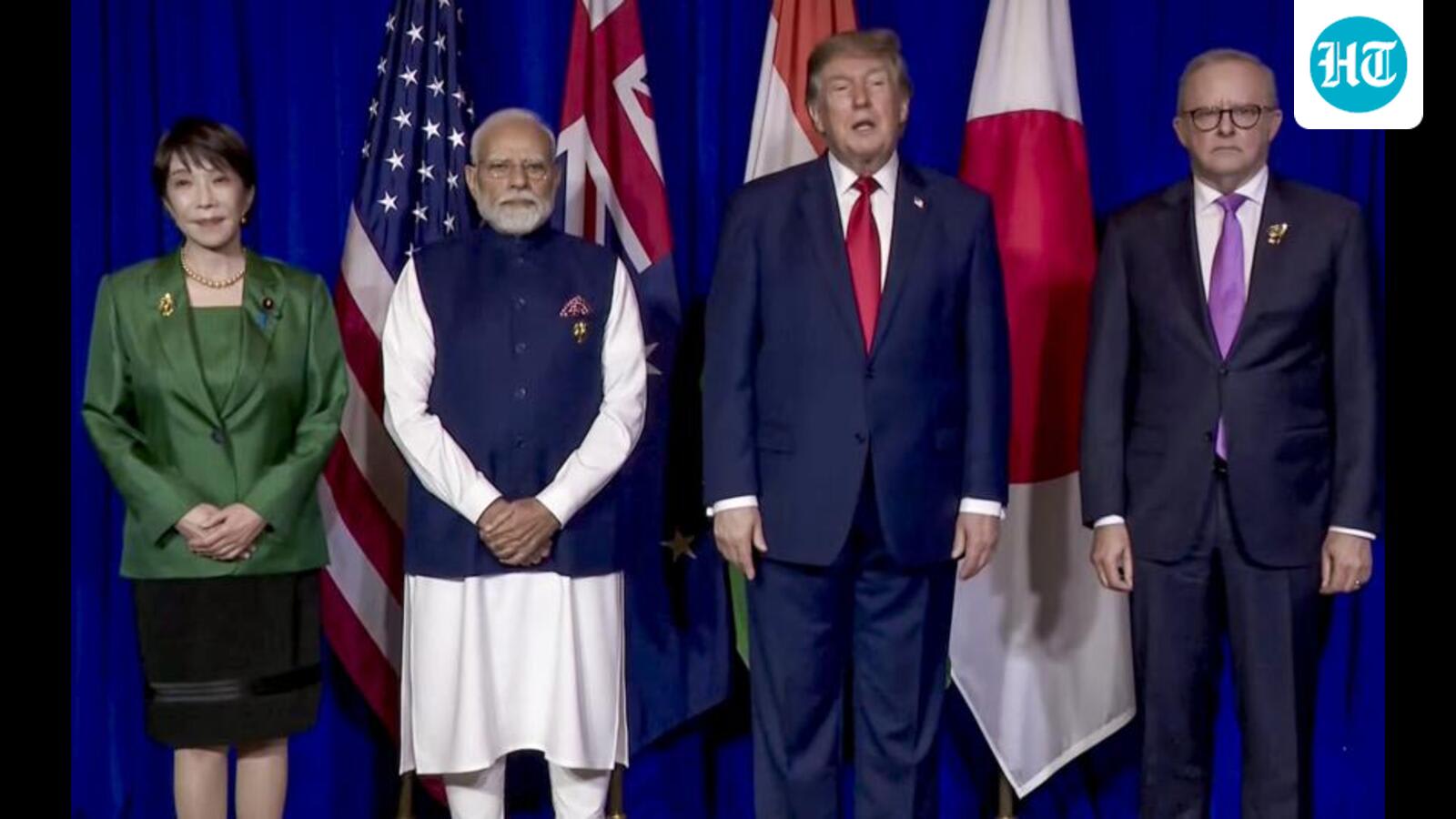
Global diplomacy reaches a critical inflection point as the Quad reconvenes in Manila to address Indo-Pacific security, while a historic first-ever trilateral summit between leaders of the US, China, and Russia is set for November 19 in Shenzhen. These meetings signal a complex shift in international relations, balancing regional security concerns with high-stakes great power negotiations.
A New Era of High-Stakes Diplomacy
The landscape of global geopolitics is undergoing a profound transformation this November, marked by two pivotal diplomatic gatherings: the Quad meeting in Manila and an unprecedented trilateral summit in Shenzhen. As President Donald Trump travels through Asia, the international community is witnessing a dual-track approach to diplomacy that attempts to balance regional security alliances with direct engagement between the world's most powerful nations.
The Quad: Resurgence in the Indo-Pacific
The Quad—comprising India, Australia, Japan, and the United States—has reconvened in Manila after a two-year hiatus. This meeting serves as a critical signal of commitment to a free and open Indo-Pacific. By explicitly opposing unilateral military action and economic coercion, the grouping aims to reassert its relevance as a stabilizing force. For India, this participation reinforces its strategy of multi-alignment, allowing New Delhi to balance its partnerships effectively while navigating an increasingly volatile global order.
The Shenzhen Trilateral: A Historic First
Simultaneously, the announcement of a first-ever trilateral meeting between Presidents Xi Jinping, Vladimir Putin, and Donald Trump on November 19 in Shenzhen represents a landmark shift in diplomatic protocol. By bringing these three leaders to the table on the sidelines of the APEC summit, China is positioning itself as a central convener of global governance. Analysts suggest that the mere act of hosting such a meeting provides significant political capital, regardless of the immediate policy outcomes.
Agenda and Strategic Implications
The agenda for the Shenzhen summit is as expansive as it is consequential. Leaders are expected to tackle nuclear non-proliferation, the ongoing war in the Middle East, trade policies, and the conflict in Ukraine. These discussions underscore the urgency of addressing global crises through direct, leader-level communication. The inclusion of topics like artificial intelligence further highlights how these powers are attempting to set the guardrails for future technological and existential risks.
Navigating Complex Relationships
While the trilateral summit is unprecedented, it builds upon a foundation of established bilateral ties. President Xi’s frequent engagements with both Putin and Trump suggest a sophisticated, if strained, network of communication. The challenge for these leaders will be to reconcile their starkly different strategic interests—ranging from trade protections to territorial disputes—within the confines of a single room. The success of this summit may well dictate the pace of international cooperation for the remainder of the decade.
Conclusion: A Dual-Track Future
The intersection of the Quad’s regional security focus and the trilateral summit’s global agenda illustrates the current complexity of international relations. While the Quad provides a mechanism for partners to push back against perceived hegemony, the Shenzhen trilateral offers a venue for the world’s most powerful actors to manage the risks of direct confrontation. As these events unfold, the world remains watching to see if these high-level dialogues can translate into tangible stability.
Multiple Citing Sources
Verification Required?