Delhi Confidential: Kiren Rijiju guest Appearance
Source Entity
The Indian Express
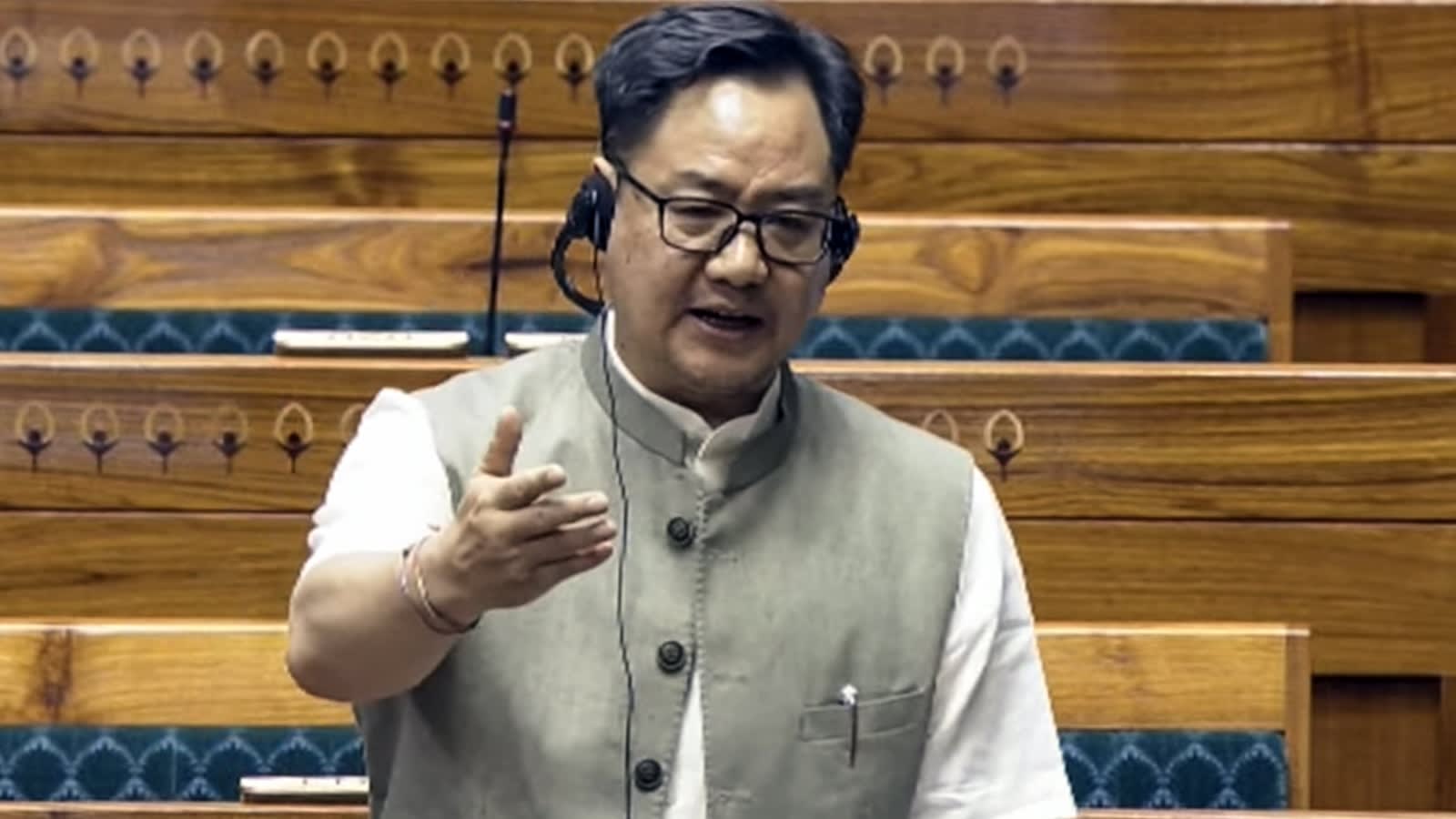
Rahul Gandhi’s accusation that Home Minister Amit Shah ordered police firing on students has sparked a major parliamentary clash. The BJP has rejected the claim as baseless, asserting that such operational decisions are handled by local authorities, not government ministers.
Parliamentary Clash: The Allegations Against Home Minister Amit Shah
The ongoing monsoon session of the Lok Sabha has been marked by intense political friction, reaching a boiling point following claims made by the Leader of Opposition, Rahul Gandhi. During a debate concerning the Public Examinations Amendment Bill, Gandhi alleged that Union Home Minister Amit Shah had issued direct orders for the use of force, including the use of pellet guns, against protesting students. These accusations, which gained traction following the July 20 march to Parliament, have ignited a firestorm of controversy, shifting the discourse from legislative scrutiny to personal and systemic confrontation.
Government Rebuttal and Procedural Defense
In response to these allegations, the government, represented by Parliamentary Affairs Minister Kiren Rijiju, launched a sharp counter-offensive. Rijiju categorized Gandhi's claims as both misleading and unparliamentary. The core of the government's defense rests on the administrative distinction between political leadership and operational law enforcement. According to the government, decisions regarding the use of force during protests are delegated to local authorities, specifically magistrates or Sub-Divisional Magistrates (SDM) on the ground, rather than being directed by cabinet ministers.
The Context of the Public Examinations Amendment Bill
It is essential to note that these heated exchanges occurred during the deliberation of the Public Examinations Amendment Bill. This legislative effort is intended to combat the recurring issue of paper leaks and examination malpractice, which has spurred significant unrest among the student population, particularly those agitating at Jantar Mantar. While the primary objective of the Bill is to introduce stricter penalties and ensure the integrity of public examinations, the parliamentary process has been overshadowed by the broader political battle over the government's handling of student dissent.
The Impact of Allegations on Legislative Integrity
Minister Rijiju further criticized the Leader of Opposition for failing to provide substantive feedback on the Bill itself, arguing that the focus should remain on the legislative framework designed to curb corruption in education. By prioritizing inflammatory rhetoric over policy analysis, the government contends that the Opposition is attempting to frame the administration as inherently authoritarian, while the BJP accuses Gandhi of trapping himself in a cycle of unsubstantiated claims that undermine the decorum of the House.
Historical Context and Broader Implications
This incident highlights a growing trend in Indian parliamentary politics where legislative discussions are increasingly punctuated by accusations of state-sponsored repression. The mention of pellet guns—an issue that has surfaced in various regional contexts—carries significant weight in public discourse, symbolizing a perceived disconnect between the state and its youth. The reliance on police station diary entries to validate such claims indicates a shift toward using granular, localized evidence to challenge high-level government policy.
Future Trends in Parliamentary Discourse
As the session progresses, it is likely that the government will continue to emphasize the legal and procedural limitations of ministerial authority to deflect claims of executive overreach. Conversely, the Opposition appears committed to leveraging student movements to challenge the government’s narrative on education privatization and governance. This cycle of accusation and rebuttal underscores a deepening polarization that threatens to stall legislative productivity, as both sides prioritize public optics and ideological narrative-setting over collaborative governance.
Multiple Citing Sources