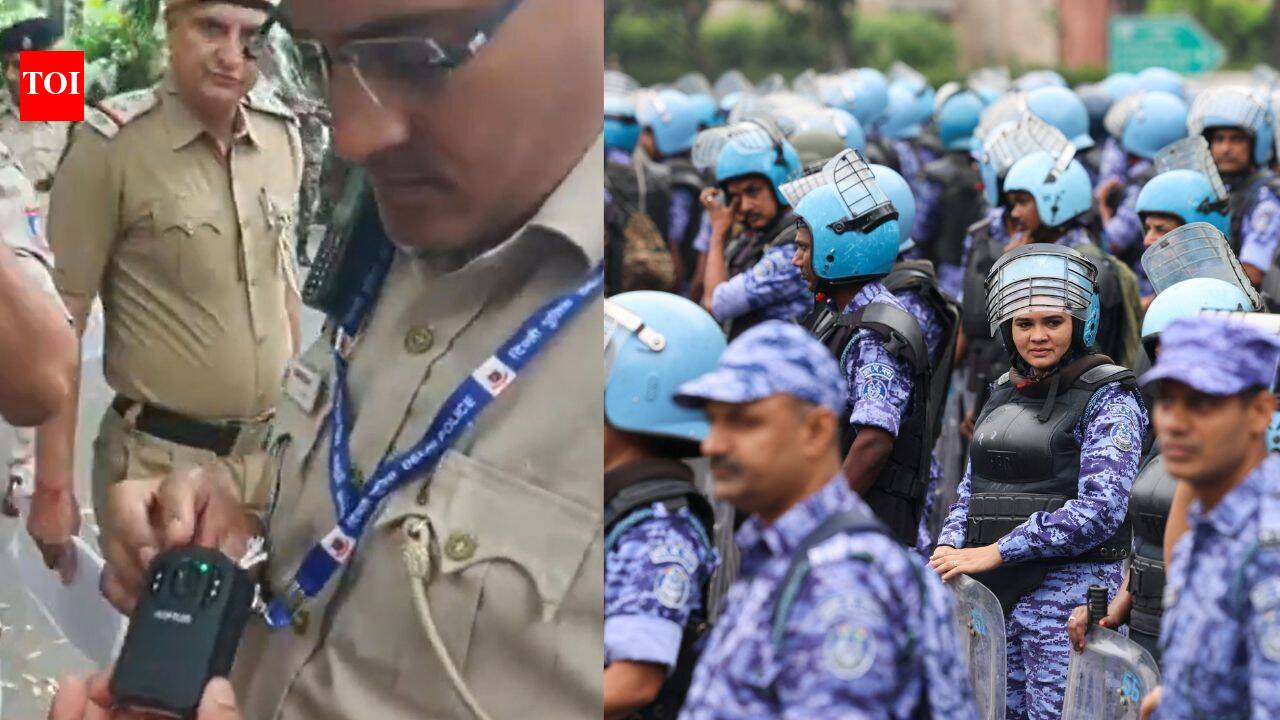
Police deploy forces with bodycams at Jantar Mantar, Dipke says 'govt waging war'
Source Entity
HADI KHAN
Rahul Gandhi has criticized PM Narendra Modi's governance while protests in Delhi led to widespread security lockdowns and metro closures. The ongoing tensions highlight a deepening rift between the opposition and the government regarding democratic freedoms.
The Escalating Confrontation: Rahul Gandhi vs. The Union Government
A Rhetorical Shift in Chennai
During the sixth edition of his youth outreach initiative, 'Chhatron Ki Goonj,' in Chennai, Leader of Opposition Rahul Gandhi launched a pointed critique against Prime Minister Narendra Modi. Utilizing the moniker "Mogambo Modi," Gandhi accused the Prime Minister of systematically dismantling India’s democratic institutions. This rhetoric signifies a hardening of the opposition's stance, moving beyond policy disagreements to direct characterizations of the government as authoritarian and exclusionary.
The 'Vote Chori' Allegation
Central to Gandhi’s address was the accusation of "vote chori" (theft of votes) and the assertion that the Prime Minister is actively silencing dissent. By framing the current political climate as a "game" that is reaching its end after 15 years, Gandhi is attempting to mobilize the youth demographic. This strategy aims to position the Congress party as the primary vehicle for those disillusioned by the current administration’s handling of public protests and student movements.
Security Lockdown in the Capital
Simultaneously, the national capital witnessed extreme security measures on October 10. Following calls for protests, Delhi Police and security forces enforced a wide-ranging lockdown across New Delhi. The deployment of tear gas munitions and the physical blocking of major thoroughfares, including Janpath and Ashoka Road, underscored the government's sensitivity to public demonstrations. The detention of early-bird protesters near Jantar Mantar demonstrates a zero-tolerance approach to public assembly in the city center.
The Impact on Urban Mobility
Beyond the political discourse, the administrative response to the protests resulted in significant logistical disruptions. The closure of 45 Delhi Metro stations highlights the massive scale of the security apparatus currently being utilized. These closures, intended to prevent the convergence of protesters, effectively paralyzed large sections of the city, forcing a debate on the balance between national security and the public's right to peaceful assembly and movement.
Broader Implications and Future Trends
These events signal a period of intense political polarization. The juxtaposition of Rahul Gandhi’s nationwide outreach and the government’s containment strategies suggests that the coming electoral cycles will be defined by high-stakes confrontations on the streets of Delhi. As the opposition seeks to frame these protests as a defense of democracy, the government appears committed to maintaining order through strict physical and administrative controls. The long-term trend suggests that both sides are preparing for a protracted struggle over the narrative of India’s democratic health.
Multiple Citing Sources