'No Coercive Action': Supreme Court In Journalist vs Cop In Molestation Case During Delhi Protest
Source Entity
NDTV News Search Records Found 1000
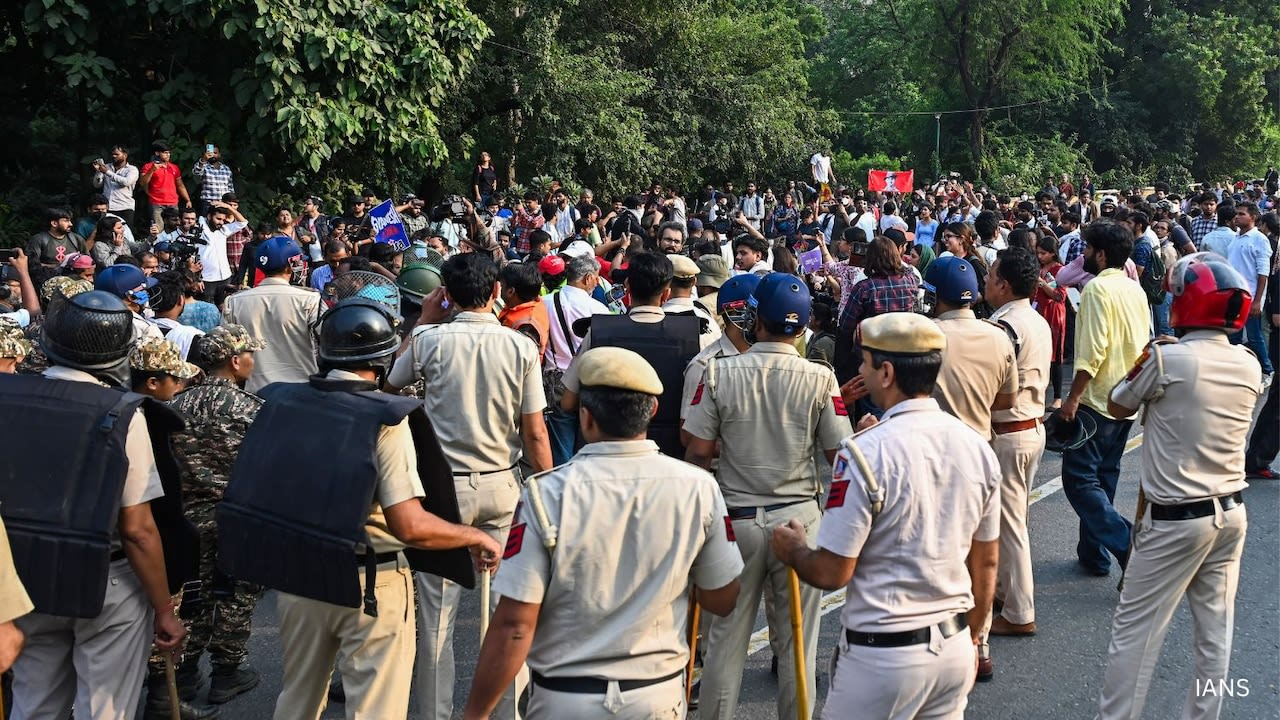
Leader of Opposition Rahul Gandhi has demanded accountability for alleged police brutality against students protesting CEC Gyanesh Kumar. The protests stem from concerns over irregularities in the Special Intensive Revision of electoral rolls, a matter now before the Supreme Court.
Tensions Escalate Over Election Commission Integrity
In a significant escalation of political friction, Leader of the Opposition (LoP) Rahul Gandhi has leveled sharp criticism at the central government, specifically targeting Prime Minister Narendra Modi and Home Minister Amit Shah. Addressing the media from 10 Janpath, Gandhi stood alongside students who claimed to be victims of police brutality during recent demonstrations. These students, some affiliated with the National Students’ Union of India (NSUI), were protesting against Chief Election Commissioner (CEC) Gyanesh Kumar regarding alleged irregularities in the Special Intensive Revision (SIR) of electoral rolls.
The Demand for Accountability
Rahul Gandhi’s public stance serves as a dual-pronged challenge to the current administration. By framing the protesting students as the "voice of India," he is positioning the Congress party as the primary defender of democratic dissent. Gandhi has explicitly demanded accountability that extends from the highest levels of government down to the individual police constables involved in the detainment and alleged mistreatment of protesters. This demand emphasizes a narrative of systemic overreach, suggesting that the state's response to peaceful protest is an affront to the democratic values the student body seeks to protect.
The Controversy Behind the SIR Exercise
At the core of these protests lies the Special Intensive Revision (SIR) of electoral rolls. The opposition, led by the India Bloc, has challenged the Election Commission of India (ECI) in the Supreme Court, alleging that CEC Gyanesh Kumar exercised the commission’s collective powers in a "unilateral and arbitrary" manner. The contention is that such critical electoral procedures require transparency and consensus, and any deviation from established protocols during the SIR raises fundamental questions about the fairness of future electoral processes.
Legal Challenges at the Supreme Court
As the political discourse intensifies, the matter has reached the judiciary. A bench headed by Chief Justice of India Surya Kant, along with Justices Joymalya Bagchi and V Mohana, is scheduled to hear the lead writ petition, Rahul Gandhi v. Election Commission of India. This legal battle is crucial, as it will determine whether the ECI's recent actions regarding the electoral rolls will be upheld or if the court will mandate a review of the decision-making process. The outcome of this hearing is expected to have far-reaching consequences for the credibility of the ECI.
Broader Implications for Indian Democracy
The alignment of the LoP with student activists highlights a growing trend of street-level mobilization against constitutional bodies. By bringing victims of police action into his residence for a press conference, Gandhi has successfully shifted the focus from a purely administrative dispute over electoral rolls to a visceral human rights narrative. This strategy forces the government to defend its security apparatus while simultaneously addressing the substantive claims regarding electoral integrity.
Future Trends and Political Outlook
Moving forward, the intersection of judicial intervention and public protest will likely define the political landscape in the coming months. If the Supreme Court finds merit in the claims of "unilateral and arbitrary" power usage, it could lead to a significant institutional crisis for the Election Commission. Conversely, if the court rules in favor of the ECI, the opposition will likely escalate its rhetoric regarding the erosion of democratic institutions. The interaction between student movements and national political leaders suggests that electoral transparency will remain a volatile and central issue in the national discourse.
Multiple Citing Sources
Verification Required?