"Law Will Take Its Own Course If Not Satisfied": Supreme Court On Jantar Mantar Plea
Source Entity
NDTV News Search Records Found 1000
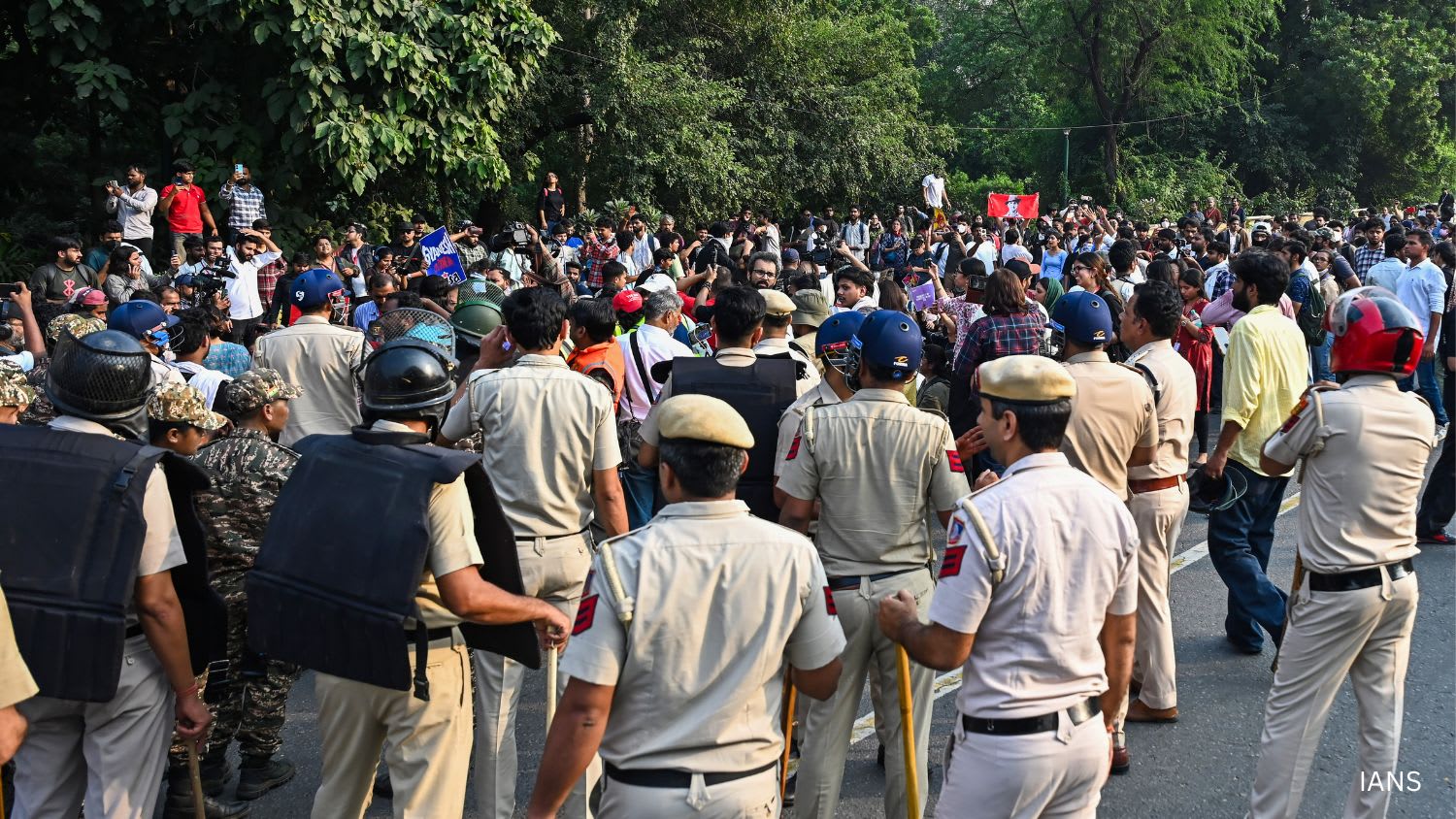
Leader of Opposition Rahul Gandhi has demanded accountability for alleged police brutality against students protesting CEC Gyanesh Kumar. The protests stem from concerns over electoral roll revisions, with the Supreme Court set to hear related petitions.
Rahul Gandhi Confronts Government Over Student Protests
Leader of the Opposition in the Lok Sabha, Rahul Gandhi, has taken a firm stance against the alleged suppression of student activists, urging Prime Minister Narendra Modi and Home Minister Amit Shah to refrain from obstructing the voices of India’s youth. This demand follows a series of protests involving students, including members of the National Students’ Union of India (NSUI), who were reportedly injured during clashes with Delhi Police while demonstrating against Chief Election Commissioner (CEC) Gyanesh Kumar.
The Core Grievance: Electoral Roll Integrity
The protests were triggered by alleged irregularities in the 'Special Intensive Revision' (SIR) of electoral rolls, a process overseen by the Election Commission of India. Demonstrators have raised significant concerns regarding the transparency and fairness of this exercise, culminating in calls for the resignation of CEC Gyanesh Kumar. The intensity of these protests highlights a broader public anxiety regarding the sanctity of the electoral process, which remains the cornerstone of Indian democracy.
Accountability and Allegations of Brutality
During a press conference held at 10 Janpath, the residence of Congress Parliamentary Party chairperson Sonia Gandhi, Rahul Gandhi hosted several students who claimed to be victims of police brutality and illegal detainment. Gandhi’s rhetoric emphasized the need for institutional accountability, explicitly calling for action against those responsible for the violence, ranging from the highest executive offices to the individual constables on the ground. This move serves to amplify the narrative that the current administration is utilizing state machinery to silence legitimate dissent.
The Judicial Dimension
As the political temperature rises, the focus shifts to the judiciary. The Supreme Court of India is scheduled to hear a batch of petitions, including the lead case Rahul Gandhi v. Election Commission of India. A bench headed by Chief Justice of India Surya Kant, alongside Justices Joymalya Bagchi and V. Mohana, will evaluate allegations that the CEC acted in a “unilateral and arbitrary” manner regarding collective powers. The court's involvement marks a critical juncture where the legal validity of the SIR process will be tested against the constitutional mandate of the Election Commission.
Broader Implications for Indian Democracy
The intersection of street protests and high-level litigation suggests a period of heightened friction between the Opposition and the Election Commission. The government’s response to these demonstrations—and the subsequent judicial verdict—will likely set a precedent for how electoral bodies are held accountable for their procedural decisions. As the Supreme Court begins its deliberations, the nation watches to see if the judiciary will intervene in the administrative functions of the ECI to ensure electoral transparency.
Future Trends and Conclusion
Looking ahead, the tension surrounding the SIR process may serve as a catalyst for deeper electoral reforms in India. If the Supreme Court finds merit in the claims of arbitrary power usage, it could mandate stricter oversight mechanisms for the Election Commission. Conversely, if the court upholds the current process, the opposition may intensify its political mobilization, potentially turning the issue into a central theme for future electoral cycles. Regardless of the outcome, the events at 10 Janpath underscore the volatile relationship between student activism, state authority, and the fundamental institutions of Indian governance.
Multiple Citing Sources
Verification Required?