Congress chief Kharge must get justice, we demand FIR: Rahul Gandhi on rally venue ‘purification’ in Uttarakhand
Source Entity
India Latest News: Top National Headlines Today & Breaking News | The Hindu
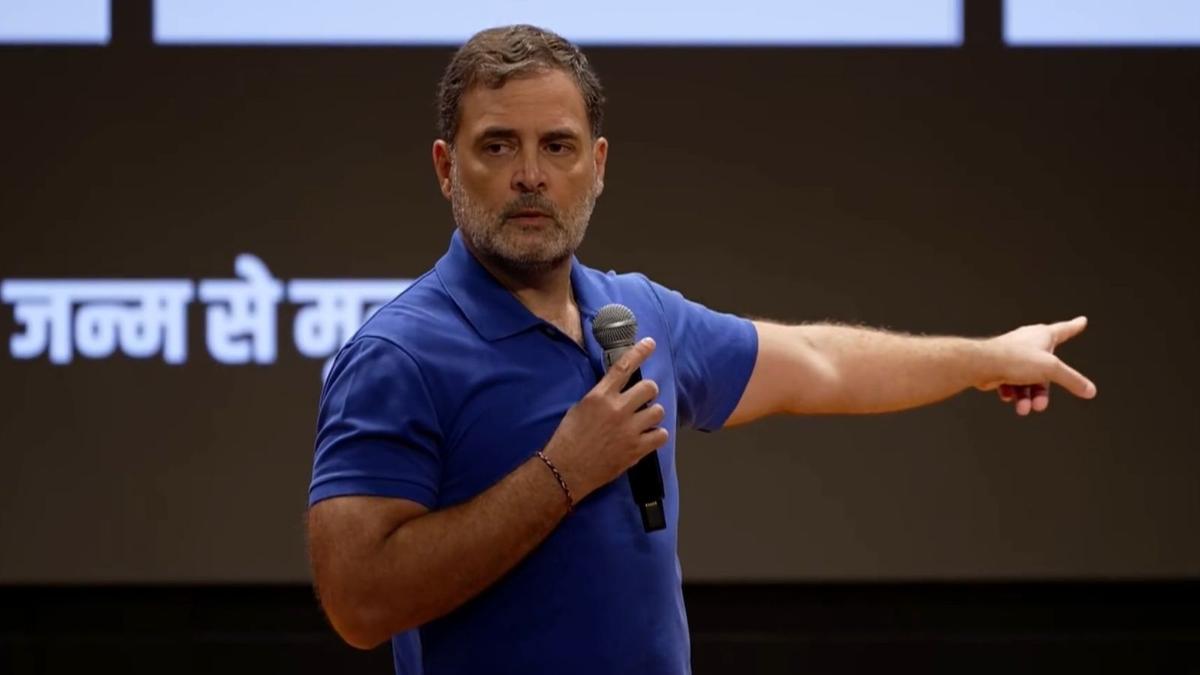
Rahul Gandhi has demanded an FIR under the SC/ST Act following a 'purification' ritual held by the Shri Ram Sena at a venue where Congress chief Mallikarjun Kharge spoke. Gandhi labeled the act as a practice of untouchability and a direct violation of constitutional protections for Dalits.
The Haldwani Purification Controversy: A Clash of Ideologies
The political landscape in India has been stirred by a contentious incident in Haldwani, Uttarakhand, where a 'shuddhikaran' (purification) ritual was conducted at the Ramlila Maidan. This event took place two days after Congress President Mallikarjun Kharge addressed a 'Vijay Shankhnaad' rally at the same location. The ritual, reportedly performed by members of the Shri Ram Sena, has sparked a firestorm, with the Leader of the Opposition, Rahul Gandhi, framing the act as a deliberate affront to the dignity of a Dalit leader and a violation of the Scheduled Castes and Scheduled Tribes (Prevention of Atrocities) Act.
The Legal and Constitutional Arguments
Rahul Gandhi has been vocal in his demand for an FIR to be filed against those responsible for the ritual. His argument rests on the premise that the act of 'purifying' a public space after a Dalit leader has occupied it constitutes a modern-day manifestation of untouchability. The SC/ST (Prevention of Atrocities) Act is designed to protect marginalized communities from precisely such acts of humiliation and social exclusion. By calling for legal action, the Congress leadership is seeking to elevate this local incident into a broader national debate regarding the enforcement of civil rights and the sanctity of the Constitution.
Ideological Confrontation
At the heart of this controversy lies what Rahul Gandhi describes as a clash between two fundamental ideologies: the constitutional framework of India and the perceived mindset of the BJP-RSS. Gandhi asserts that the ritual is not merely an isolated case of religious expression but a symptom of a deeper, systemic issue where caste-based discrimination continues to manifest in public life. The defense offered by Uttarakhand BJP president Mahendra Bhatt, who claimed the venue was 'polluted with slogans,' has only served to sharpen the divide, with the Congress interpreting such justifications as an endorsement of discriminatory practices.
Historical Context and Social Implications
This incident taps into long-standing historical grievances regarding the treatment of Dalits in India. For centuries, the practice of ritual purification has been used as a tool to maintain caste hierarchies and enforce social boundaries. By highlighting incidents like Dalit children being forced to perform menial labor in schools, Gandhi is attempting to contextualize the Haldwani event as part of a persistent pattern of exclusion. This narrative aims to mobilize support among marginalized communities by positioning the Congress as the primary defender of their constitutional rights against perceived regressive social forces.
Future Trends and Political Fallout
As the demand for an FIR gains momentum, the Haldwani incident is likely to become a recurring theme in political discourse. The incident forces the ruling party to address the actions of peripheral organizations like the Shri Ram Sena, potentially creating a friction point between mainstream political governance and grassroots ideological groups. If this issue continues to gain traction, it may necessitate a stronger judicial or administrative intervention to clarify the limits of religious expression versus the protections afforded by the SC/ST Act, setting a potential precedent for how public spaces are managed in a pluralistic democracy.
Verification Required?