'Grabbed her, threw her to ground': BJP alleges Rahul 'thrashed' pregnant journalist
Source Entity
ABHISHEK MISHRA
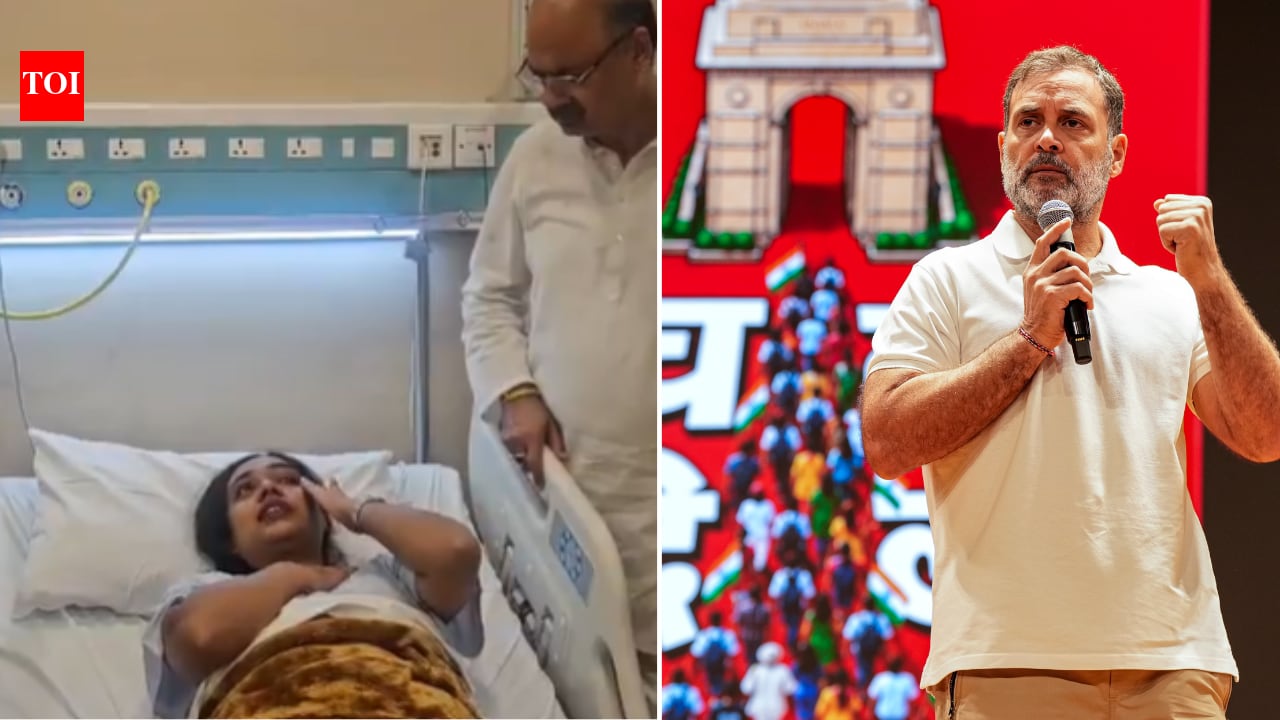
A pregnant journalist, Richa Parashar, has accused Rahul Gandhi of physically assaulting her during a protest in Delhi. The incident has sparked a heated political standoff, with the BJP alleging misconduct and the Congress party vehemently denying the claims.
Allegations of Physical Confrontation During Delhi Protest
A significant controversy has erupted following an incident involving Congress leader Rahul Gandhi and a journalist named Richa Parashar during an INDIA bloc protest in New Delhi on October 12. Parashar, who reports being three months pregnant, has publicly alleged that Gandhi grabbed her hand and pulled her forward while she was attempting to cover the demonstration against Election Commissioner Gyanesh Kumar. This initial contact, she claims, led to a chaotic sequence of events involving security personnel and resulted in her falling down a set of stairs.
The Sequence of Events and Alleged Injuries
According to the journalist's account, the encounter occurred while she was attempting to secure a comment from the leader. Parashar stated that the physical interaction caused her to land on her stomach, leading to injuries on her hands and knees, alongside the destruction of her recording equipment. These allegations have been framed by the journalist as a direct act of aggression, raising serious concerns regarding the safety of media professionals covering high-profile political events and the conduct of political figures in public spaces.
Political Polarization and Conflicting Narratives
Predictably, the incident has become a focal point of intense political friction. The Bharatiya Janata Party (BJP) has seized upon the allegations, characterizing the event as a case of a 'thrashed' journalist and using it to highlight what they describe as a pattern of disregard for democratic norms by the opposition. Conversely, the Congress party has categorically rejected these claims, labeling them as outright lies. This dichotomy in narratives reflects the deeply polarized nature of Indian political discourse, where incidents involving prominent leaders are immediately integrated into broader partisan strategies.
Broader Implications for Media Freedom
This incident underscores the increasingly precarious environment for journalists operating in politically charged atmospheres. The physical safety of reporters during protests is a critical component of press freedom, and when such events occur, they inevitably lead to a debate regarding the boundaries of political conduct. The involvement of security details in the alleged pushing of the journalist further complicates the matter, raising questions about the management of security protocols during public demonstrations.
Future Trends and Accountability
As the situation develops, the demand for transparency and objective investigation will likely intensify. The reliance on video evidence—often a point of contention in such disputes—will be central to establishing the facts. Moving forward, such incidents are likely to influence the ongoing discourse regarding the regulation of interaction between political figures and the media. Whether this event leads to formal legal scrutiny or remains a purely rhetorical battleground will depend on the subsequent actions of both the involved parties and the relevant authorities.