Watch: Team CJP climb barricades to 'reclaim' Jantar Mantar after protest ban
Source Entity
AADRITA HALDER
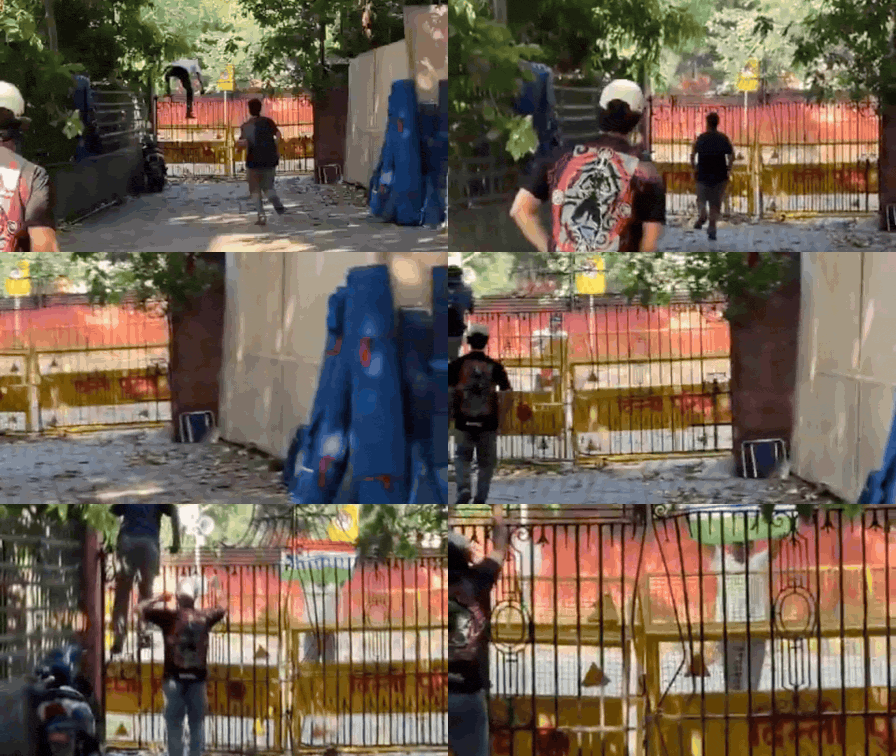
The Delhi government has officially de-notified Jantar Mantar as a designated protest site, replacing it with Ramlila Ground, Burari Ground, and CBD Ground. The Delhi High Court has scheduled a hearing regarding this closure and related allegations of protester harassment for October 13.
The Shift in Delhi’s Protest Landscape
In a significant administrative move, the Ministry of Home Affairs (MHA) has officially de-notified Jantar Mantar as a designated venue for public protests and demonstrations. This decision, communicated via a notice from Delhi Police Commissioner Anurag Kumar on October 12, 2026, marks the end of an era for a site that has long served as the heart of political dissent and civil society engagement in India's capital. The government has instead designated three alternative locations: the Ramlila Ground in Central Delhi, the Burari Ground in North Delhi, and the CBD Ground in East Delhi.
The Administrative Rationale
The formal transition away from Jantar Mantar follows the recommendations of a committee established by the MHA to identify suitable venues for citizen expression. By moving protests to these specific grounds, the authorities aim to decentralize demonstrations, potentially to manage traffic, security, and the impact on daily urban life in the city center. However, this policy shift has immediately sparked legal challenges, as critics argue that such decentralization may dilute the visibility and efficacy of peaceful protests.
Legal Challenges and Judicial Oversight
The legality of this closure is currently under judicial scrutiny. On October 12, 2026, the Delhi High Court, presided over by Acting Chief Justice Nitin Wasudeo Sambre and Justice Sanjay Sharma, declined an urgent request for a stay on the closure. The court noted that the Supreme Court of India is already seized of the broader matter regarding the right to protest. Consequently, the High Court has scheduled a formal hearing for October 13, 2026, to address the plea challenging the site's closure.
Concerns Over Civil Liberties
A central point of contention raised by legal counsel before the High Court is the lack of an immediate, viable, and centrally located alternative that preserves the impact of peaceful assembly. The argument suggests that by removing protesters from a high-profile location like Jantar Mantar, the authorities may be effectively stifling the ability of citizens to raise their voices effectively. The situation is further complicated by reports of unrest at recent protest sites.
Allegations of Harassment and External Interference
Beyond the debate over the location itself, the High Court is set to address an additional petition on October 13 involving allegations of harassment. The petition claims that "outsiders" infiltrated a protest held over the weekend, resulting in the harassment of genuine participants. This adds a layer of security concern to the administrative decision, as the government must now navigate not only the legal challenge to the site's closure but also the responsibility of ensuring the safety of demonstrators in the newly designated areas.
Future Implications for Dissent
The transition to the Ramlila, Burari, and CBD grounds represents a fundamental change in how the state manages public dissent. As the judiciary weighs the constitutional right to peaceful assembly against the state's authority to regulate public spaces, the upcoming court proceedings will be critical. The outcome will likely set a precedent for how the government balances urban governance with the fundamental democratic necessity of providing citizens a platform to voice their grievances against the state.
Multiple Citing Sources