Rajiv Gandhi’s security cover was removed deliberately to facilitate his killing: Rahul
Source Entity
India Latest News: Top National Headlines Today & Breaking News | The Hindu
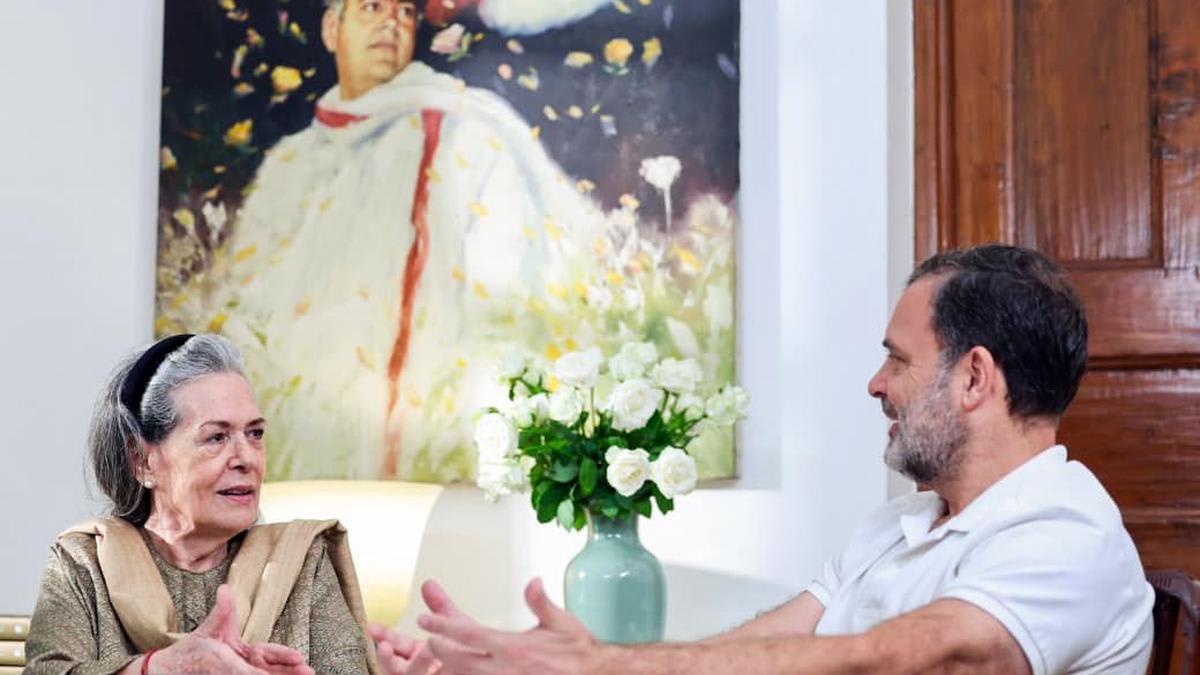
Rahul Gandhi has alleged that the V.P. Singh government deliberately removed his father Rajiv Gandhi's security cover in 1990 to facilitate his assassination. This claim surfaced during a family discussion regarding Sonia Gandhi's memoir, highlighting long-standing grievances over political security and victimization.
The Controversy Surrounding Rajiv Gandhi's Security
In a recent, deeply personal video conversation centered on the release of Sonia Gandhi’s memoir, Belonging: A Journey of Love, Congress leader Rahul Gandhi made a grave allegation: that the security cover for former Prime Minister Rajiv Gandhi was not merely downgraded, but deliberately removed to facilitate his assassination. According to Rahul, the withdrawal of the Special Protection Group (SPG) cover by the V.P. Singh government in 1990 created the necessary conditions for his father’s tragic death, framing the event as a calculated political act rather than a bureaucratic oversight.
Historical Context of the Security Withdrawal
The events in question date back to February 1990, shortly after Rajiv Gandhi ceased to be the Prime Minister. Following the transition of power, the V.P. Singh administration transferred the responsibility for his security from the elite SPG to other agencies. Rahul Gandhi posits that this transition was not a standard protocol adjustment, but a deliberate move to expose his father to threats. This narrative emphasizes the vulnerability of political leaders during transitions of power and the immense weight of state-provided protection in the volatile climate of the era.
Legislative Shifts Post-Assassination
The gravity of the security lapse became painfully clear in the wake of the 1991 assassination. The subsequent government, led by P.V. Narasimha Rao, recognized the inadequacy of existing protection policies and took corrective legislative action. The government amended the SPG Act to mandate that protection be extended to former Prime Ministers and their immediate family members for a period of five years after leaving office. This legislative change serves as a tacit acknowledgment that the previous security arrangements for former leaders were insufficient to counter the significant threats they faced.
Addressing Political Victimization
Beyond the specifics of the security concerns, the dialogue between Rahul, Priyanka Gandhi Vadra, and Sonia Gandhi served as a platform to discuss the broader theme of political victimization. Rahul Gandhi indicated his intention to address the persistent humiliation and political targeting that his mother, Sonia Gandhi, has faced throughout her public life. By linking the personal tragedy of his father's death to the political struggles of his mother, Rahul is attempting to reframe the narrative of the Gandhi family’s legacy, portraying it as one of sacrifice in the face of systemic opposition.
Personal Recollections and Family Dynamics
The conversation also touched upon the personal toll of political life on the Gandhi family. Priyanka Gandhi Vadra shared a childhood anecdote involving a confrontation with a classmate who insulted her uncle, Sanjay Gandhi, illustrating the deep-seated emotional impact of living in the public eye. These personal reflections humanize the political figures, grounding the high-level allegations of state-sponsored negligence in the lived experience of a family that has been at the center of Indian politics for decades.
Implications and Future Trends
Rahul Gandhi’s public declaration marks a significant moment in Indian political discourse, potentially reopening debates about the security of former leaders and the role of partisan politics in administrative decision-making. As the Congress party continues to reflect on its history, these claims are likely to influence the party's ideological stance regarding political victimization. Future political trends suggest that the Gandhi family will continue to use personal memoirs and public dialogue to challenge historical narratives, ensuring that their perspective on these critical past events remains a central part of the national political conversation.
Verification Required?