'Jagga Jasoos': Congress mocks Rajnath Singh over opposition demanding regime change
Source Entity
PRISHA PATNAIK
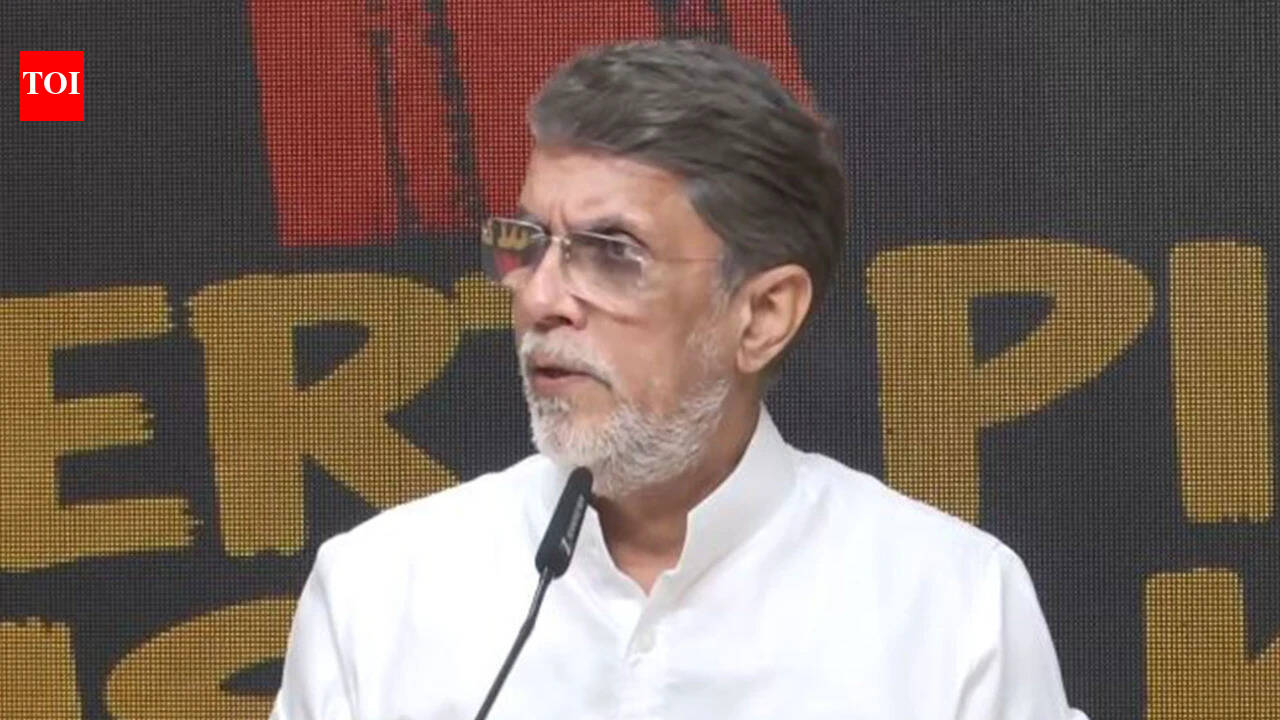
Union Minister Rajnath Singh has accused the Congress party and its allies of inciting anarchy to orchestrate a Bangladesh-style regime change in India. The Congress has rejected these allegations, asserting that their objective remains seeking political change exclusively through the democratic electoral process.
Political Tensions Escalate: The Allegation of 'Bangladesh-Style' Unrest
On October 16, 2026, Union Minister Rajnath Singh leveled serious accusations against the Indian National Congress and its political allies. Speaking from a press conference in Lucknow, Singh claimed that recent protests in the national capital were not genuine expressions of democratic dissent, but rather a calculated effort to destabilize the current government. He explicitly characterized these movements as an attempt to replicate the recent political upheaval seen in neighboring Bangladesh, suggesting that the opposition is weaponizing the energy of the youth to foster nationwide anarchy.
The Core Accusation: Anarchy vs. Dissent
Minister Singh’s rhetoric centers on the fundamental distinction between democratic protest and the subversion of constitutional order. By invoking the imagery of Bangladesh’s regime change, he positioned the opposition’s actions as an existential threat to India’s institutional credibility. According to Singh, the demonstrations—including the CJP Tiranga protest—are not grounded in legitimate policy grievances, such as electoral reforms or the actions of the Chief Election Commissioner, but are instead a cynical conspiracy to seize power outside of the mandated electoral cycle.
Opposition Rebuttal: The Democratic Mandate
In response to these grave allegations, the Congress party, represented by leaders like Pawan Khera, has categorically dismissed the claims. The opposition maintains that their political activities are rooted in the pursuit of government change through legitimate, constitutional means: the ballot box. By labeling Singh’s accusations as a form of political theater or "Jagga Jasoos"-style surveillance narratives, the Congress suggests that the government is attempting to delegitimize valid public grievances by framing them as insurrectionist activities.
Institutional Integrity and Public Order
At the heart of this confrontation lies a debate over the sanctity of constitutional institutions. Rajnath Singh’s insistence that democracy does not grant a "licence to create disorder" reflects a broader governance stance that prioritizes stability and state authority. This narrative aims to insulate constitutional bodies, such as the Election Commission, from what the ruling party perceives as coordinated campaigns to undermine their reputation. Conversely, the opposition views these same institutions as needing reform, framing their protests as a necessary check on power.
Historical Context and Future Implications
The invocation of the "Bangladesh model" serves as a potent political tool in the current Indian climate. By drawing parallels to external regional instability, the ruling party seeks to create a defensive perimeter around the current administration, warning voters of the risks of political volatility. As the political landscape in India continues to evolve, the tension between the opposition's right to protest and the state's mandate to maintain public order will likely remain a central point of conflict, potentially influencing future electoral rhetoric and the intensity of street politics in the coming years.
Multiple Citing Sources