Let ‘healing touch’ also reflect in your conduct: Rajnath to young docs at KGMU convocation
Source Entity
Latest News: Today's Latest News Headlines from India & World | Hindustan Times | Hindustan Times
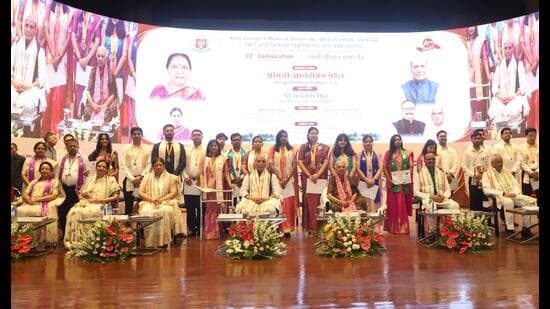
India setting new benchmarks in medical research and developing indigenous solutions to global health challenges through gene therapy and nuclear medicine, says defence minister
Bridging Clinical Excellence and Compassion: Analysis of Rajnath Singh's Address at KGMU
In a significant address to the graduating class of King George's Medical University (KGMU), Defence Minister Rajnath Singh emphasized a critical intersection in modern healthcare: the balance between advanced technical proficiency and the fundamental human element of medicine. By urging young doctors to ensure their "healing touch" is reflected in their conduct, the Minister highlighted a growing concern in the global healthcare landscape—the potential for clinical detachment in an era of highly digitized and specialized medicine. This call to action serves as a reminder that the efficacy of medical treatment is often inextricably linked to the trust and empathy established between the physician and the patient.
The Ethical Imperative of the 'Healing Touch'
Mr. Singh's focus on conduct suggests a strategic push toward holistic patient care. In the context of India's overburdened healthcare system, the psychological state of the patient often determines the success of the recovery process. By emphasizing "conduct," the Minister is calling for a professional culture where dignity, patience, and empathy are not viewed as optional soft skills but as core clinical competencies. This is particularly relevant for graduates of premier institutions like KGMU, who are expected to lead by example in both rural and urban healthcare settings, ensuring that the prestige of their degree does not create a barrier between them and the vulnerable populations they serve.
India's Strategic Pivot Toward Indigenous Medical Research
Beyond the ethical exhortations, the address provided a window into India's strategic ambitions in the medical sciences. The mention of "setting new benchmarks in medical research" indicates a national shift from being primarily a provider of affordable generic medicines to becoming a pioneer in high-end medical innovation. The focus on "indigenous solutions" is a key component of the broader 'Atmanirbhar Bharat' (Self-Reliant India) initiative. By developing home-grown medical technologies, India aims to reduce its dependence on expensive imports, thereby lowering the cost of advanced care for its billion-plus population and enhancing national health security.
Advancements in Gene Therapy and Nuclear Medicine
Specifically, the Minister's highlight of gene therapy and nuclear medicine points toward India's entry into the realm of precision medicine. Gene therapy represents the frontier of treating hereditary disorders and certain types of cancer by modifying genetic material, while nuclear medicine offers unparalleled diagnostic and therapeutic capabilities for oncology and cardiology. The pursuit of these complex fields suggests that India is investing heavily in the infrastructure required for molecular biology and radiopharmaceuticals. This trajectory positions the country to not only solve local health challenges but to export sophisticated medical protocols and treatments to the Global South.
The Role of Academic Institutions in National Progress
KGMU, as one of the oldest and most prestigious medical universities in India, plays a pivotal role in this transition. The convocation ceremony is more than a ritual; it is the point where academic research is translated into public health practice. When a high-ranking government official like the Defence Minister addresses such a gathering, it signals the state's recognition of medical universities as strategic assets. The integration of research-driven education with a mandate for ethical conduct ensures that the next generation of doctors is equipped to handle both the complexity of a gene-editing tool and the fragility of a patient's emotional state.
Broader Implications for Global Health Leadership
India's push into indigenous high-tech medicine has profound implications for global health equity. If India can successfully scale gene therapy and nuclear medicine using cost-effective, indigenous methods, it could democratize access to treatments that are currently the exclusive domain of wealthy nations. This transition from a "pharmacy of the world" to a "research and innovation hub" allows India to exert more influence in international health forums and provide a blueprint for other developing nations to achieve medical autonomy.
Conclusion: A Vision for the Future of Indian Medicine
Ultimately, Rajnath Singh's address outlines a dual-track vision for the future of Indian healthcare: one that is technologically cutting-edge yet deeply human-centric. The synergy between the "healing touch" and "indigenous research" suggests that India does not wish to choose between progress and empathy. As the new graduates of KGMU enter the workforce, they carry the responsibility of embodying this balance—utilizing the latest breakthroughs in nuclear medicine and gene therapy while maintaining the compassionate conduct that defines the true essence of the medical profession.
Verification Required?