The purpose of history is not to construct statements for contemporary political use: Prof. Romila Thapar
Source Entity
India Latest News: Top National Headlines Today & Breaking News | The Hindu
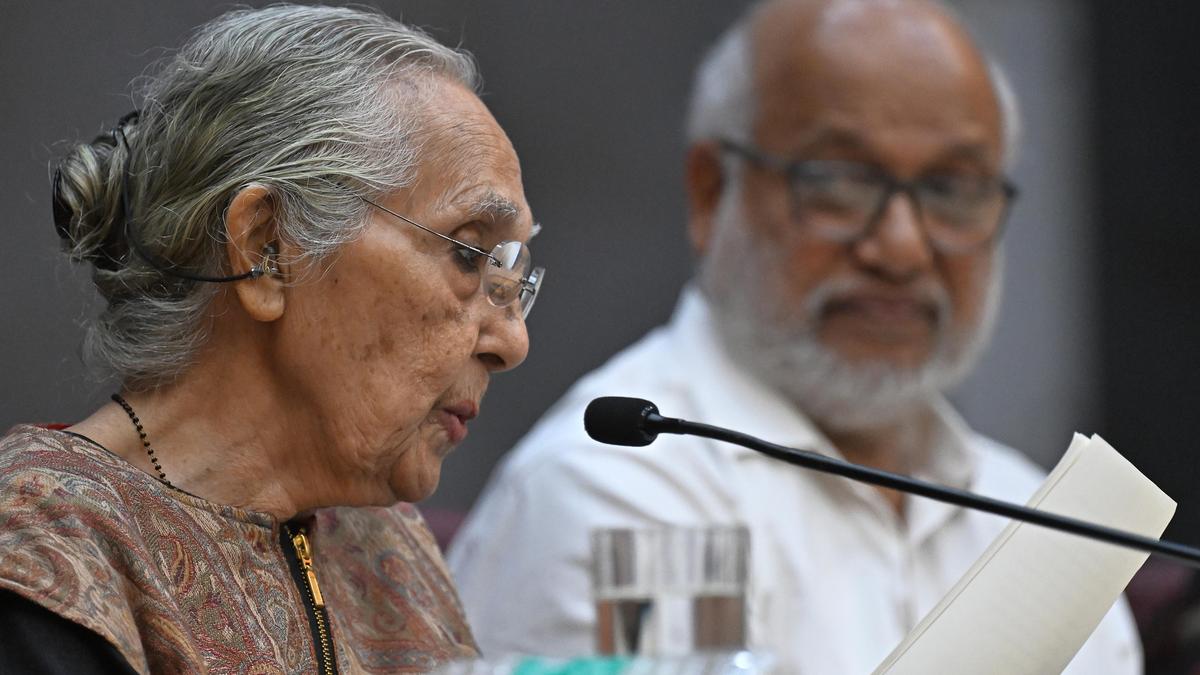
Professor Romila Thapar argues that historical inquiry must focus on understanding societal evolution rather than serving contemporary political agendas. Her lecture emphasizes that a singular, fixed reading of Indian history, particularly through a Hindutva lens, is academically flawed.
The Integrity of Historical Inquiry: Insights from Prof. Romila Thapar
Challenging the Politicization of the Past
In a recent address delivered at the second Sitaram Yechury Memorial Lecture, renowned historian Professor Romila Thapar articulated a profound critique regarding the contemporary misuse of historical narratives. Thapar emphasized that the primary purpose of history is to investigate the complex evolution of Indian society, rather than to function as a tool for constructing statements tailored to immediate political utility. Her lecture, titled ‘Historiography and Early Indian History’, serves as a reminder that history should be a rigorous academic pursuit rather than a subservient instrument of ideological engineering.
Rejecting the 'Single and Fixed' Narrative
Central to Professor Thapar’s argument is the rejection of a monolithic interpretation of India’s past. She specifically addressed the 'Hindutva reading' of history, characterizing it as an attempt to impose a ‘single and fixed’ perspective on a civilization defined by its immense diversity and historical fluidity. By challenging this reductionist approach, Thapar advocates for a historiographical methodology that embraces complexity, nuance, and the multifaceted nature of early Indian societal development.
The Sitaram Yechury Memorial Context
This lecture was held under the auspices of the Sitaram Yechury Foundation, serving as a commemorative tribute to the late political leader. Thapar noted that the subject matter was inspired by a brief prior conversation with Yechury, underscoring the deep intellectual engagement that defined their relationship. The setting of this lecture highlights the intersection of academic discourse and the public intellectual tradition in India, where historical truth is often a focal point of intense national debate.
Implications for Historical Methodology
Thapar’s perspective suggests that when history is constrained by political mandates, it loses its analytical rigor and scholarly integrity. By insisting that historical inquiry must focus on the evolution of social structures and cultural exchanges, she promotes a model of historiography that is resilient against the pressures of contemporary partisan agendas. This approach requires historians to navigate primary sources with objectivity, avoiding the pitfalls of anachronism or the selective highlighting of facts to suit modern political narratives.
Future Trends in Historiography
The debate sparked by Thapar’s lecture reflects a broader global trend where the interpretation of national identity is increasingly contested through the lens of history. As academic institutions and public discourse grapple with these interpretations, the trend toward more inclusive and evidence-based historical research remains essential. Thapar’s work suggests that the future of Indian historiography must prioritize a pluralistic understanding of the past to ensure that historical knowledge contributes to a more informed and democratic society, rather than deepening existing social divides through the promotion of a singular, politically charged narrative.
Verification Required?