Russia proposes direct rail link to India to bypass Bosphorus & Hormuz straits
Source Entity
TNN
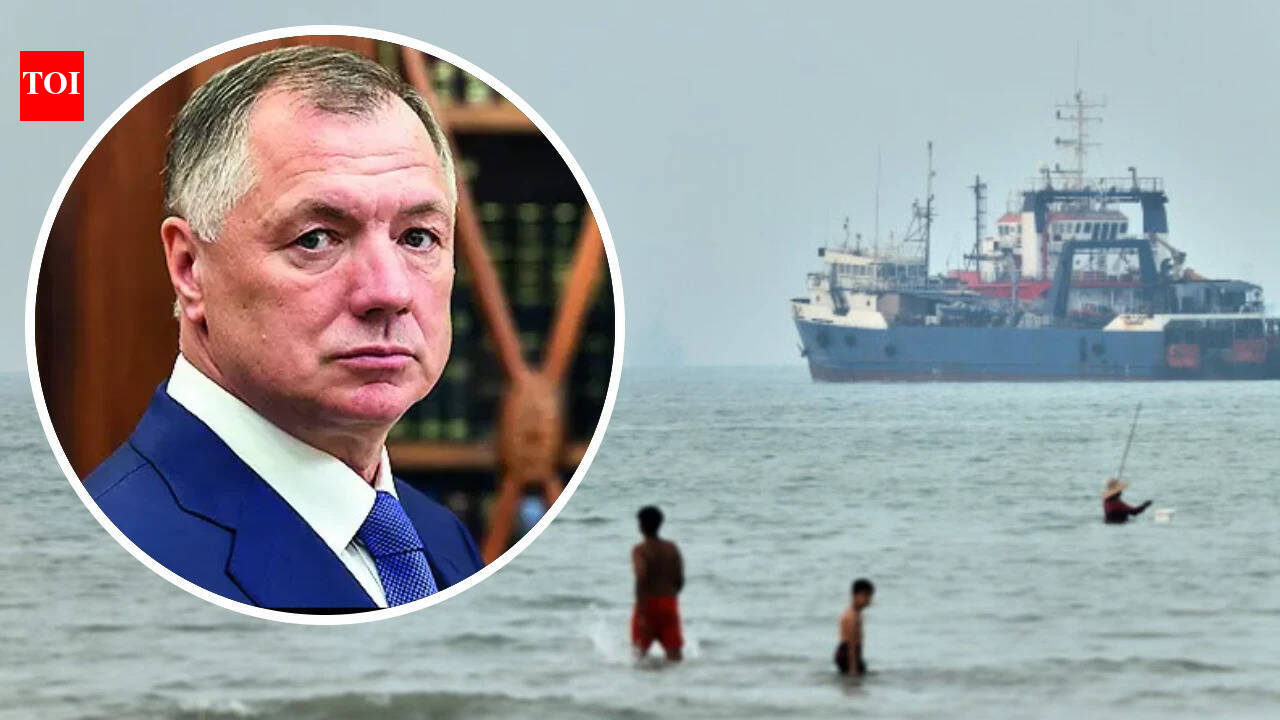
Russian Deputy Prime Minister Marat Khusnullin has proposed a direct rail freight corridor connecting Russia to India via Central Asia and Pakistan. This ambitious project aims to bypass maritime chokepoints like the Bosphorus and Strait of Hormuz but faces significant geopolitical and logistical hurdles.
The Proposed Russia-India Rail Corridor: A Strategic Shift
Russian Deputy Prime Minister Marat Khusnullin has formally proposed the exploration of a direct rail freight link connecting Russia to the Indian Ocean. This initiative, designed to establish a consistent overland trade route, is positioned as a strategic alternative to traditional maritime corridors that have become increasingly vulnerable to geopolitical tensions and regional conflicts. By seeking to connect Moscow to India, Russia aims to create a robust supply chain that circumvents the Bosphorus Strait and the Strait of Hormuz.
Navigating Geopolitical Chokepoints
The primary motivation behind this proposal is the mitigation of transit risks. The Bosphorus Strait, a critical maritime passage in Turkey, and the Strait of Hormuz, a vital artery for global energy, are susceptible to closures and disruptions due to ongoing conflicts in West Asia. These maritime vulnerabilities have previously stalled major infrastructure projects, such as the India-Middle East-Europe Economic Corridor (IMEC). By shifting to a rail-based model, Moscow hopes to decouple its trade interests from the volatility associated with these narrow sea lanes.
The Proposed Trans-Regional Route
The envisioned rail corridor is geographically complex, requiring passage through Turkmenistan, Iran, Afghanistan, and Pakistan. This route essentially attempts to bridge the vast distance between the Eurasian landmass and the Indian subcontinent. Each segment of this path presents its own unique set of challenges, ranging from the integration of disparate rail gauges to the necessity of infrastructure development in regions currently lacking high-speed or heavy-freight capacity.
Major Logistical and Financial Hurdles
Beyond the physical construction of rail lines, the project faces daunting economic and logistical realities. Experts have noted that the sheer cost of building and maintaining such a trans-continental rail network is immense. Furthermore, the efficiency of rail freight compared to maritime shipping remains a point of contention for global trade analysts. Sustaining a competitive price point for goods transported over such long, mountainous, and politically sensitive terrain will require unprecedented levels of international investment and coordination.
The Pakistan Factor and Security Cooperation
Perhaps the most significant barrier to the realization of this project is the political requirement for New Delhi to engage with the proposed route through Pakistan. For India, the security implications of such a transit corridor are profound. Any rail link traversing Pakistani territory would necessitate deep-seated security cooperation and a level of diplomatic trust that has been historically elusive. Without a stable and secure framework for transit, the project remains a theoretical ambition rather than a concrete infrastructure plan.
Concluding Outlook
While the Russian proposal for a direct rail link to India signifies a bold attempt to redefine trade logistics in an era of global instability, its implementation remains highly speculative. The project must overcome the intersecting challenges of regional rivalries, immense capital requirements, and the complex security landscape of Central and South Asia. For now, the proposal serves as a clear indication of Russia's desire to forge new economic pathways that are insulated from the traditional pressures of Western-aligned maritime security architecture.