Putin Warns About Using "All Types Of Weapons" If Kaliningrad Is Attacked
Source Entity
NDTV News Search Records Found 1000
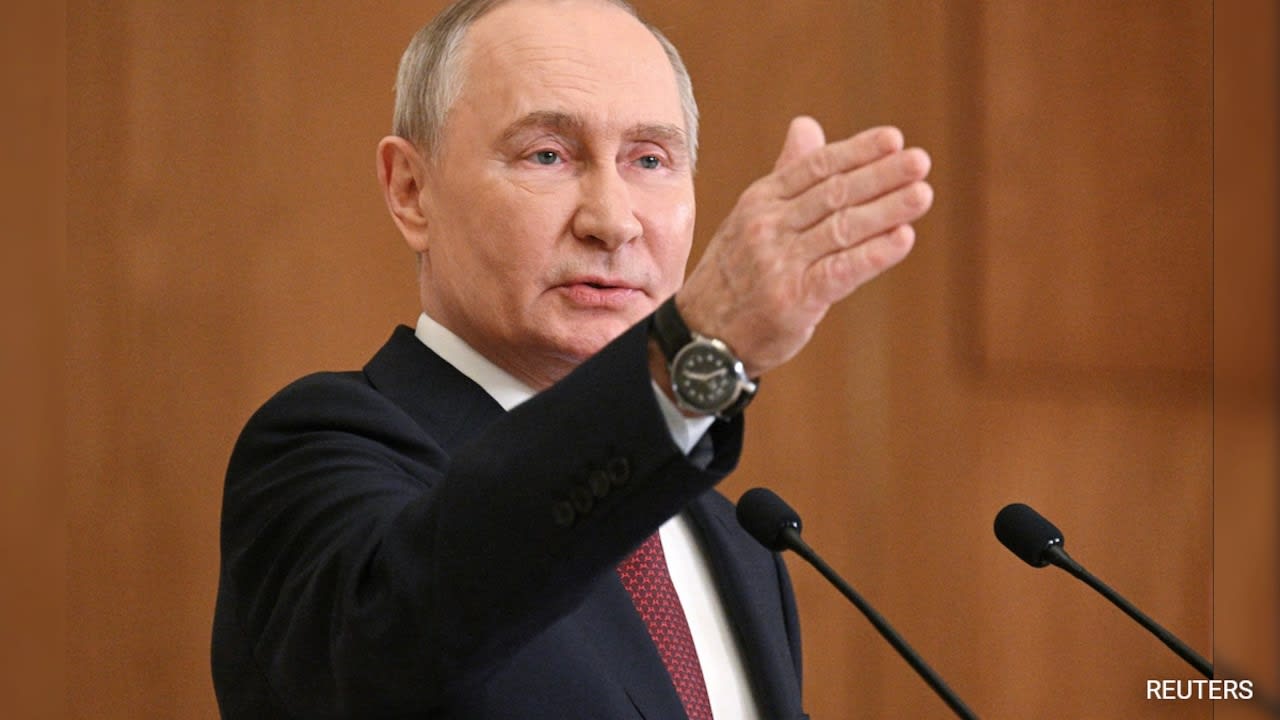
Russian President Vladimir Putin has issued stern warnings regarding the defense of Kaliningrad and the use of advanced weaponry amid escalating tensions with the West. Meanwhile, NATO Secretary General Mark Rutte has cautioned European nations to prepare for a sustained campaign of Russian hybrid warfare and sabotage.
Escalating Rhetoric: The Kaliningrad Flashpoint
Recent developments have signaled a sharp deterioration in the security landscape of Eastern Europe. Russian President Vladimir Putin has issued a provocative warning, stating that Russia would consider utilizing "all types of weapons" if its exclave of Kaliningrad were to be attacked. This declaration, coupled with his condemnation of ongoing military exercises in the Baltic Sea, underscores the extreme sensitivity of this geographic corridor. Kaliningrad, a Russian territory geographically separated from the mainland and nestled between NATO members Poland and Lithuania, remains a primary focal point for potential miscalculation.
The Shift Toward Hybrid Warfare
Beyond direct military threats, the conflict is increasingly defined by asymmetric tactics. NATO Secretary General Mark Rutte has explicitly urged European nations to prepare for a new normal characterized by Russian-led sabotage, arson, and various hybrid attacks. This strategic shift acknowledges that the conflict is no longer confined to the frontlines in Ukraine but has expanded into a broader, continent-wide campaign intended to destabilize European social cohesion and critical infrastructure.
Technological Escalation and Tactical Shifts
On the battlefield, the nature of the conflict continues to evolve with the introduction of new military assets. President Volodymyr Zelensky confirmed that Ukraine has, for the first time, deployed the FP-7 tactical ballistic missile in combat. This development marks a significant shift in Ukraine’s defensive and offensive capabilities. Simultaneously, the continued use of drone warfare remains a brutal reality, as evidenced by a recent Russian drone strike on a school in Kyiv. While the presence of children and staff in shelters prevented a mass casualty event, the targeting of civilian infrastructure remains a point of intense international condemnation.
The Nuclear Shadow and Diplomatic Standoff
President Putin’s rhetoric regarding the "fatal point of no return" and the potential use of weapons of mass destruction reflects a dangerous escalation in nuclear signaling. While Putin maintains that Russia does not intend to attack European nations, he explicitly links the current climate of global tension to the technical and military support provided to Ukraine by Western powers. This framing positions Western assistance as a direct threat to Russian security, effectively broadening the scope of the conflict to include the entire NATO alliance.
Future Trends and Regional Stability
Looking forward, the interaction between NATO’s defensive posture and Russia’s aggressive rhetoric suggests a prolonged period of instability. The "hybrid" nature of the conflict implies that European security will increasingly depend on counter-intelligence, cyber defense, and the hardening of civilian infrastructure against sabotage. As long as the current diplomatic stalemate persists, the risk of accidental escalation—particularly surrounding the Baltic region—remains at a historical high. The international community is now forced to navigate a landscape where the threshold for conflict is constantly being tested by both traditional military maneuvers and non-conventional aggression.
Multiple Citing Sources
Verification Required?