Russian bombing kills 18 people at Ukraine aid centre, Kyiv says
Source Entity
BBC News
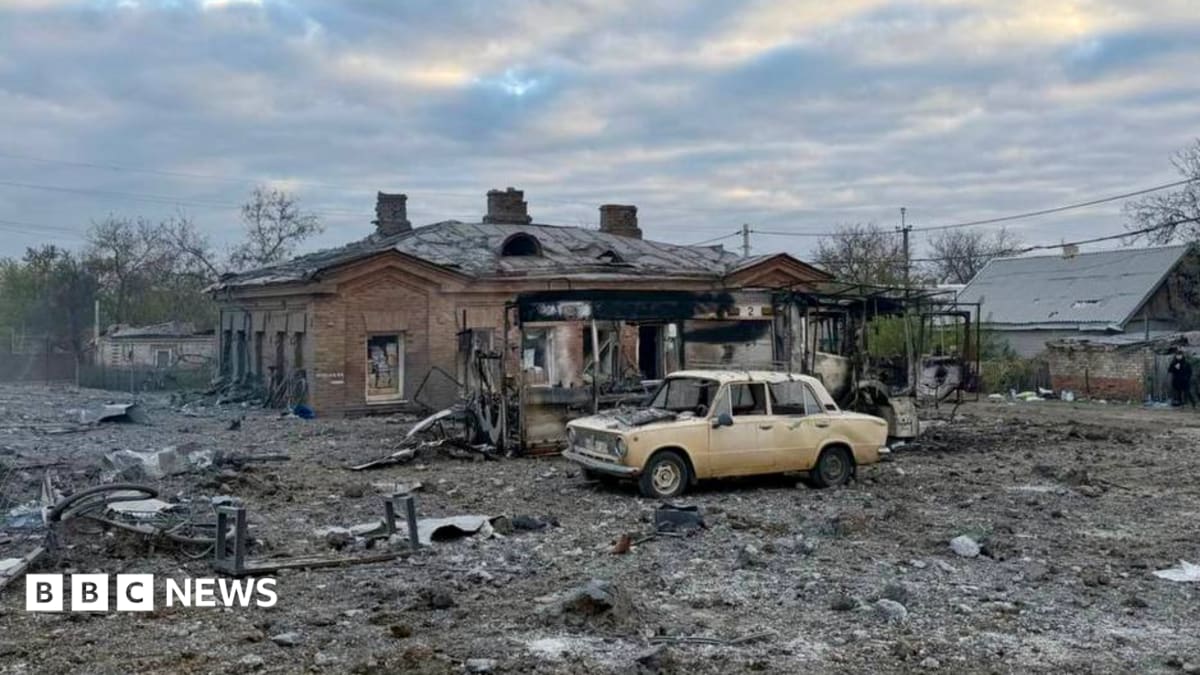
A Russian aerial bombardment on a humanitarian aid center and shelter in Komyshuvakha, Ukraine, has resulted in 24 deaths. President Zelenskyy condemned the strikes as evidence of Russia's refusal to de-escalate and warned of impending attacks on energy infrastructure.
The Tragedy in Komyshuvakha: A Humanitarian Crisis
A devastating aerial assault on the village of Komyshuvakha in Ukraine's southern Zaporizhzhia region has resulted in the deaths of 24 civilians. The attack specifically targeted a local school currently serving as a humanitarian aid distribution center, followed by a secondary strike on a nearby shelter where survivors had gathered. Regional head Mykhailo Semikin confirmed that at least nine 3,000kg aerial bombs were utilized in the operation, leaving 27 individuals missing and five others injured.
The Mechanics of the Attack
The tactical execution of this strike suggests a deliberate attempt to maximize civilian casualties. According to reports from President Volodymyr Zelenskyy, the bombardment followed a 'double-tap' pattern—a military tactic where a second strike is launched immediately after the first, specifically targeting rescue workers and civilians attempting to seek safety or assist the wounded. By hitting a facility clearly marked and utilized for humanitarian aid, the Russian forces have demonstrated a disregard for the protected status of civilian infrastructure under international humanitarian law.
Strategic Implications and Intent
President Zelenskyy has categorized this incident as definitive proof that the Russian leadership has no intention of pursuing de-escalation. The timing of the attack, coupled with intelligence regarding upcoming strikes on Ukrainian energy and logistics infrastructure, suggests a calculated effort to erode the Ukrainian public’s morale and physical security. This strategy appears designed to exploit vulnerabilities in Ukraine’s air defense systems, particularly regarding the availability and deployment of Patriot missile batteries.
Geopolitical Context and Global Response
This escalation occurs against a sensitive backdrop of international political cycles, with Zelenskyy specifically noting that Russia may be timing these attacks to coincide with the American midterm elections. The Ukrainian leadership is actively seeking increased pressure from the United States and the global community to deter further aggression. The narrative from Kyiv is clear: the international community must send a signal that state-sponsored terror yields no strategic gains, specifically by targeting the economic pillars of the Russian war effort, such as the oil sector.
Future Trends and Outlook
As winter approaches, the vulnerability of Ukraine's energy grid remains a primary concern for the government. The attack on Komyshuvakha serves as a grim indicator of the evolving nature of the conflict, where humanitarian hubs are increasingly becoming tactical targets. The ongoing search for the 27 missing persons in the rubble highlights the immediate human cost, while the broader strategic warning issued by Kyiv suggests that without enhanced air defense capabilities, the civilian toll in southern Ukraine will likely continue to rise as logistics and power centers remain under constant threat.