Russian warship carried out firing exercise off Plymouth coast
Source Entity
BBC News
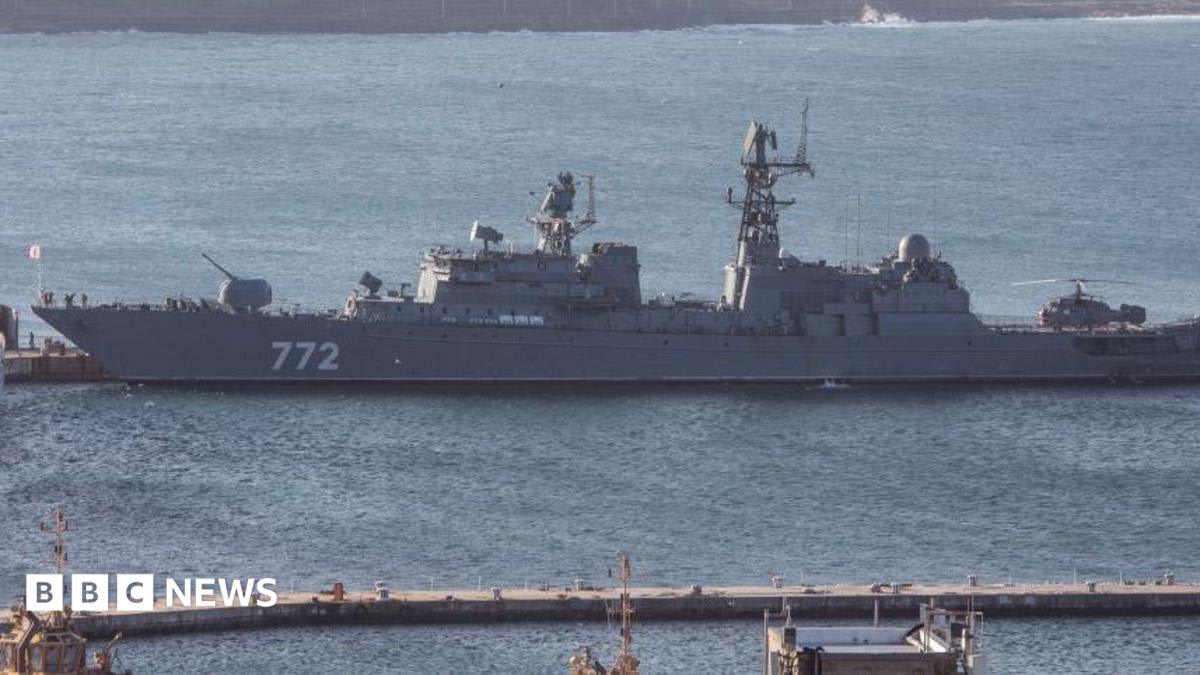
A Russian frigate, the Neustrashimy, conducted a 30-minute live-fire artillery exercise in international waters off the coast of Plymouth. The Royal Navy tracked the vessel throughout the event, ensuring safety protocols were maintained after the Russian ship requested a repositioning of HMS Tyne.
Russian Naval Activity Near UK Waters: An Analysis
The Incident Off Plymouth
On Monday, the Russian frigate Neustrashimy conducted a 30-minute live-fire artillery exercise in international waters, situated approximately 40 nautical miles south of Plymouth. While the exercise occurred outside of sovereign British territorial waters, the proximity of such activity to a major British naval hub highlights the ongoing tension and high-stakes monitoring taking place in European maritime zones. The presence of the vessel was detected and closely observed by the Royal Navy, specifically the Offshore Patrol Vessel HMS Tyne.
Communication and Protocol
Despite the underlying geopolitical friction, the interaction between the Russian vessel and the Royal Navy demonstrated adherence to standard maritime protocols. The Russian warship proactively communicated its intent to conduct gunnery exercises to HMS Tyne. Following this communication, the Russian vessel requested that the British patrol ship move to a safer distance, a request that was fulfilled. This level of professional communication suggests that while the exercise was intended to project capability, both parties were committed to preventing an accidental escalation.
International Surveillance
The monitoring of the Neustrashimy was not limited to British forces. Reports indicate that a French military aircraft also tracked the vessel and established radio contact to clarify its intentions. This collaborative surveillance underscores the integrated nature of European maritime defense, where NATO and allied nations coordinate to maintain situational awareness of Russian naval movements. The involvement of multiple nations reflects the broader strategic importance of the English Channel and the surrounding waters.
Broader Geopolitical Implications
Such exercises serve as a form of 'gray zone' signaling, where nations conduct activities that fall just short of direct provocation but serve to demonstrate reach and operational readiness. By operating in international waters near a key NATO partner's coastline, the Russian Navy is asserting its right to freedom of navigation while simultaneously testing the response times and monitoring capabilities of the UK and its allies. These maneuvers are a staple of modern naval posturing, designed to keep regional adversaries on high alert.
Historical Context and Future Trends
Historically, the presence of Russian naval assets in the North Atlantic and the English Channel has been a consistent feature of post-Cold War maritime strategy. As the geopolitical landscape remains strained, it is highly probable that we will continue to see these 'shadowing' operations. The Royal Navy’s commitment to 'tracking the vessel's activity closely' indicates that the UK will maintain a persistent presence to ensure that international waters remain secure and that any deviations from standard procedure are immediately addressed. This 'new normal' of maritime surveillance is expected to continue as a primary method of managing naval competition without resorting to open conflict.