Salon is shutting down after 31 years
Source Entity
Jay Peters
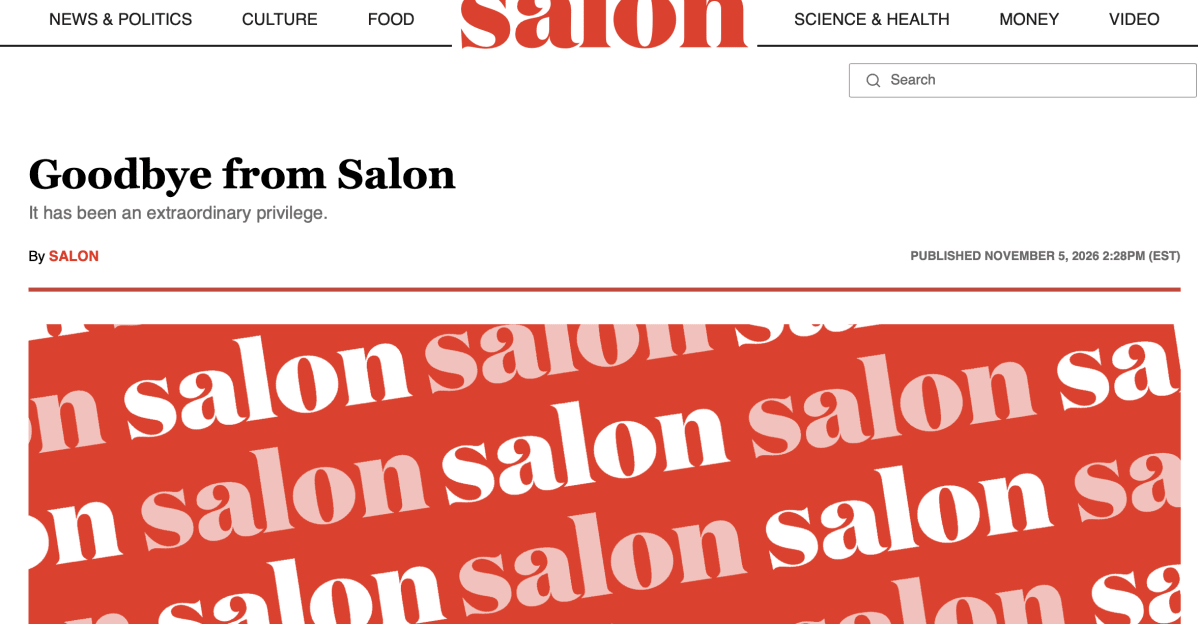
Pioneering online magazine Salon is shutting down after 31 years due to the unsustainable nature of independent digital journalism. The closure highlights the broader industry struggle against changing web traffic patterns and the rise of AI-driven content.
The End of a Digital Pioneer: Salon Shuts Down
After more than three decades of operation, Salon—one of the internet's earliest and most influential online-only magazines—has officially announced it is ceasing publication. Launched in the mid-1990s, the outlet served as a trailblazer for the digital-first news movement, carving out a niche for independent journalism long before the modern era of social media aggregation and algorithmic content delivery. Its closure marks a poignant end to a significant chapter in the history of the web.
Evolving Business Realities
The company cited the shifting landscape of digital media as the primary catalyst for its decision. In an unsigned announcement, leadership explicitly noted that the 'business realities of independent digital journalism have changed profoundly over the years.' This admission reflects a broader crisis facing legacy digital publishers, who have seen their traditional revenue streams—largely dependent on display advertising and direct web traffic—eroded by the consolidation of the internet economy.
The 'Google Zero' and AI Impact
While the company did not provide granular financial disclosures, the timing of the closure aligns with industry-wide concerns regarding 'Google Zero'—a phenomenon where search engines provide direct answers to queries, effectively preventing users from clicking through to original publisher websites. Furthermore, the rapid integration of AI tools into search and information retrieval has drastically altered how audiences consume news, making it increasingly difficult for independent outlets to monetize their content through traditional web traffic models.
The Sustainability Crisis in Independent Media
Salon’s decision to cease operations highlights the vulnerability of the independent publishing model in an era dominated by platform gatekeepers. For years, digital journalism has struggled to balance the costs of maintaining a professional newsroom with the volatility of digital ad spending. As platforms prioritize AI-generated summaries and automated content, the 'independent' edge that once defined Salon's brand has become a difficult asset to sustain financially.
A Legacy of Digital Journalism
For 31 years, Salon operated at the intersection of culture, politics, and technology, influencing generations of digital journalists. Its departure leaves a void in the media ecosystem, signaling that even the most established digital-first institutions are not immune to the fundamental shifts in how the internet functions. The closure serves as a stark reminder of the fragile state of independent media in a post-search, AI-integrated digital environment.
Future Implications for the Industry
Looking ahead, the closure of Salon is likely to accelerate discussions regarding the future of news subscription models and the necessity of legislative action against platform dominance. As independent publishers continue to face a 'sustainability' wall, the industry may see further consolidation or a pivot toward niche, community-funded models. The demise of this pioneer serves as a cautionary tale for the industry at large.