Satya Nadella has issued a shocking warning to companies using AI
Source Entity
Julie Bort
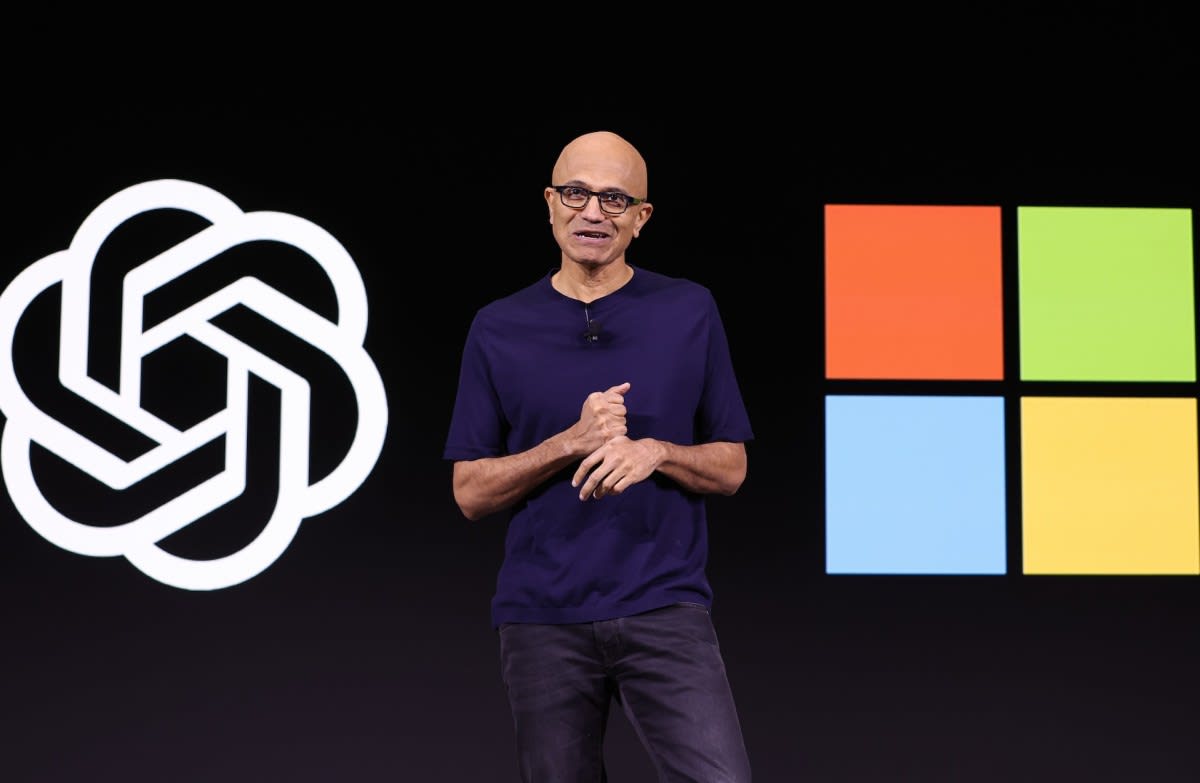
Of all the debates raging about the potential downsides of AI, there is one worry causing the most hand-wringing among AI enthusiasts in Silicon Valley — that the giant AI labs that sell proprietary models are somehow acting like Trojan horses.
The Strategic Paradox: Analyzing Satya Nadella's AI Warning
In a move that underscores the complex tension between rapid innovation and corporate sovereignty, Microsoft CEO Satya Nadella has brought attention to a growing anxiety within Silicon Valley: the risk of proprietary AI models acting as "Trojan horses." This warning comes at a pivotal moment when enterprises globally are racing to integrate Large Language Models (LLMs) into their core operations. The core of the concern lies in the precarious balance between the immediate efficiency gains offered by turnkey, proprietary solutions and the long-term strategic risk of becoming inextricably tied to a single provider's ecosystem.
The "Trojan Horse" Architecture and Vendor Lock-in
The metaphor of the "Trojan horse" in this context refers to the deceptive ease of initial adoption. Proprietary models, often delivered via API or integrated cloud services, allow companies to deploy sophisticated AI capabilities almost instantly without the need for massive internal compute resources. However, as these models become deeply embedded in a company's proprietary workflows, data pipelines, and customer-facing interfaces, the cost of switching becomes prohibitively high. This creates a state of vendor lock-in where the AI provider gains immense leverage over pricing, feature availability, and the fundamental logic governing the client's business processes.
Broader Implications for Enterprise Autonomy
Beyond simple pricing disputes, the dependency on "black box" proprietary models introduces significant operational risks. When a company relies on a model whose weights, training data, and update schedules are hidden, they surrender a degree of control over their own product's behavior. A sudden update to a model's alignment or a change in its output characteristics can break downstream applications or alter the user experience without warning. This lack of transparency transforms a tool for productivity into a potential point of failure, where the enterprise is essentially renting its intelligence rather than owning it.
Historical Parallels: From Cloud to AI
This current AI anxiety mirrors the early transitions to cloud computing. In the previous decade, the industry witnessed a shift from on-premise servers to proprietary cloud environments. While this accelerated scaling, it led to the "egress fee" wars and the struggle for multi-cloud strategies to avoid total dependence on a single provider. Nadella's warning suggests that the AI era is repeating this cycle but with higher stakes; while cloud computing managed data and compute, AI manages the actual cognitive logic of the business, making the "Trojan horse" effect far more potent and dangerous.
The Rise of Open-Source as a Strategic Hedge
As a direct response to the fear of proprietary capture, there is an accelerating trend toward open-source or "open-weight" models. The emergence of models like Meta's Llama or Mistral AI provides a critical alternative, allowing companies to host models on their own infrastructure. By doing so, enterprises can maintain full control over their data and the versioning of their AI, effectively neutralizing the Trojan horse risk. Nadella's acknowledgement of this worry validates the strategic necessity for companies to adopt a hybrid approach—using proprietary models for cutting-edge performance while maintaining open-source foundations for core stability.
Future Trends: Toward Model Agnosticism
Looking forward, the industry is likely to pivot toward "model-agnostic" orchestration layers. We can expect to see the rise of middleware that allows businesses to swap underlying LLMs seamlessly based on cost, performance, or privacy requirements. This evolution will be driven by the very fears Nadella highlighted; the goal will be to decouple the application logic from the model provider. The future of corporate AI will not be about choosing the "best" model, but about building the infrastructure that prevents any single model from becoming a permanent, controlling fixture of the business.
Conclusion
Satya Nadella's warning serves as a critical reminder that in the AI gold rush, the tool providing the most immediate value may also be the one creating the most significant long-term vulnerability. For businesses, the challenge is to embrace the transformative power of AI without sacrificing their strategic autonomy. The transition from blind adoption to calculated integration will define the winners of the next decade of digital transformation.