Why was Saurav Das stopped from flying to London? Delhi HC to hear case
Source Entity
India Latest News: Top National Headlines Today & Breaking News | The Hindu
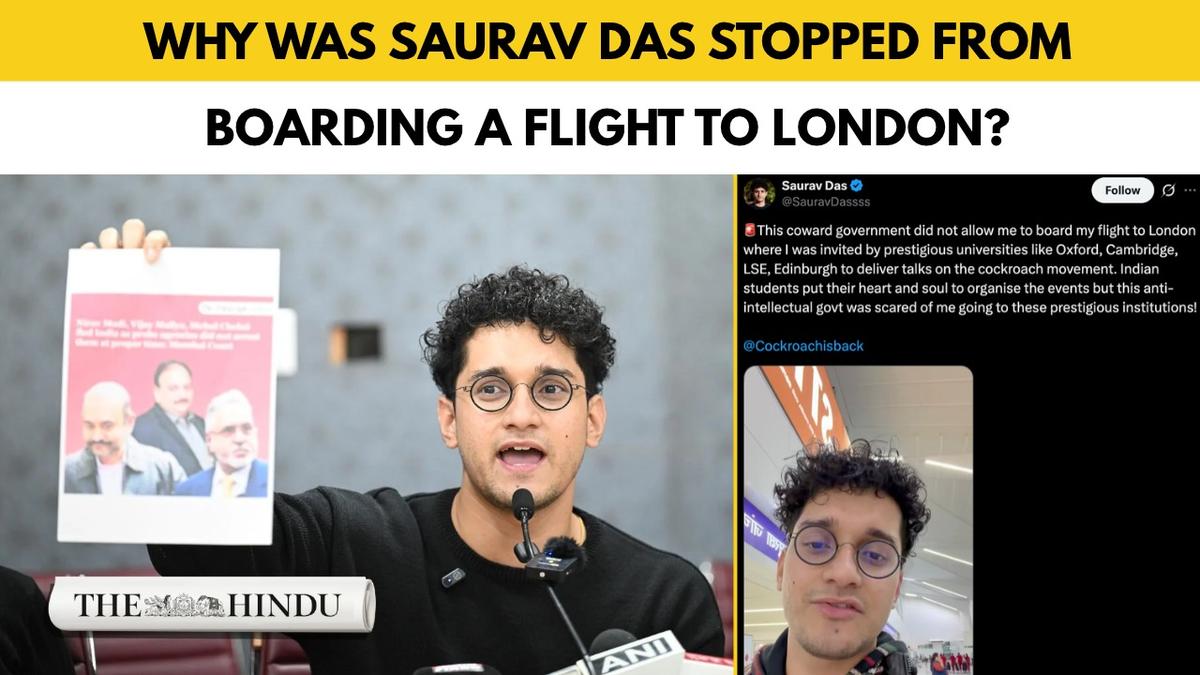
Cockroach Janta Party co-convener Saurav Das has moved the Delhi High Court after being barred from traveling to the U.K. for an Oxford University event. Party leadership alleges the government is suppressing dissent and blocking international exposure of its policy failures.
Legal Challenge Over Travel Ban
Saurav Das, co-convener of the Cockroach Janta Party (CJP), has filed a petition in the Delhi High Court following an incident at the Indira Gandhi International Airport where he was allegedly prevented from boarding a flight to the United Kingdom. Das, a legal journalist, was scheduled to address an academic gathering at the University of Oxford regarding the "cockroach movement." Upon being stopped at the immigration desk, Das reported that no specific legal order or Look Out Circular (LOC) was presented to him, prompting an urgent legal challenge to clarify the grounds for his travel restriction.
The Judicial Response
The legal proceedings commenced on November 25, 2026, when Das’s legal team, led by advocate Krishnaraj Bapat, requested an urgent hearing before a bench comprising Acting Chief Justice Nitin Wasudeo Sambre and Justice Sanjay Sharma. Recognizing the significance of the individual's right to mobility and free speech, the court scheduled the matter for a formal hearing on November 26. Senior advocate Akhil Sibal is expected to represent Das, focusing on the lack of due process and the absence of formal documentation that usually accompanies state-sanctioned travel bans.
Political Allegations and Government Scrutiny
Abhijeet Dipke, the founder of the CJP, has framed the incident as a targeted act of political suppression. During a press engagement in Chhatrapati Sambhajinagar, Dipke criticized the Central government, drawing a pointed comparison between the treatment of high-profile financial fugitives like Vijay Mallya, Nirav Modi, and Mehul Choksi and the restrictions placed on Das. Dipke argued that the government is utilizing its administrative machinery to prevent young leaders from discussing the ideological foundations of the CJP—specifically the influences of Ambedkar and Gandhi—on international stages.
Implications for Academic and Political Discourse
The central tension in this case revolves around the government's perception of international criticism. Dipke alleged that the restriction stems from a fear that the CJP will expose internal policy failures to a global audience. By preventing Das from attending the Oxford event, the government faces accusations of attempting to curate the narrative surrounding Indian domestic politics. This incident highlights the growing friction between emerging political movements and the state apparatus, particularly regarding the export of dissent.
Historical Context and Future Trends
Historically, the use of travel restrictions and LOCs has been a subject of intense debate in Indian constitutional law, often balancing national security interests against the fundamental right to travel and freedom of expression. If the court finds that the restriction lacked a statutory basis, it could set a critical precedent for how authorities handle the movement of political activists and journalists. As the CJP continues to mobilize, particularly in the context of ongoing electoral cycles like those in Uttar Pradesh, the outcome of this case will likely influence how political dissenters are treated at points of exit, potentially signaling a shift in the legal landscape regarding the right to international engagement.
Verification Required?