Grazing sheep in fields with solar arrays
Source Entity
Hacker News
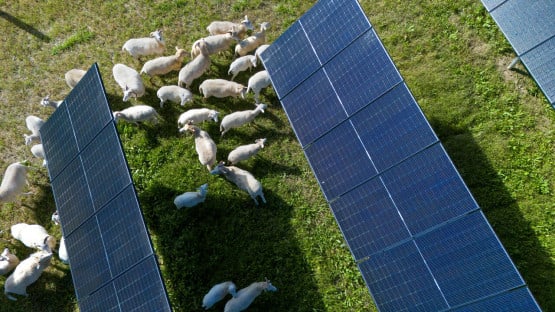
New research shows that sheep grazing in solar arrays significantly boosts beneficial insect populations compared to mechanical mowing. A new decision-support tool is also available to help farmers manage these solar-grazing herds profitably.
The Symbiosis of Agrivoltaics: Sheep and Solar Energy
Recent research from the College of Agriculture and Life Sciences (CALS) has provided empirical evidence for a burgeoning agricultural practice known as 'agrivoltaics'—the dual use of land for both solar energy production and agricultural activities. The study specifically highlights that grazing sheep within solar arrays serves as a superior land management strategy compared to traditional mechanical mowing. By replacing fossil-fuel-powered lawn maintenance with livestock grazing, farmers are discovering ecological benefits that extend far beyond simple maintenance.
Boosting Biodiversity in Solar Fields
The most striking finding from the study is the 38% increase in beneficial insect populations, including wild bees, honey bees, and lady beetles, when a density of two sheep per hectare is maintained. This shift is not merely incidental; the research notes an 83% surge in honey bees alone. This suggests that the presence of sheep creates a more favorable habitat for pollinators than the sterile, frequently mowed environments typically found in industrial solar installations. This data confirms that thoughtful land management can turn renewable energy sites into biodiversity hotspots.
Economic Support for Farmers
Beyond the ecological data, the research addresses the practical barrier of implementation: profitability. The development of a decision-making support tool is a critical step in professionalizing solar grazing. By helping farmers calculate the optimal herd size and management logistics, this tool lowers the barrier to entry for small and large-scale agricultural operations. This innovation bridges the gap between theoretical environmental benefits and the bottom-line realities that dictate farming practices.
The Future of Land Stewardship
As the global transition to renewable energy accelerates, the demand for large-scale solar installations will continue to grow. The integration of sheep grazing offers a scalable solution to the 'land-use conflict' often cited by opponents of solar expansion. By proving that solar fields can function as productive agricultural land rather than industrial dead zones, this model provides a template for sustainable infrastructure development that respects the needs of both the energy and agricultural sectors.
Broadening the Scope of Agrivoltaics
Looking ahead, these findings suggest that the future of solar energy production is intrinsically tied to land stewardship. The success of this dual-use model could influence policy decisions regarding land-use permits and environmental subsidies for solar developers. If managed correctly, the synergy between solar arrays and controlled grazing could become the standard for rural renewable energy projects, effectively mitigating the negative impacts of traditional vegetation management while supporting local honey production and pest control services provided by beneficial insects.