India ‘takes note’ of Trump-Xi-Putin summit, awaits more details
Source Entity
India Latest News: Top National Headlines Today & Breaking News | The Hindu
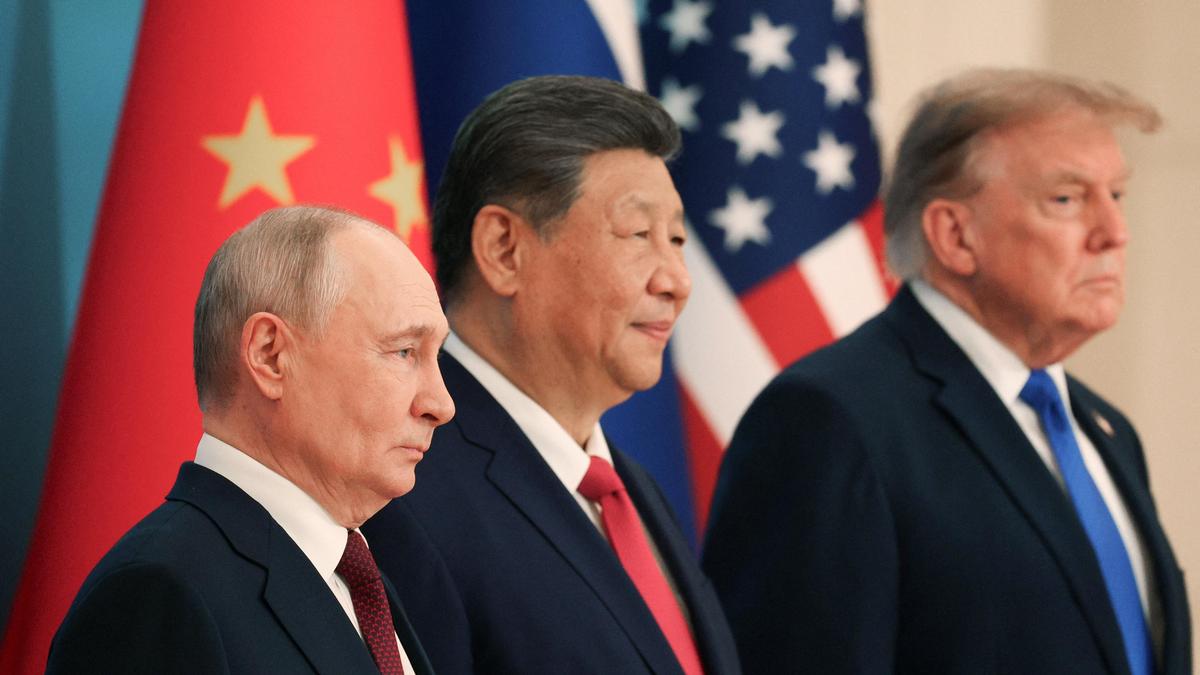
The U.S., China, and Russia held a historic trilateral summit in Shenzhen, focusing on oil supplies and nuclear risk reduction. India has responded cautiously to this 'G-3' meeting, emphasizing its commitment to existing frameworks like the Quad.
The Shenzhen Summit: A New Era of Great-Power Diplomacy
The recent trilateral meeting in Shenzhen, China, between U.S. President Donald Trump, Chinese President Xi Jinping, and Russian President Vladimir Putin, represents a pivotal shift in the landscape of global geopolitics. Held on the sidelines of the APEC summit at Kylin Villa, this unprecedented gathering—often referred to as a 'G-3' summit—signals a return to a framework where the world’s most consequential powers seek to manage the international order through direct, high-level engagement.
Strategic Objectives and Global Implications
At the core of the discussions were two critical areas of global concern: the stabilization of international energy markets through increased oil supplies and the urgent need to address nuclear risk reduction. By convening on these topics, the three leaders have signaled a pragmatic, albeit temporary, convergence of interests. This move suggests that despite deep-seated ideological and strategic rivalries, these nations recognize the necessity of managing shared systemic risks that could threaten global stability.
India’s Diplomatic Stance and the 'G-3' Narrative
India’s response to the Shenzhen summit has been one of measured caution. The Ministry of External Affairs, represented by spokesperson Randhir Jaiswal, stated that India has "taken note" of the meeting but remains non-committal, awaiting a more comprehensive assessment of the "concrete outcomes" produced. This guarded posture reflects the complexities of India's position; while it maintains strong ties with the U.S. and Russia, the formation of a G-3 bloc poses questions regarding the inclusivity of global governance and the potential sidelining of other major players.
The Quad vs. The G-3: A Balancing Act
Critics and opposition voices in India have questioned the nation's absence from this high-level forum. However, the Indian government has effectively countered by highlighting the recent successes of the Quad Summit, which took place just days prior. This juxtaposition illustrates a broader trend in Indian foreign policy: balancing participation in established, value-based partnerships like the Quad with a pragmatic observation of emerging, power-centric groupings that may redefine the global order.
Symbolism Over Substance?
While the Shenzhen summit is historically significant for its optics, experts note that its true impact remains to be seen. The meeting projected a message that great-power diplomacy remains the primary engine of international relations. However, the deep-seated, divergent ambitions of the U.S., Russia, and China suggest that this convergence may be more symbolic than structural. Future trends will likely depend on whether this trilateral arrangement can move beyond managing immediate crises to establishing a sustainable framework for long-term cooperation.
Conclusion
The Shenzhen trilateral serves as a reminder that the global order is in a state of flux. As the world watches to see if this G-3 arrangement develops into a formal diplomatic mechanism, nations like India must continue to navigate these shifting alliances with strategic patience. The ability of these three powers to follow through on their commitments regarding oil and nuclear safety will ultimately determine whether the Shenzhen summit was merely a momentary alignment or the beginning of a new, more rigid tri-polar architecture.
Verification Required?