CNBC's The China Connection newsletter: Betting on Shenzhen over Silicon Valley
Source Entity
US Top News and Analysis
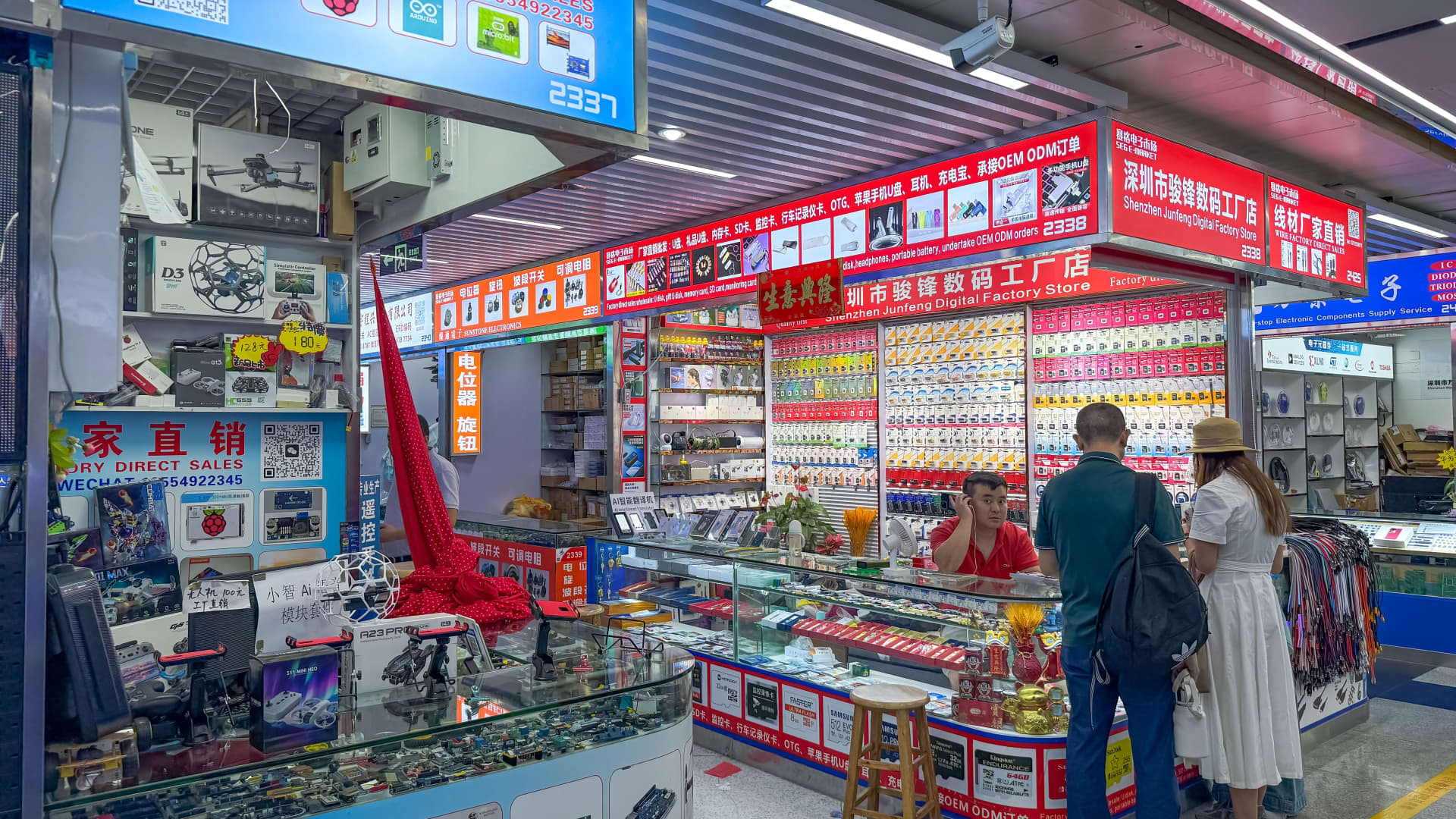
The coastal Chinese city of Shenzhen has become a hub for tech hardware that U.S. firms can't ignore.
The Shift in Global Tech Supremacy: Shenzhen vs. Silicon Valley
For decades, Silicon Valley has been the undisputed epicenter of global technological innovation, primarily driven by software, cloud computing, and venture capital. However, as highlighted by CNBC's The China Connection, a significant paradigm shift is occurring. The coastal city of Shenzhen has evolved from a mere manufacturing outpost into a sophisticated hub for tech hardware. This transition signifies a move from 'design-centric' innovation to 'execution-centric' innovation, where the ability to rapidly prototype and scale physical products has become a critical competitive advantage that U.S. firms can no longer ignore.
The 'Shenzhen Speed' and Ecosystem Synergy
One of the primary drivers behind Shenzhen's ascent is what industry experts call "Shenzhen Speed." Unlike Silicon Valley, where the design of a product often happens thousands of miles away from the factory, Shenzhen integrates the entire lifecycle of hardware development within a tight geographic radius. The city's legendary Huaqiangbei electronics market and the surrounding density of component suppliers, engineers, and factories allow a company to move from a conceptual sketch to a working prototype in a matter of days. This vertical integration reduces the iterative loop of product development, allowing for a pace of innovation in hardware—particularly in IoT, robotics, and consumer electronics—that is currently unmatched in the West.
Why U.S. Firms are Pivoting Their Strategy
The realization that U.S. firms "can't ignore" Shenzhen stems from the sheer efficiency of the Pearl River Delta's supply chain. For many American tech companies, attempting to build a comparable hardware ecosystem domestically is prohibitively expensive and slow. The concentration of specialized talent and raw materials in Shenzhen creates a network effect: the more firms that move there, the more suppliers emerge, further lowering costs and increasing speed. Consequently, many U.S. startups and established tech giants are increasingly "betting on Shenzhen" by establishing local R&D centers or deep partnerships to ensure their hardware can keep pace with global demand.
Contrasting Innovation Philosophies
Historically, Silicon Valley has excelled at the "zero to one" phase—creating entirely new categories of software or digital services. Shenzhen, conversely, has mastered the "one to one hundred" phase—taking a concept and optimizing its physical production for global scale. However, the line between these two is blurring. Shenzhen is no longer just copying Western designs; it is leading in hardware innovation, particularly in drone technology and electric vehicles (EVs). This shift forces a reconsideration of the global division of labor, where the physical manifestation of technology is now as much a source of intellectual property as the code that runs it.
Navigating Geopolitical Friction and Dependency
This economic reality exists in stark tension with the current geopolitical climate. The ongoing trade frictions and technological sanctions between the U.S. and China create a precarious environment for firms betting on Shenzhen. While the U.S. government has pushed for "re-shoring" or "friend-shoring" of critical tech manufacturing, the infrastructure in Shenzhen is so deeply entrenched that a total decoupling appears nearly impossible for most hardware firms. The dependency on Shenzhen's ecosystem creates a strategic paradox: U.S. firms must leverage the city's efficiency to remain competitive while simultaneously mitigating the risks of geopolitical volatility.
Future Trends: The Hybrid Innovation Model
Looking forward, the trend suggests the emergence of a hybrid model of innovation. We are likely to see more "Silicon Valley Design, Shenzhen Execution" partnerships, but with a deeper level of integration. As AI continues to merge with physical hardware (the "embodied AI" trend), the importance of Shenzhen will only grow. The future of tech will not be decided by software alone, but by who can most efficiently house that software in a physical form. Those who can bridge the gap between California's software prowess and Shenzhen's hardware mastery will likely dominate the next decade of technological advancement.
Summary
Shenzhen's rise as a hardware powerhouse represents more than just a shift in manufacturing; it is a shift in the center of gravity for technological execution. By offering an ecosystem that prioritizes speed, proximity, and scalability, Shenzhen has created a competitive moat that challenges the traditional dominance of Silicon Valley. For U.S. firms, the city is no longer just a source of cheap labor, but a strategic necessity for any company aiming to lead in the physical tech landscape.