What building Shippy taught us about building agents
Source Entity
Hugging Face - Blog
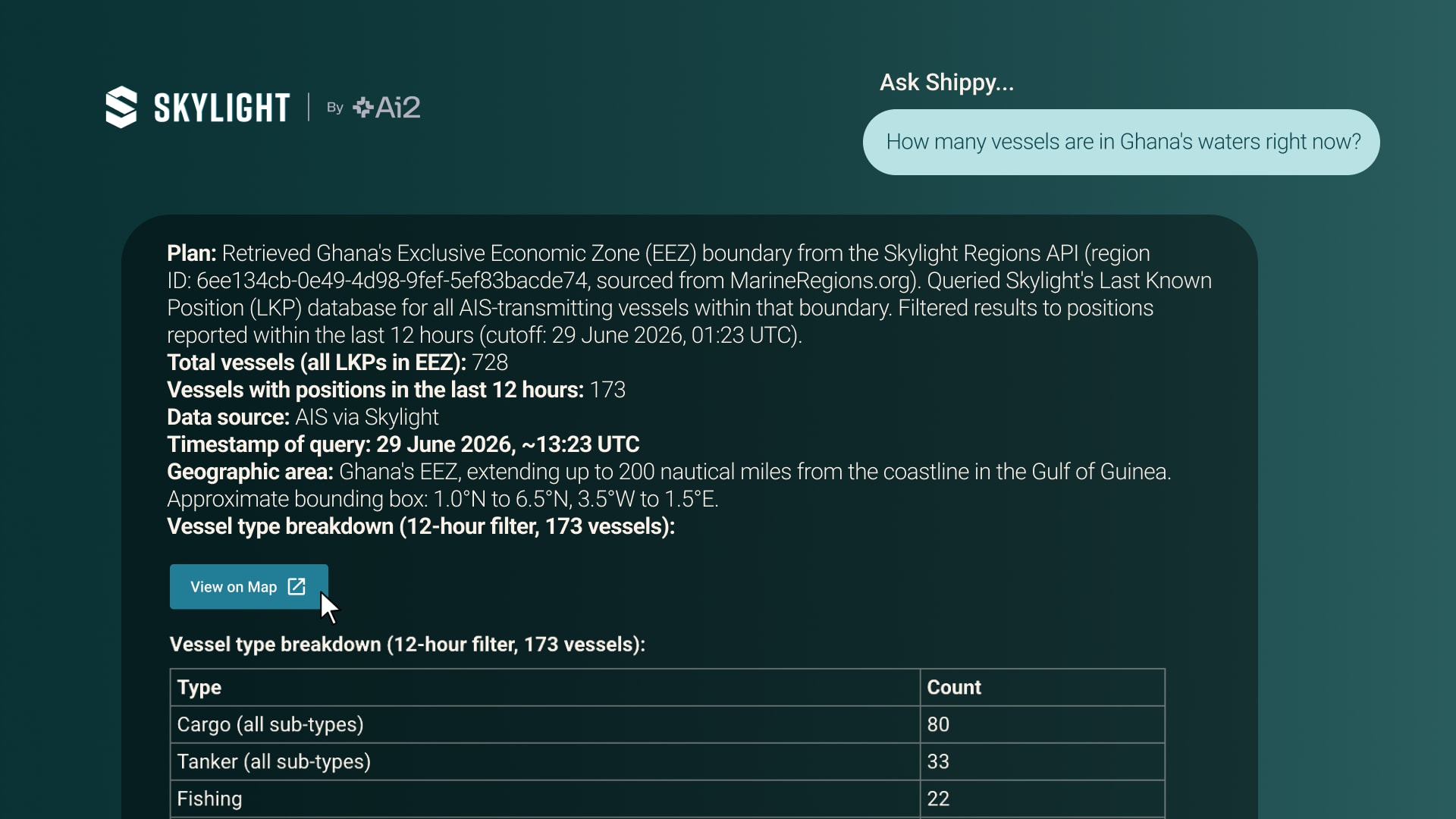
The development of the Shippy maritime AI agent highlights critical challenges in building reliable, high-stakes operational systems. Engineers are finding that effective model routing requires complex systems optimization rather than simple classification.
The Evolution of High-Stakes AI Agents
The emergence of specialized AI agents like 'Shippy' marks a significant shift in how artificial intelligence is applied to high-stakes operational environments. Designed specifically for maritime analysis, Shippy represents a move away from general-purpose chatbots toward systems that prioritize reliability, transparency, and actionable intelligence. By providing maritime analysts with data sources, timestamps, and deep links to platforms like Skylight, the architecture emphasizes the necessity of human-in-the-loop verification in environments where errors carry physical and financial consequences.
The Reliability Imperative
Building an agent for ocean protection involves navigating high-stakes decision-making where a single incorrect coordinate can misdirect patrol vessels, wasting precious resources. The core challenge here is not just generating an answer, but ensuring that the logic behind the answer is auditable. The developers behind Shippy have demonstrated that for AI to be trusted in critical infrastructure, the system must show its work, effectively bridging the gap between machine-generated insights and human operational oversight.
Deconstructing Model Routing Complexity
While the industry often treats model routing—the process of directing queries to different AI models based on cost or specialty—as a straightforward classification problem, the reality is far more nuanced. As developers have discovered, routing is fundamentally a systems optimization challenge. Relying on simple heuristics to send 'easy' tasks to cheaper models often fails to account for the dynamic nature of performance, latency, and actual operational costs.
Beyond Theoretical Pricing
One of the most profound lessons from current development cycles is that theoretical model pricing rarely matches real-world expenditures. When evaluating models like GPT-4.1 versus Claude Sonnet 4.6, engineers are finding that cost structures are volatile and influenced by factors beyond simple token pricing. This realization forces teams to rethink their infrastructure, moving away from static routing rules toward more adaptive, system-wide optimization strategies that prioritize long-term stability.
Future Trends in Agentic Systems
Looking forward, the architecture behind Shippy and the lessons learned regarding model routing suggest a maturing field. We are moving toward a paradigm where 'agentic' systems are evaluated not by their conversational fluency, but by their ability to integrate with existing specialized data tools and their resilience under operational pressure. Future systems will likely require even more sophisticated routing logic that accounts for model drift, changing cost landscapes, and the specific accuracy requirements of the domain in which they operate.
Conclusion
The transition from simple AI models to robust, high-stakes agents requires a fundamental shift in engineering philosophy. By prioritizing transparency and acknowledging that model routing is a complex optimization problem, developers are creating tools that are not only smarter but significantly more reliable for critical, real-world applications.