When to replace your kitchen tawa: Signs of damage and safety risks
Source Entity
The Indian Express
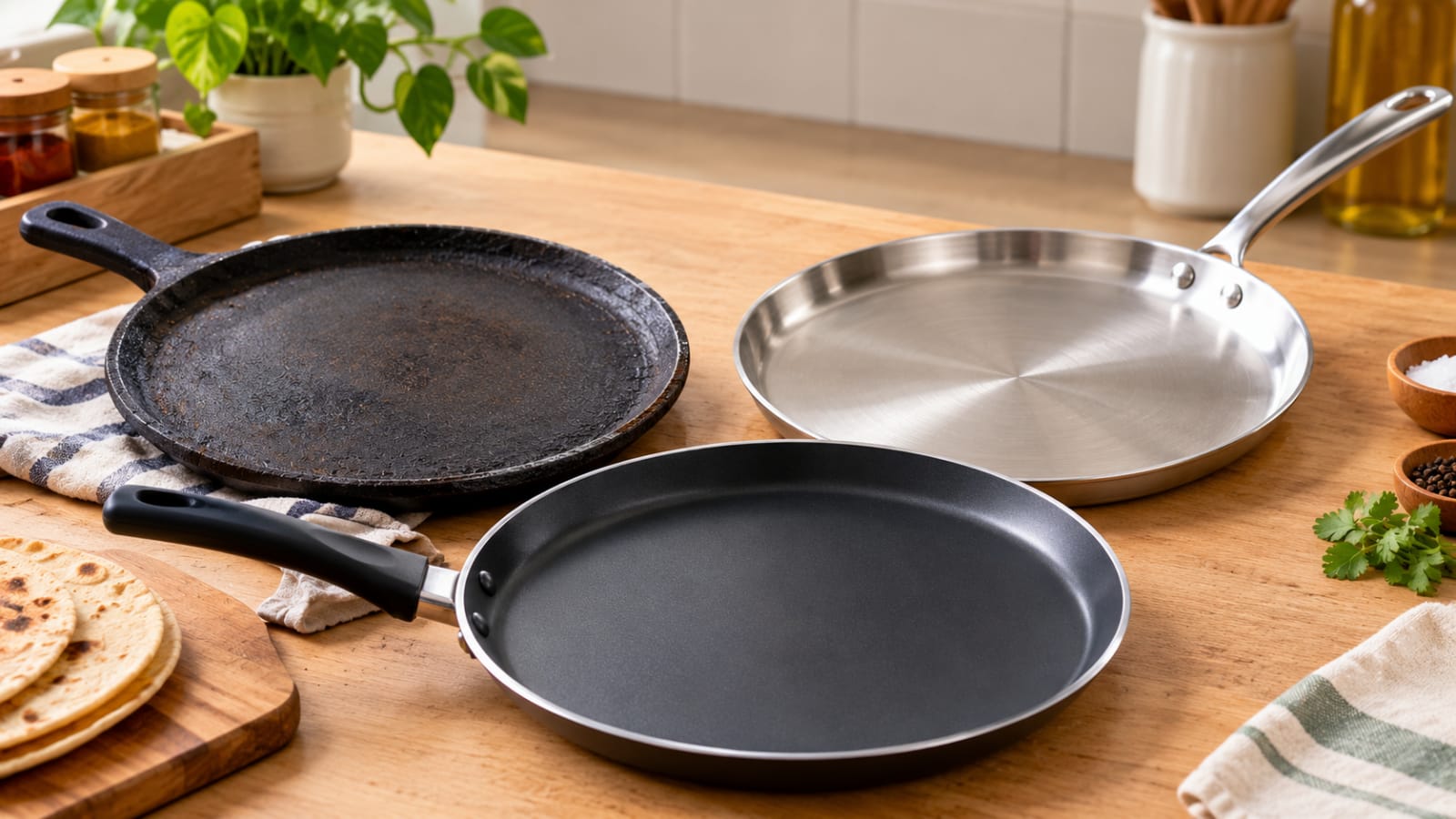
Replacing a kitchen tawa is essential for food safety when signs of physical wear like deep scratches, warping, or peeling appear. These damages can lead to uneven cooking and potential health risks from degraded coating materials.
The Hidden Risks of Your Kitchen Tawa
For many households, the kitchen tawa is the workhorse of daily meal preparation, essential for staples like rotis, parathas, and dosas. While these utensils are designed for durability and frequent use, they are not permanent fixtures in your kitchen. Recognizing the threshold between a well-seasoned utensil and a safety hazard is crucial for maintaining both food quality and personal health.
Identifying Non-Stick Degradation
Non-stick cookware relies on specialized coatings to function. As dietitian Kanikka Malhotra notes, the primary indicators of a compromised non-stick surface are deep scratches that expose the underlying grey metal, as well as visible peeling or bubbling of the coating. When these layers break down, the surface loses its integrity, causing food to stick despite the use of oils. Furthermore, persistent dark patches that remain after washing indicate a buildup of carbonized material or chemical breakdown that can no longer be safely sanitized.
The Dangers of Warped Cookware
Beyond the surface coating, structural integrity is paramount. A tawa that has warped—a common issue caused by thermal shock or prolonged high-heat exposure—presents a significant functional problem. By placing the tawa on a flat surface and pressing the edges, one can easily detect instability. A warped base prevents even heat distribution, leading to unevenly cooked food and potential safety issues where the utensil may slide or tip on the stovetop.
Health Implications of Damaged Utensils
Using a degraded tawa is not merely a culinary nuisance; it is a health consideration. When non-stick coatings are scratched or bubbled, there is a risk of coating particles leaching into food. Furthermore, food sticking to damaged surfaces requires higher temperatures or more oil to manage, which can alter the nutritional profile of the meal or lead to burnt, unhealthful residues. Replacing a damaged tawa is a proactive step in food safety management.
Future Trends in Kitchen Safety
As consumers become more health-conscious, the trend is shifting toward more durable, non-toxic materials. While non-stick remains popular for its convenience, the awareness regarding the lifespan of these products is growing. The future of kitchenware lies in recognizing that even the most 'permanent' tools have a lifecycle. By monitoring for the signs described—scratches, warping, and sticking—home cooks can ensure their kitchen remains a space for safe and efficient nutrition.