Carbon emission blame unfairly put on developing nations: PM Modi at NGT international conference
Source Entity
Nikhil Ghanekar
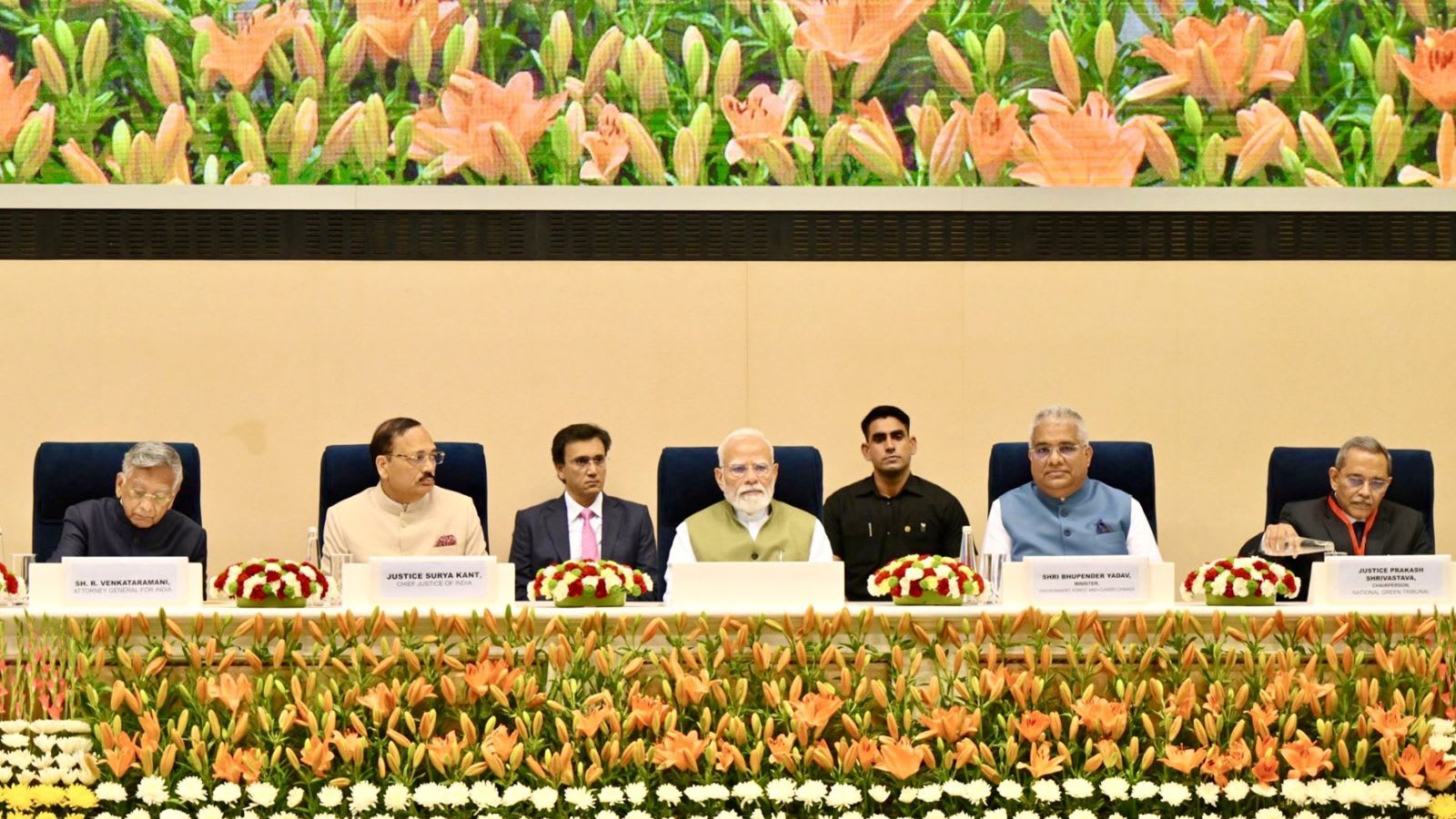
The Sikkim High Court has launched a PIL on climate justice following devastating flash floods in Nepal. Simultaneously, PM Modi has criticized the unfair global narrative regarding carbon emissions, emphasizing the disparity between developed and developing nations.
Judicial and Political Responses to Climate Crisis
The catastrophic flash floods triggered by an ice-rock avalanche near the Nepal-Tibet border have catalyzed a significant legal shift in India. With a staggering death toll of 1,410 and over 6,000 individuals still missing, the disaster has prompted the Sikkim High Court to initiate a suo motu Public Interest Litigation (PIL) focused on climate justice. By naming the Railway Ministry, the National Highways and Infrastructure Development Corporation Limited (NHIDCL), the Sikkim State Disaster Management Authority, and the State Power Department as respondents, the court is signaling a rigorous examination of infrastructure resilience in the face of climate-induced disasters.
The Legal Framework of Climate Justice
The decision by Chief Justice A. Muhamed Mustaque and Justice Bhaskar Raj Pradhan to formalize this PIL underscores an evolving judicial philosophy in India that seeks to hold state and central agencies accountable for environmental planning. In the Himalayan region, where fragile ecosystems are increasingly susceptible to glacial lake outburst floods and seismic instability, the court’s intervention suggests that infrastructure development must now be strictly audited against the backdrop of an unpredictable, warming climate.
Global Climate Inequality and Policy
Parallel to the judicial developments in Sikkim, Prime Minister Narendra Modi addressed the National Green Tribunal’s (NGT) international conference on ‘The Future of Environment and Climate Dynamics’. His remarks highlighted a persistent geopolitical friction: the unfair burden of blame placed on developing nations regarding carbon emissions. By noting that developed countries maintain per capita emissions six times higher than India’s, the Prime Minister advocated for a more equitable global dialogue on environmental responsibility.
The Paradox of Development and Regulation
Prime Minister Modi’s address also touched upon the internal challenges India faces in transitioning to cleaner energy. He pointed to a recurring friction where efforts to scale up nuclear energy—a critical component of a non-fossil fuel strategy—are frequently met with legal challenges. This reflects the complex balancing act that developing nations must navigate: the urgent need for industrial and energy expansion versus the stringent environmental oversight necessary to protect vulnerable regions like those impacted by the Nepal floods.
Strategic Implications for Infrastructure
As India continues to expand its non-fossil fuel energy capacity and clean mobility, the convergence of the Sikkim High Court’s PIL and the NGT’s international conference suggests a tightening of national policy. The focus is shifting toward a model where 'climate justice' is not merely an abstract concept but a practical requirement for the Railway Ministry and infrastructure developers. Moving forward, public projects in ecologically sensitive zones will likely require a higher standard of climate-resilience auditing to survive both environmental reality and judicial scrutiny.
Conclusion
The nexus between the devastating loss of life in Nepal and the high-level policy discussions in New Delhi underscores the urgency of the climate crisis. Whether through judicial intervention in the Himalayas or diplomatic advocacy on the global stage, the message is clear: India is moving toward an era where environmental accountability and developmental goals are inextricably linked. The coming years will likely see a more assertive judicial role in environmental governance and a continued diplomatic push for climate equity at international forums.
Multiple Citing Sources