US on alert after China's 'dual-use' research vessels spotted near Alaska
Source Entity
PRANJAL PANDEY
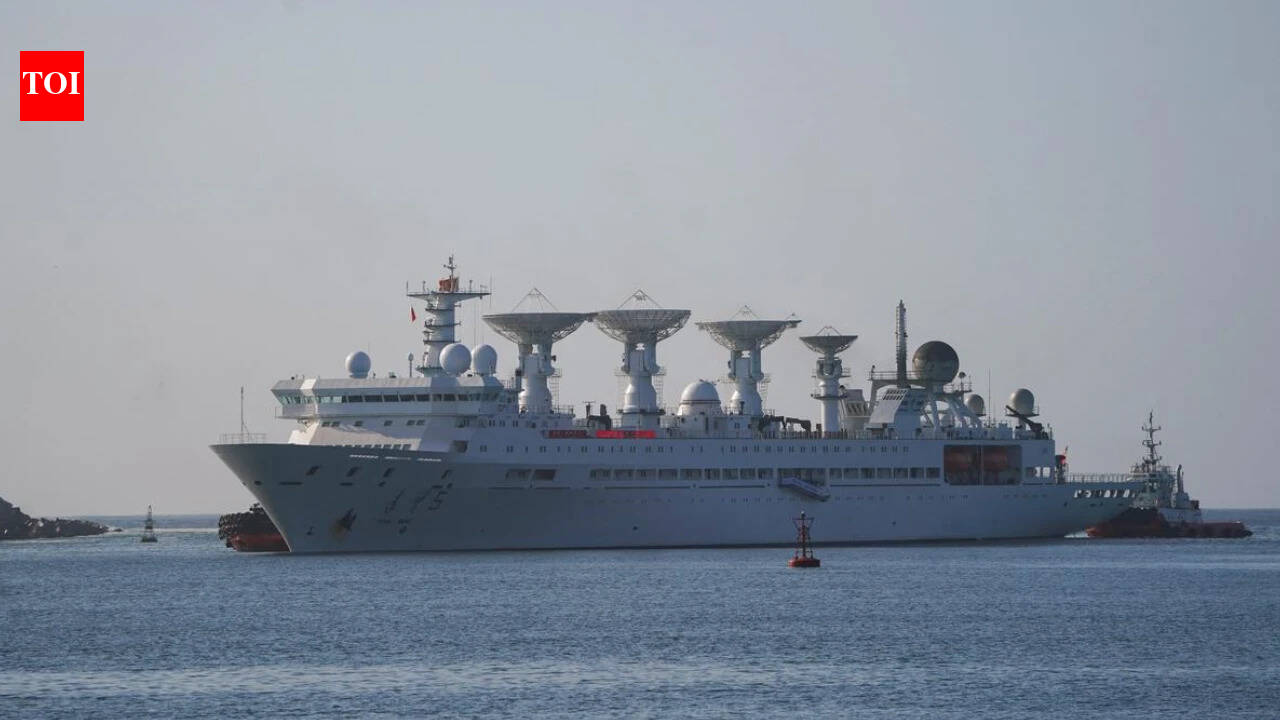
The United States is monitoring a surge in activity by Chinese research vessels near Alaskan waters, citing concerns over maritime security and mineral exploration. These 'dual-use' ships are conducting operations in the Arctic without prior notification, prompting increased vigilance from the US Coast Guard.
Rising Tensions in the High North
The United States has officially signaled heightened alert levels following a significant increase in the presence of Chinese research vessels near Alaskan maritime zones. According to reports, these vessels have been observed operating near the Aleutian Islands, navigating through the Bering Strait, and even extending their reach toward the North Pole. This shift in operational tempo, noted by Rear Admiral Bob Little of the US Coast Guard’s Arctic District, highlights a deepening strategic competition in a region once considered a peripheral theater of global power dynamics.
The 'Dual-Use' Dilemma
The core of the concern lies in the classification of these ships as 'dual-use' vessels. While nominally conducting scientific research, these ships—such as the Yuan Wang 5—possess technological capabilities that allow them to gather critical hydrographic, oceanographic, and bathymetric data. This information is invaluable for both civilian mineral exploration and military submarine navigation. By mapping the Arctic seabed, China is positioning itself to capitalize on potential resource extraction while simultaneously enhancing its strategic footprint in waters that serve as a vital maritime passage between the US and Russia.
Escalating Operational Tempo
Data provided by the US Coast Guard indicates a sharp uptick in these incursions, with four separate vessels identified in the first portion of 2026 alone, nearing the total count of five for the entirety of 2025. This acceleration suggests a deliberate policy shift in Beijing to normalize a persistent presence in the US Arctic. The fact that these vessels operate in international waters while eschewing standard diplomatic notification protocols creates a 'gray zone' challenge, where the US must balance freedom of navigation principles with the need to protect national security interests.
Broader Geopolitical Implications
The Arctic is no longer a frozen sanctuary of scientific cooperation; it has become a critical node in global geopolitics. As the ice recedes, the race to secure mineral rights and establish shorter shipping routes has intensified. The presence of Chinese research vessels near Alaska suggests that Beijing views the Arctic as an essential frontier for its long-term economic and security strategy. This puts the US in a difficult position, as it must monitor these activities without escalating tensions to a point of direct confrontation.
Regional Impact and Future Outlook
Beyond US concerns, the expansion of Chinese maritime operations has sparked anxiety among other nations, including India, which has historically monitored Chinese naval movements in the Indian Ocean. The trend suggests that as China expands its blue-water navy capabilities, its 'research' footprint will follow suit globally. Moving forward, we can expect the US to increase its Coast Guard and naval patrols in the Arctic, potentially leading to more frequent standoffs or diplomatic friction as the US and China compete for influence in the northernmost reaches of the globe.