Silicon Valley is falling in line with Trump’s attempt to rename AI
Source Entity
Terrence O’Brien
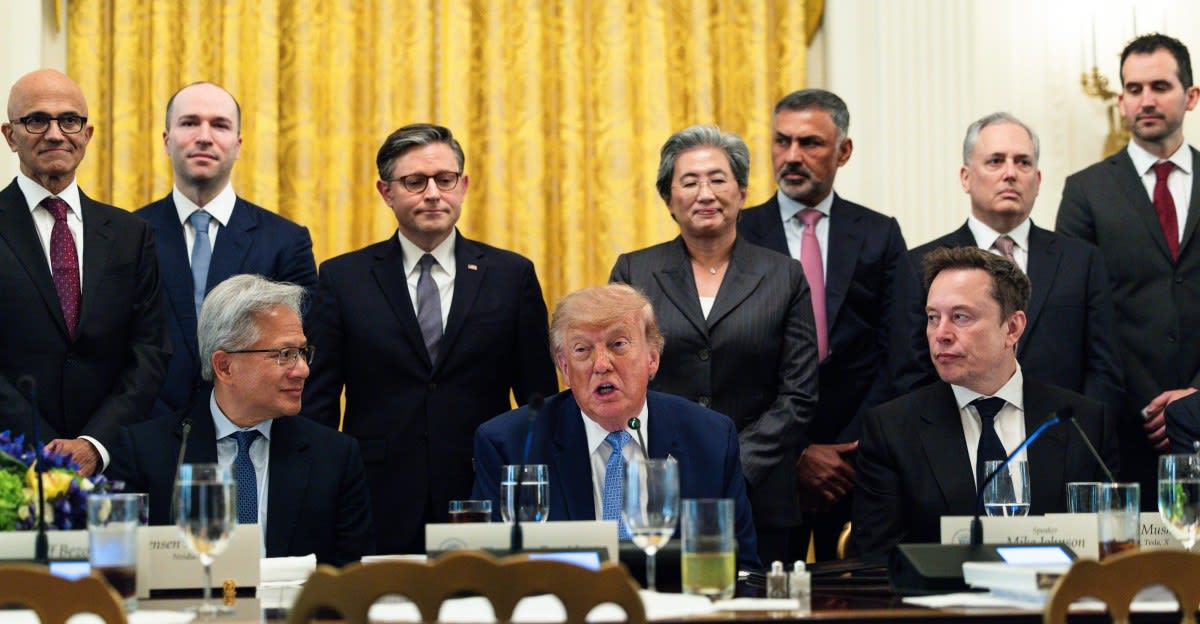
Silicon Valley leaders are beginning to adopt President Trump’s push to rebrand 'Artificial Intelligence' as 'Super Intelligence.' High-profile figures like Elon Musk have already signaled compliance by adjusting company terminology.
The Shift Toward 'Super Intelligence'
President Donald Trump’s recent initiative to rebrand the industry-standard term 'Artificial Intelligence' (AI) to 'Super Intelligence' (SI) has moved from a political directive to a tangible shift within the tech sector. While initial reactions from the general public and casual observers were marked by skepticism, the influence of the executive branch is beginning to exert pressure on Silicon Valley’s corporate nomenclature. This transition marks a rare instance where political messaging is directly dictating the internal branding strategies of some of the world's most influential technology firms.
The Role of Corporate Alignment
The pivot toward 'Super Intelligence' is not occurring in a vacuum; it is being driven by powerful industry leaders who prioritize alignment with the current administration. Elon Musk, a central figure in the development of advanced computing, was among the first to signal his compliance. By pledging to rename 'SpaceXAI' to 'SpaceXSI,' Musk is setting a precedent that others in the sector may feel compelled to follow to maintain favorable standing or to reflect a shared vision of the technology’s future capabilities.
Implications for Industry Standardization
Historically, the term 'Artificial Intelligence' has served as the bedrock of academic research, government policy, and consumer understanding for decades. Replacing such a deeply entrenched term presents significant challenges for technical documentation, legal frameworks, and global communication. If the 'Super Intelligence' branding gains wider adoption, it could lead to a bifurcated language system where political and corporate entities use one terminology, while the scientific and academic communities remain tethered to the traditional 'AI' designation.
Why Branding Matters
Branding in technology is rarely just about semantics; it is about perception and the framing of power. By pushing for a shift to 'Super Intelligence,' the administration is framing the technology not as a synthetic imitation of human cognition, but as an advanced, superior evolution of computational capability. This shift in framing is designed to shape public sentiment regarding the safety, utility, and dominance of these systems, potentially influencing future regulatory discussions and public trust.
The Future of Tech-Political Relations
This development raises critical questions about the autonomy of Silicon Valley. As tech companies increasingly align their internal branding with political mandates, the line between private sector innovation and public policy becomes further blurred. Whether this trend continues will depend on the willingness of other major tech conglomerates to follow suit and whether the public eventually adopts the new terminology in their daily lexicon. For now, the move toward 'Super Intelligence' serves as a clear indicator of the administration's intent to reshape the narrative surrounding the most consequential technology of our time.