India’s first private orbital rocket Vikram-1 set for lift-off
Source Entity
India Latest News: Top National Headlines Today & Breaking News | The Hindu
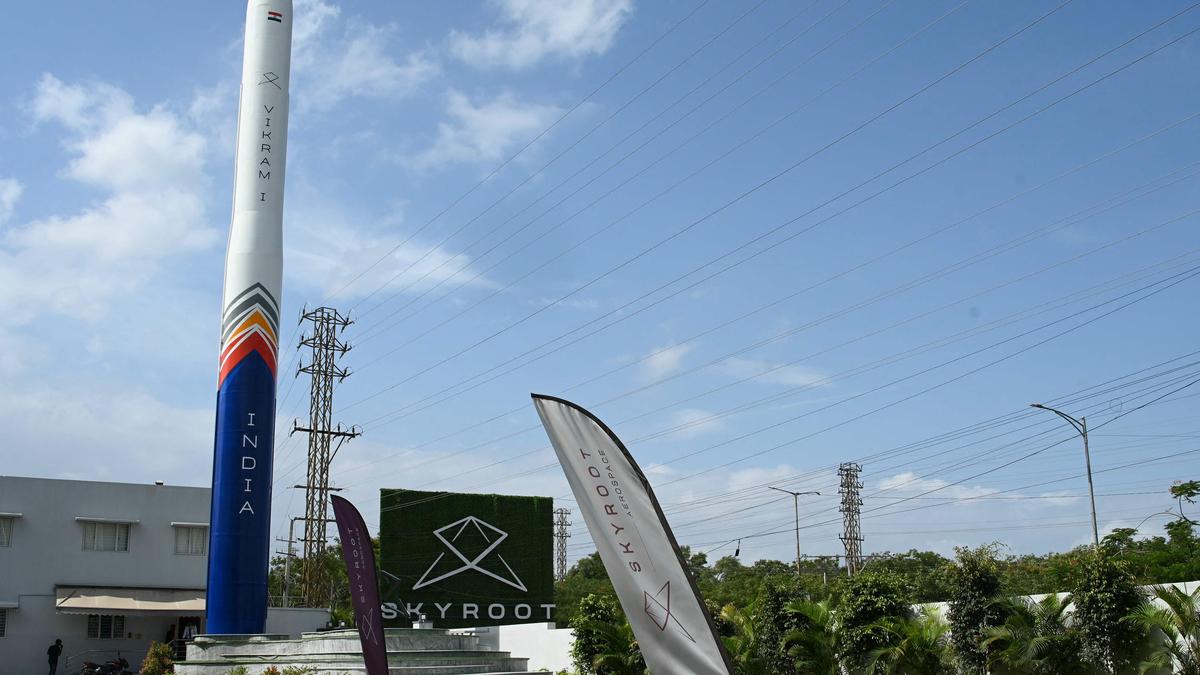
India's private sector enters a new era with Skyroot Aerospace's Vikram-1, the country's first privately developed orbital rocket. Despite a planned hold during its maiden launch attempt, the mission marks a historic milestone in India's space exploration journey.
A New Era for Indian Space Exploration
On July 18, the Indian space sector reached a pivotal juncture as Skyroot Aerospace prepared to launch Vikram-1, the nation's first privately developed orbital-class rocket. This mission, scheduled for liftoff from the Satish Dhawan Space Centre at Sriharikota, represents a monumental shift in how India approaches spaceflight. By transitioning from a purely government-led endeavor to one that embraces private enterprise, the nation is signaling its intent to dominate the growing global market for rapid, cost-effective satellite deployment.
Historical Parallels and Symbolic Significance
The timing of this launch is deeply symbolic, occurring exactly forty-six years after the successful deployment of India’s first experimental Satellite Launch Vehicle (SLV-3) in 1980. That historic flight placed the Rohini Satellite (RS-1) into orbit, cementing India’s status as the sixth nation to achieve independent spaceflight. By returning to the same launch site to witness a private entity attempt an orbital injection, the Indian space program has come full circle, demonstrating the maturation of its domestic aerospace ecosystem.
Engineering Innovation in Vikram-1
Vikram-1 distinguishes itself through cutting-edge engineering, standing as a seven-storey-tall, multi-stage vehicle. A defining feature of its design is the utilization of an all-carbon composite structure, which provides a high strength-to-weight ratio crucial for orbital efficiency. Furthermore, the rocket incorporates sophisticated, in-house propulsion systems, notably featuring 3D-printed engines. These advancements allow Skyroot Aerospace to offer rapid, high-thrust launch services, catering to the increasing demand for small-satellite constellations.
Complexity of the Orbital Mission
The mission profile for Vikram-1 is a testament to the technical rigor required for orbital entry. The flight sequence is meticulously planned to span 14 distinct phases over a total duration of 15.46 minutes. This journey from initial liftoff to final orbit injection involves precise staging and ignition sequences, reflecting the high stakes involved in a maiden orbital attempt. The complexity of these 14 phases underscores the engineering prowess now present within India's private sector.
Challenges and the 'Planned Hold'
Even with meticulous planning, spaceflight remains inherently unpredictable. Recent reports confirmed that the Vikram-1 launch was placed on a 'planned hold' just minutes before the scheduled takeoff. In the aerospace industry, such holds are critical safety protocols designed to ensure that all systems are within nominal parameters before committing to the violent forces of launch. This pause reflects the professionalism and safety-first culture currently permeating the private Indian space industry.
Broader Implications for India's Economy
Prime Minister Narendra Modi has lauded this milestone as a 'historic new frontier,' specifically highlighting the 'talent of youth' driving these advancements. The success of a private company like Skyroot Aerospace acts as a catalyst for a broader economic shift, potentially attracting significant domestic and international investment. As India continues to foster an environment conducive to private space innovation, the nation is well-positioned to become a premier global hub for satellite launch services, moving beyond traditional government-led missions into a competitive, commercialized space economy.
Multiple Citing Sources
Verification Required?