Delhi HC to hear PIL alleging ‘intrusive police surveillance’ of Cockroach Janta Party protesters
Source Entity
India Latest News: Top National Headlines Today & Breaking News | The Hindu
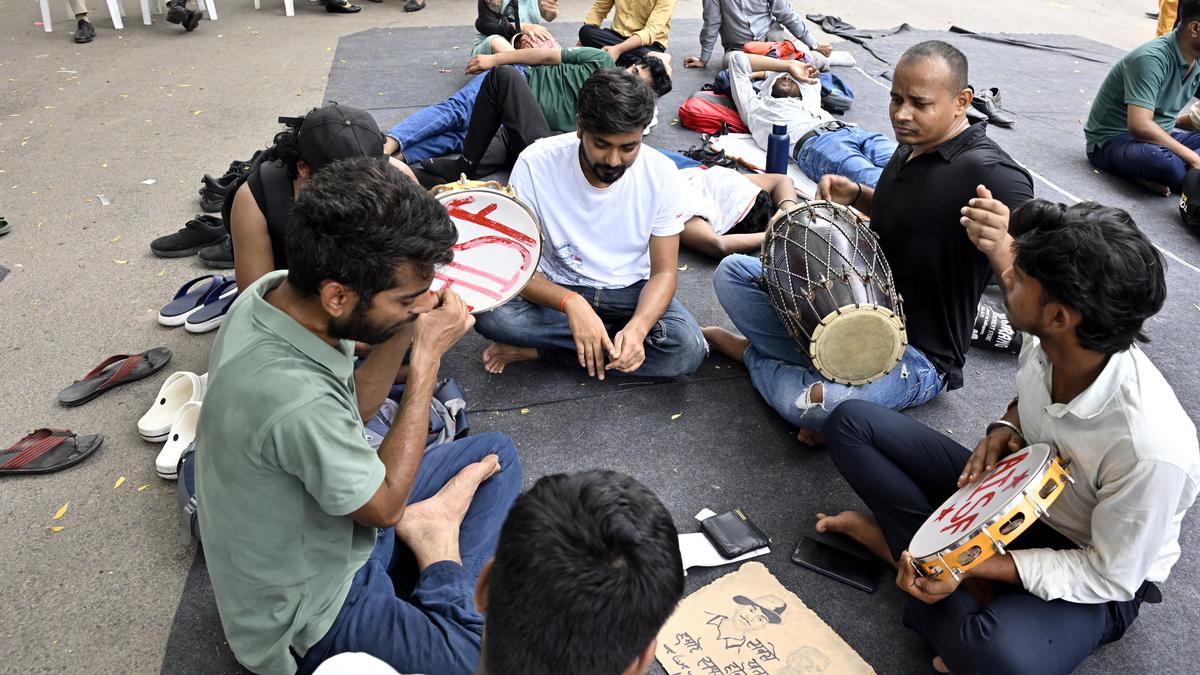
Activist Sonam Wangchuk and AISA student leaders are in critical condition after 20 days of indefinite hunger strikes at Jantar Mantar. Despite severe medical warnings of organ failure, they remain committed to their protests until the scheduled Parliament march on July 20.
The Escalating Hunger Strike Crisis at Jantar Mantar
The ongoing protests at Jantar Mantar have reached a precarious juncture as activist Sonam Wangchuk and three AISA student leaders—Manish, Neha, and Aameen—enter their third week of indefinite hunger strikes. The situation has drawn significant public attention, not only due to the duration of the fasts but because of the deteriorating physical states of the participants. Medical professionals monitoring the site have issued dire warnings, noting that the activists are now at high risk of irreversible organ failure as their bodies begin to consume muscle mass for energy.
The Human Cost of Protest
For Sonam Wangchuk, the 20-day mark represents a severe physiological decline. According to medical bulletins, Wangchuk has lost approximately 9.5 kg, with his weight dropping to 56.55 kg. While he remains mentally alert, his health has entered a critical stage, prompting the Delhi High Court to intervene by ordering the Union and Delhi governments to ensure constant, regular medical monitoring. This judicial oversight underscores the severity of the health risks posed by prolonged fasting in an outdoor environment.
Solidarity and Student Activism
Parallel to Wangchuk’s efforts, AISA activists are maintaining a high-stakes protest to demand the resignation of Union Education Minister Dharmendra Pradhan. The student leaders, including JNU PhD scholar Neha Bora, have explicitly linked their hunger strike to a broader critique of governance, specifically citing recent exam leaks and systemic irregularities. Their presence at the protest site, coupled with the warning that they are in a "high risk condition," highlights the intensifying frustration among student groups regarding educational accountability.
Political Implications and the CJP March
Central to these protests is the Cockroach Janta Party (CJP), which has organized a significant march to Parliament scheduled for July 20, the opening day of the monsoon session. Wangchuk has signaled his determination to survive until this date, framing the strike as a moral imperative to send a message to the government. The involvement of political figures, such as AAP national convenor Arvind Kejriwal, who visited the site to express solidarity, further elevates the protest from a localized demonstration to a broader political challenge.
Broader Socio-Political Context
These protests reflect a growing trend of utilizing non-violent, bodily-focused resistance to demand government transparency. By choosing the site of Jantar Mantar—the historic epicenter of Delhi’s protest culture—the activists are leveraging the visibility of the national capital to force a dialogue on issues ranging from environmental concerns to educational reform. The government's perceived silence, which the activists describe as "heartless," serves as a catalyst for their continued resolve.
Future Trends and Outlook
As the July 20 deadline approaches, the tension between the state and the protesters is likely to escalate. The government faces a difficult dilemma: engaging with the protesters could be seen as yielding to pressure, while continued inaction risks a public relations and humanitarian crisis should the health of any participant critically fail. The outcome of the scheduled Parliament march will likely serve as a litmus test for the effectiveness of such extreme protest tactics in the current Indian political landscape.
Multiple Citing Sources
Verification Required?