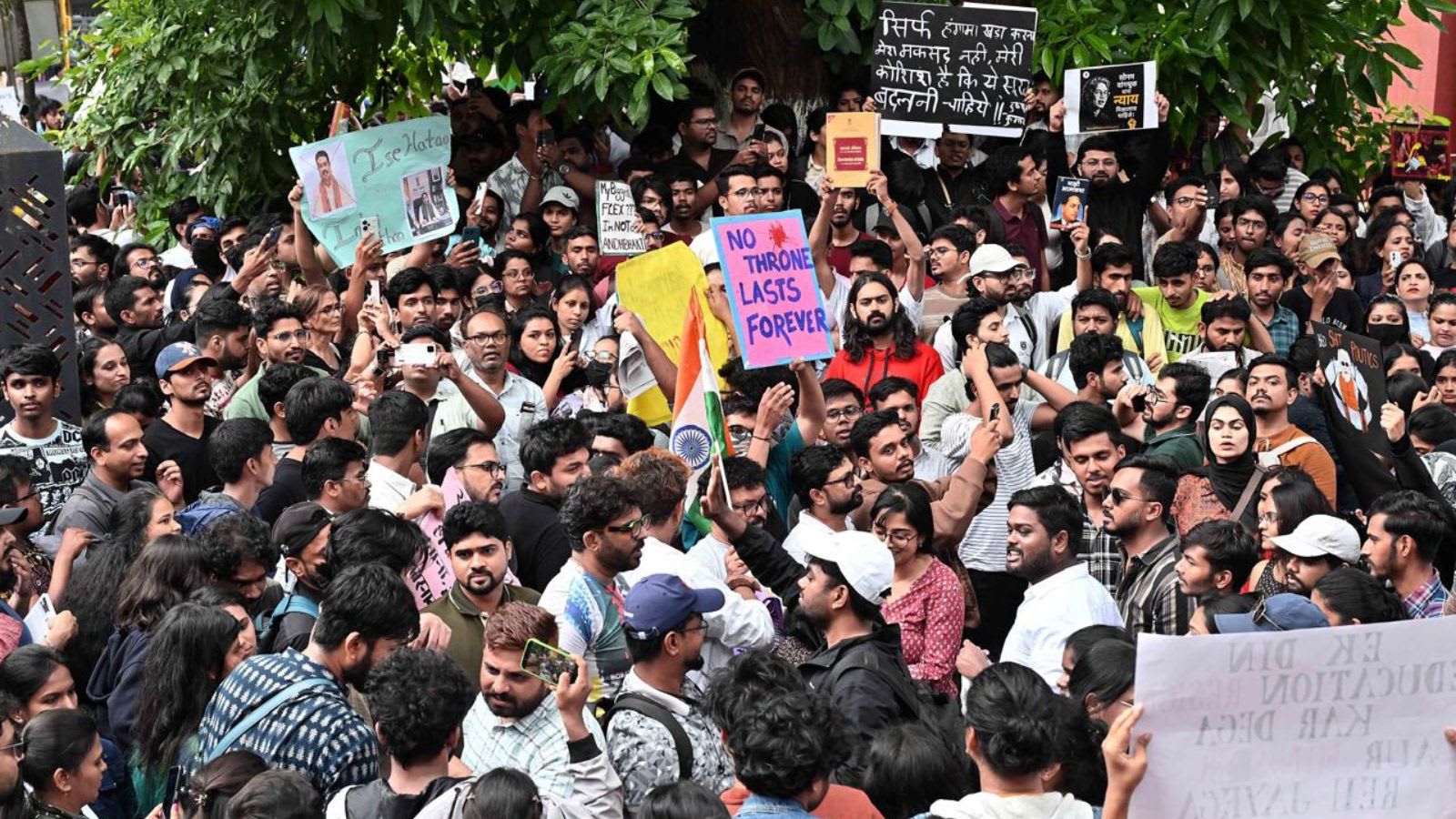
‘Students deserve better’: CJP supporters hold protest in Pune backing Sonam Wangchuk
Source Entity
The Indian Express
Climate activist Sonam Wangchuk has been shifted to Safdarjung Hospital following 21 days of an indefinite hunger strike. Delhi Police cited medical necessity under court orders, while concerns persist regarding the treatment of protesters at Jantar Mantar.
The Hospitalization of Sonam Wangchuk: A Critical Turning Point
On July 18, 2026, the ongoing hunger strike led by climate activist and educator Sonam Wangchuk reached a critical juncture. After 21 days of protest, Wangchuk was relocated by the Delhi Police to Safdarjung Hospital. This development follows a period of mounting tension regarding the activist's health, which had reportedly begun to deteriorate significantly due to the prolonged nature of his fast.
Official Rationale and Legal Context
According to the New Delhi Deputy Commissioner of Police (DCP), the decision to move Wangchuk was not arbitrary. The authorities stated that the transfer was executed in compliance with Delhi High Court orders and based on professional medical advice. The primary objective cited was the provision of 'essential medical care' necessitated by his declining physical state. This highlights the complex intersection between the state’s duty to preserve life and an individual's right to engage in civil disobedience through hunger strikes.
The Protester's Autonomy and Family Concerns
The situation has sparked intense scrutiny regarding the rights of the activist while in state custody. Gitanjali J. Angmo, Wangchuk's wife, has publicly asserted her role in his medical oversight. By demanding that no oral or intravenous treatments be administered without the consent of his family and personal medical team, she has underscored the lack of trust between the protesters and the state. This tension reflects a broader pattern in Indian protest movements where the physical autonomy of the activist becomes a focal point of the political struggle.
Escalation at Jantar Mantar
The broader environment surrounding this protest has been marked by volatility. Reports indicate that the 'Cockroach Janta Party' has leveled serious allegations against the Delhi Police, specifically accusing them of lathi-charging students at the Jantar Mantar protest site. Furthermore, the detention of individuals like Abhijeet Dipke suggests that the state is maintaining a firm hand in managing the demonstrations. These events illustrate how a movement that began with social media satire has evolved into a significant and contentious public protest.
Broader Implications and Future Trends
The hospitalization of a prominent figure like Sonam Wangchuk serves as a catalyst for national discourse on the efficacy of hunger strikes as a political tool in modern India. As the state balances public order with human rights, the precedent set by this incident will likely influence how future long-term protests are managed. The evolution of the 'Cockroach Janta Party' from digital satire to physical protest signifies a growing trend of online discourse manifesting into sustained, on-the-ground activism, which will continue to challenge administrative authorities in the coming years.
Multiple Citing Sources