'There was no need to bring him to hospital', says Wangchuk's wife; CJP attacks Modi govt
Source Entity
TOI NEWS DESK
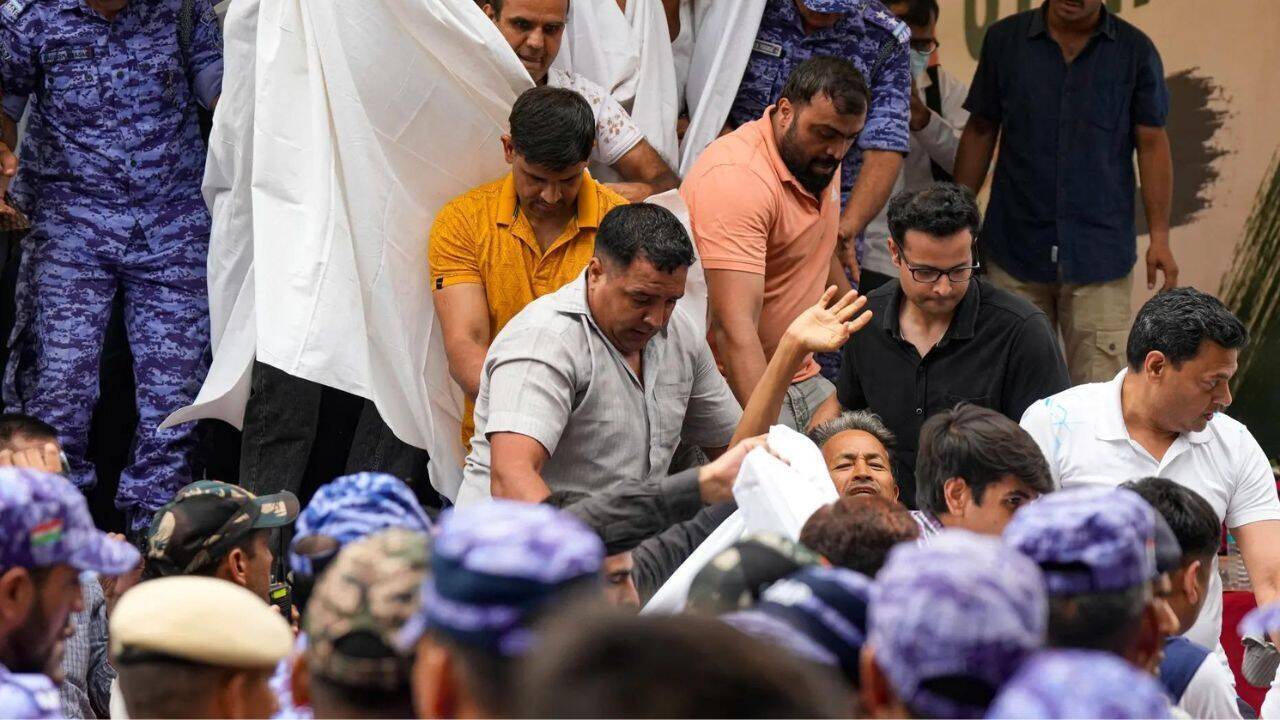
Climate activist Sonam Wangchuk has been hospitalized after 21 days of an indefinite hunger strike at Jantar Mantar. While authorities cite court-mandated medical care, supporters and the Cockroach Janta Party allege forced removal and police misconduct.
The Escalation of the Sonam Wangchuk Protest
On July 18, 2026, the 21-day hunger strike led by climate activist Sonam Wangchuk reached a critical juncture when he was forcibly removed from the Jantar Mantar protest site and transported to Safdarjung Hospital. The Delhi Police, acting under what they described as directives from the Delhi High Court and expert medical advice, initiated the transfer citing the activist's rapidly deteriorating health. This event marks a significant escalation in a movement that has increasingly captured national attention.
The Intersection of Activism and Satire
The protest has become intrinsically linked with the 'Cockroach Janta Party' (CJP), a movement that began as social media satire but has evolved into a formidable vehicle for political dissent. The arrest of CJP founder Abhijeet Dipke by Delhi Police during the events on Saturday highlights the growing friction between the state apparatus and these emerging protest groups. The CJP has leveled serious allegations against the government, accusing police of lathi-charging students and using excessive force to dismantle the peaceful gathering at Jantar Mantar.
Family Concerns and Medical Ethics
The hospitalization has triggered a standoff regarding medical autonomy. Gitanjali J. Angmo, Wangchuk’s wife, has publicly demanded that no intravenous or oral treatments be administered to the activist without explicit consent from his family and his personal medical team. This insistence underscores a profound lack of trust between the protesters and the state, as the family fears that medical intervention might be used as a pretext to undermine the protest's momentum.
Legal and Procedural Tensions
The Delhi Police maintain that the removal was a necessary intervention to preserve human life, strictly adhering to legal mandates provided by the High Court. However, the optics of the situation—removing a weakened activist against the wishes of his family—have only served to galvanize his supporters. The juxtaposition of the police’s claims of 'essential medical care' versus the family's plea for bodily autonomy creates a complex legal and ethical narrative that reflects the broader challenges of managing long-term civil disobedience in the capital.
Broader Political Implications and Future Trends
As the situation unfolds, the focus has shifted toward the upcoming march to Parliament scheduled for July 20. The current crisis suggests that the government is facing a test of its ability to handle decentralized, digitally-organized protest movements. If the state continues to respond with force or forced medical interventions, it risks further alienating segments of the populace and potentially inflating the influence of groups like the CJP. The outcome of Wangchuk's health and the subsequent response of his supporters will likely set a precedent for how the state manages indefinite hunger strikes in an era of viral, highly organized social media activism.
Multiple Citing Sources