India needs a peaceful revolution: Sonam Wangchuk
Source Entity
India Latest News: Top National Headlines Today & Breaking News | The Hindu
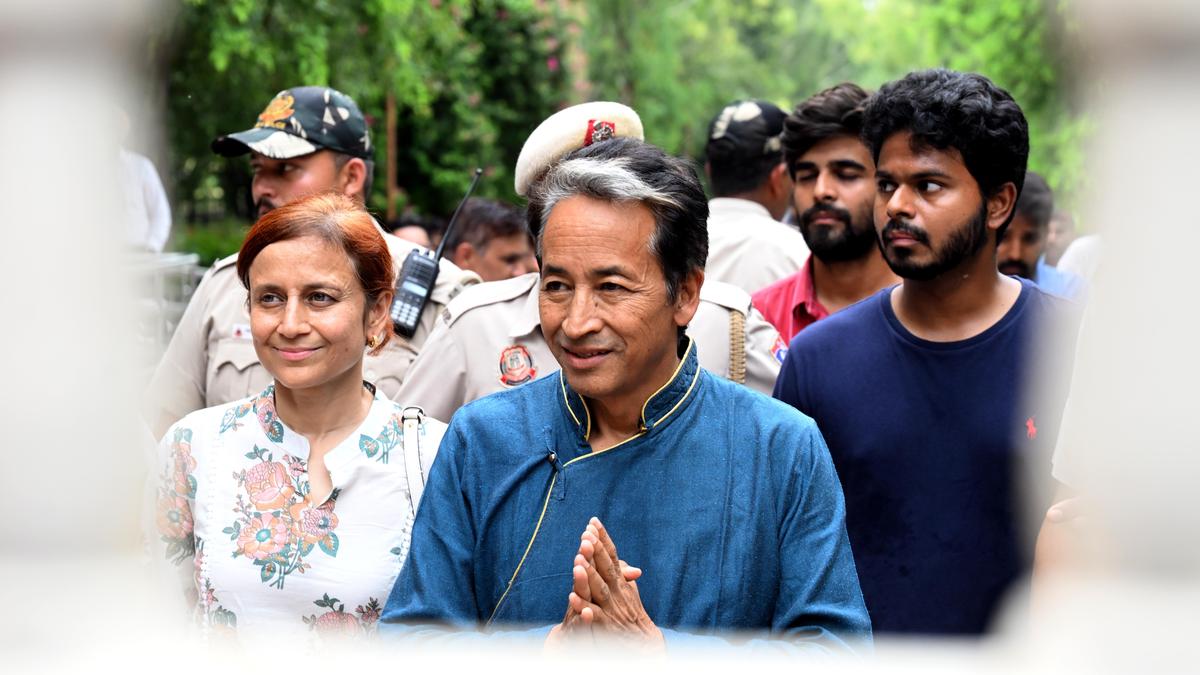
Activist Sonam Wangchuk has called for a 'peaceful revolution' in India's political selection process to ensure national progress by 2047. He is urging citizens to identify and support selfless, ethical leaders to address systemic issues and improve India's global standing.
A Call for Systemic Reform: Sonam Wangchuk’s Vision for 2047
In a poignant message delivered on August 13, 2026, activist Sonam Wangchuk issued a clarion call for a "peaceful revolution" regarding how India selects its political leadership. Speaking ahead of Independence Day, Wangchuk framed this appeal as the necessity for "India’s second Independence movement." His central thesis is that the nation’s current trajectory requires a fundamental transformation if it intends to remain a "respectable nation" as it approaches the centenary of its independence in 2047.
The Comparative Economic Context
Wangchuk’s urgency is rooted in a comparative analysis of India’s developmental progress against its Asian neighbors. He noted that countries like Thailand, Malaysia, Indonesia, Sri Lanka, and Bangladesh—which were either behind or on par with India fifty years ago—have experienced significant advancements, leaving India trailing in several key metrics. This observation serves as the cornerstone of his argument: that India’s potential is being stifled not by a lack of resources, but by the quality of its political governance.
Addressing the Crisis of Representation
A significant portion of Wangchuk’s critique focuses on the moral and professional caliber of the country’s elected representatives. He expressed deep concern regarding the prevalence of individuals with criminal backgrounds serving as Members of Parliament. By highlighting this issue, Wangchuk is challenging the electorate to reconsider their voting priorities, suggesting that the normalization of such candidates is a primary obstacle to national development and ethical governance.
The Search for 'Selfless' Leadership
In his appeal, Wangchuk explicitly requested the public's assistance in identifying "selfless, fearless men and women of character and substance." This call for a grassroots-led identification of future leaders represents a shift away from traditional party-centric politics. By leveraging his influence as an activist in Ladakh, he is attempting to mobilize a nationwide discourse on the qualities that constitute true service, urging citizens to move beyond conventional political allegiances.
Broader Implications for Indian Democracy
Wangchuk’s message, crafted while he was recovering from an illness, reflects a contemplative, long-term view of India’s future. The implications of this movement are significant: if it gains traction, it could alter the landscape of civic engagement in India. By focusing on the 2047 timeline, he is setting a benchmark for accountability, challenging the current political establishment to provide tangible results that align with the aspirations of the populace.
Future Trends and Conclusion
As India moves toward its centenary, the discourse surrounding the quality of leadership is likely to intensify. Wangchuk's advocacy signals a growing public desire for a shift toward meritocracy and integrity in public life. Whether this "peaceful revolution" will evolve into a formal political movement or remain a catalyst for civic awareness remains to be seen, but it undoubtedly places the onus on the Indian electorate to redefine the standards for those who hold the power to shape the nation’s future.
Verification Required?