S&P considers Nvidia credit downgrade over governance and ‘key man’ risks
Source Entity
Marina Temkin
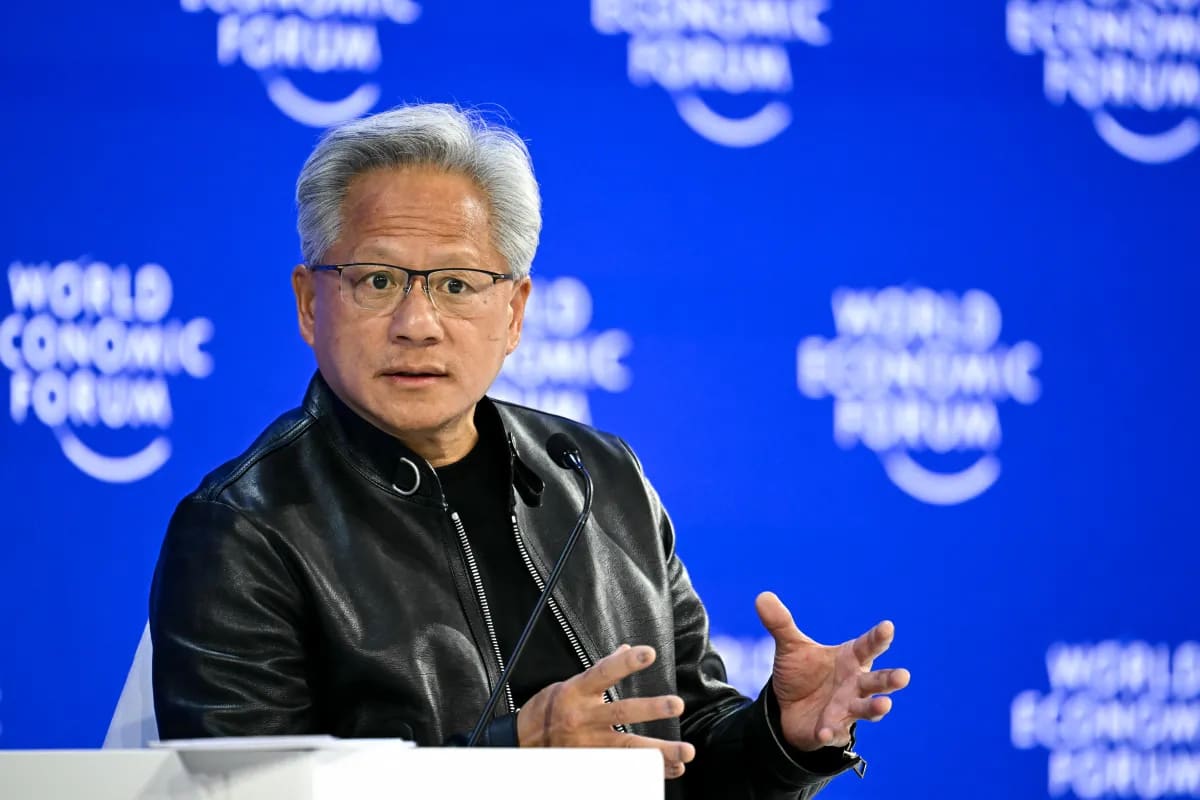
S&P Global Ratings is reviewing Nvidia for a potential credit downgrade to AA- due to governance concerns and 'key man' risks. The review follows the recent tumultuous ouster and reinstatement of CEO Jensen Huang, raising questions about board independence and succession planning.
S&P Global Ratings Evaluates Nvidia Amidst Governance Turmoil
S&P Global Ratings has officially placed semiconductor giant Nvidia on a watchlist for a potential credit rating downgrade, threatening to move the company from its current AA status to AA-. While Nvidia remains firmly in investment-grade territory, this move signals significant institutional concern regarding the company’s internal governance and executive leadership stability. The agency has indicated that its formal review process will conclude within 90 days, during which time the market will closely monitor the company's efforts to address these structural criticisms.
The 'Key Man' Risk and Executive Volatility
At the heart of the agency’s concerns is the concept of "key man risk," which highlights an extreme dependency on a single individual—in this case, CEO Jensen Huang—for the company’s strategic direction and market performance. The recent, highly publicized episode involving Huang’s temporary ouster by the board, followed by his subsequent reinstatement, has exposed deep fissures in Nvidia’s corporate hierarchy. S&P explicitly cited this volatility as evidence of "weak executive oversight" and a glaring lack of effective succession planning, which are critical metrics for maintaining a high credit rating.
Board Independence and Governance Deficits
Beyond the personality-driven risks, the rating agency has cast doubt on the composition and efficacy of the Nvidia board. S&P noted that the long tenure of certain board members may have compromised their independence, suggesting that the current governance structure is no longer suited for a company of Nvidia’s current scale. As Nvidia has evolved into a central pillar of global artificial intelligence and cloud infrastructure, the agency believes that the company’s internal controls have failed to keep pace with its rapid market expansion.
Financial Implications of a Downgrade
Although a one-notch downgrade to AA- would not strip Nvidia of its investment-grade status, it could have tangible financial consequences. A lower credit rating typically correlates with increased borrowing costs, which could impact the company’s ability to finance capital-intensive projects. This is particularly sensitive given that Nvidia currently serves as a critical financial backstop for various neoclouds and infrastructure companies; any disruption in Nvidia’s own credit profile could create ripple effects throughout the broader technology ecosystem.
Contextualizing the Turmoil
This governance crisis was precipitated by reports regarding Jensen Huang’s personal conduct, specifically allegations involving an extramarital affair with an alleged Chinese spy. The board's initial decision to remove Huang, followed by the reversal of that decision, has created a perception of administrative chaos. For institutional investors, this level of uncertainty is anathema to the stability usually expected from a company with a market capitalization as significant as Nvidia’s.
Future Trends and Market Outlook
As the 90-day review period progresses, the market will look for concrete signs of governance reform. This may include changes to board composition, the introduction of a robust succession plan, or new transparency protocols to appease institutional stakeholders. Whether Nvidia can successfully rehabilitate its governance image will be the deciding factor in whether S&P maintains its current rating or proceeds with the downgrade, potentially setting a new standard for how large-cap technology firms must manage executive risk in the future.