SpaceX returned its Starship rocket on Saturday—but there's a catch
Source Entity
Eric Berger
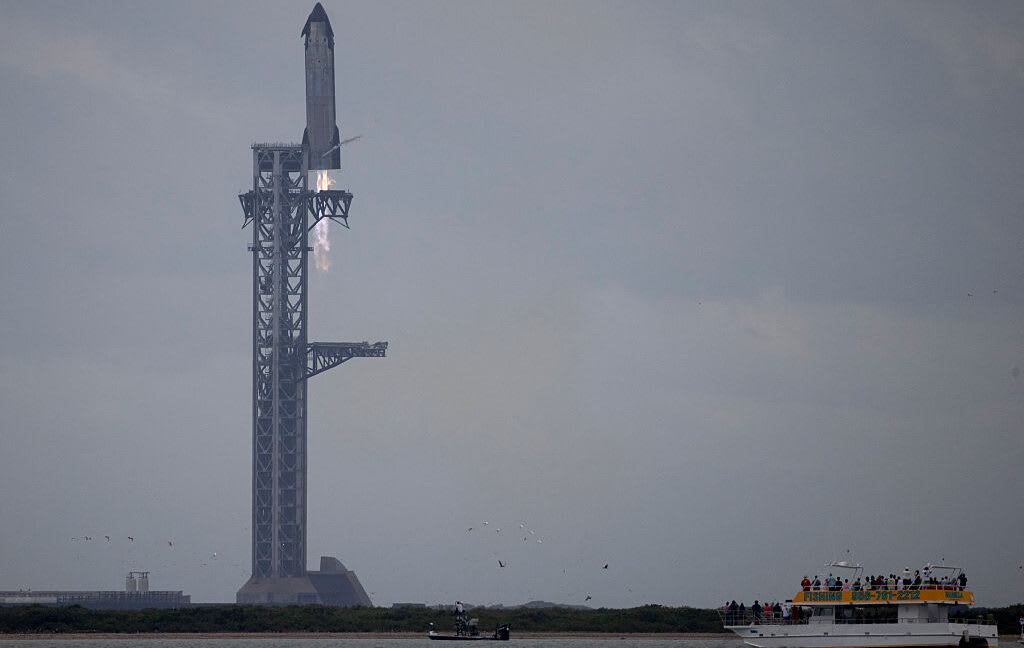
SpaceX successfully demonstrated a mid-air catch of its Starship upper stage using mechanical launch tower arms. While this marks a historic milestone for reusable rocketry, the mission also saw the loss of the Super Heavy booster during its recovery attempt.
A New Era of Reusability: Analyzing the Starship Milestone
SpaceX has achieved a monumental milestone in aerospace engineering by successfully executing a mid-air recovery of the Starship upper stage. In a display that defied conventional aviation logic, the massive vessel descended from the sky, transitioning from a horizontal orientation to a vertical landing profile through the precise ignition of its Raptor engines. This maneuver culminated in the spacecraft being snagged by the mechanical arms of the launch tower at Starbase, Texas, an event that represents a significant leap toward the company's goal of rapid, full reusability.
The Engineering Complexity of the Catch
The technical precision required for this operation cannot be overstated. With only two small nubs protruding about one foot from the side of the vehicle, the margin for error was razor-thin. By relying on the launch tower's arms to intercept the spacecraft, SpaceX is essentially attempting to eliminate the need for heavy landing legs, thereby reducing the mass of the vehicle and increasing its payload capacity for future missions to the Moon, Mars, and beyond. This 'catch' mechanism is the culmination of nearly a quarter-century of iterative development at SpaceX.
Operational Success Amidst Setbacks
While the recovery of the upper stage was a triumph, the mission was not without its complications. Reports indicate that the Super Heavy booster—the primary launch vehicle—failed its recovery attempt shortly after liftoff, resulting in its total destruction. This highlights the inherent risks involved in the development of orbital-class launch vehicles. Despite this loss, the mission was highly productive in other areas, with the Starship successfully completing 14 orbits and deploying 26 satellites, proving its utility as a functional transport platform.
Thermal Protection and Future Prospects
A critical factor in the success of this mission was the performance of the spacecraft's heat shield. During its reentry, the Starship endured the extreme thermal stresses of atmospheric friction. The fact that the heat shield performed well is a vital indicator that the company is solving one of the most persistent hurdles in space exploration: protecting a vehicle during high-velocity reentry. This progress is essential for the long-term viability of the Starship program as a fully reusable system.
Broader Implications for the Aerospace Industry
This event marks a decisive moment in the industry’s decades-long pursuit of fully reusable rocket systems. Historically, the space industry relied on expendable rockets, which significantly increased the cost per kilogram of payload and limited the frequency of launches. By demonstrating that a massive vehicle can be caught and potentially refurbished for subsequent flights, SpaceX is challenging the traditional economic models of spaceflight. If this technology can be scaled and made reliable, it will fundamentally alter the logistics of orbital logistics and deep-space exploration.
Conclusion: The Path Forward
While the destruction of the Super Heavy booster serves as a reminder of the volatility of rocket science, the successful recovery of the Starship upper stage is a clear signal of progress. The ability to intercept a returning spacecraft with mechanical arms is a feat of engineering that transitions the concept of 'future' technology into current operational reality. As SpaceX continues to refine these techniques, the focus will likely shift toward increasing the reliability of both the booster and the upper stage, moving the world closer to a future where space travel is as routine as air travel.
Multiple Citing Sources